Skip navigation
You are viewing our beta course page.
Study level:
Undergraduate

Course summary

The Foundation Degree in Food Innovation and Technology is validated by Ulster University and designed to equip graduates with the knowledge and skills to develop and produce innovative, nutritious, safe and healthy foods which meet consumer demands. This is a 4 semester programme spread over 2 years. Semester 3 is spent on an industry based placement where students develop both their technical expertise and commercial awareness. Many graduates progress on one of the BSc (Hons) Degrees at Loughry or at another academic institution. Those that go directly into employment take up posts such as supervisory management in production, product development, training and quality control.
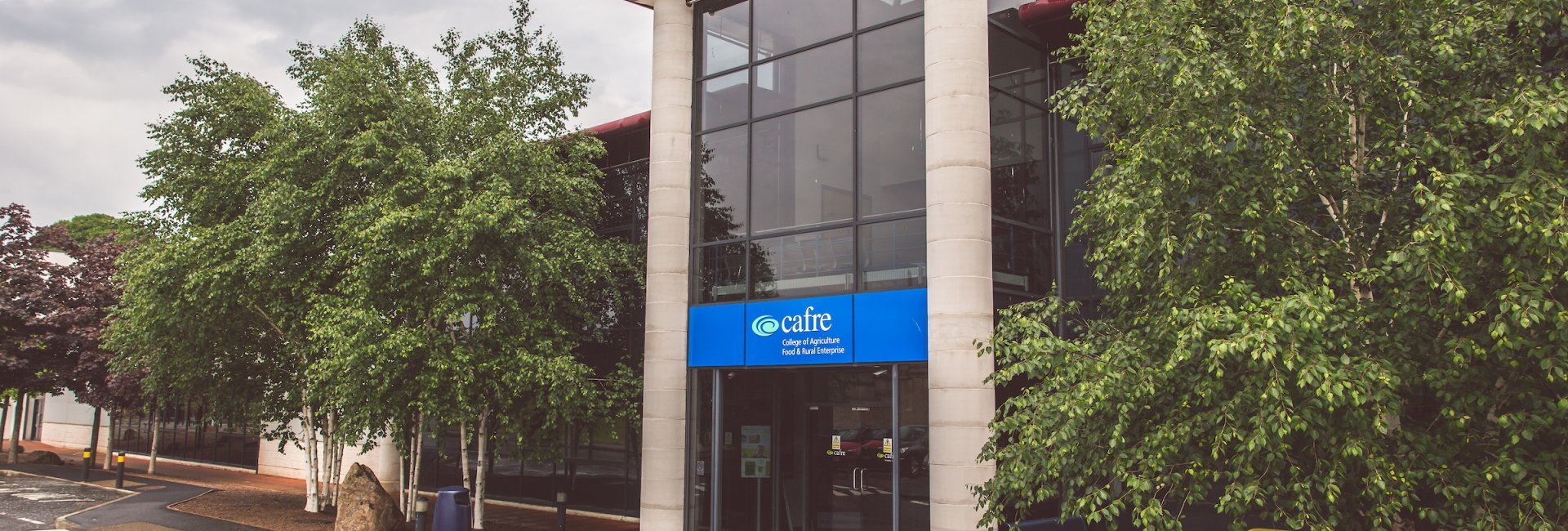
Loughry Campus – The Food Centre of Northern Ireland.
CAFRE Loughry Campus offers full-time and part-time courses in Food to educate new entrants and support staff working within the agri-food sector to improve business efficiency. One of the great things about CAFRE is that each of our three campuses deliver a specific range of courses and has the specialist facilities to match. We are continually investing in our staff, buildings, equipment and resources so you can get the most out of your time with us.
Loughry Campus, which is based 2 miles outside Cookstown in Co Tyrone, showcases the latest design and technology to ensure compliance with best practice in food manufacture.
The educational facilities are exceptional and include the Food Innovation Centre, Food Technology Centre, Science Laboratories and Packaging Centre.
The Food Innovation Centre comprises product development labs, sensory suites, an ideas hub, and a package prototyping lab to assist in the creation of new food concepts to meet the needs of a dynamic market place. A new robotics project is currently underway in partnership with Queens University, Belfast. The facilities within the centre are used by students and many food businesses, retailers and industry bodies working in our agri-food sector.
The Food Technology Centre showcases the latest technology and is designed to ensure compliance with best practice in food manufacture. The facility incorporates four food processing areas focusing on the meat, bakery, dairy, brewing, fruit and vegetable sectors. This unique facility is equipped with an extensive range of modern pilot and industrial scale food processing equipment, used in equal measure by our students and technical team. Small-scale processing equipment allows the demonstration of computerised control systems used in food manufacturing. Utilisation of the facility helps students develop the competences and skills needed by the food industry.
The Food Packaging Centre provides a modern resource for evaluating packaging materials and distribution packaging systems. It is equipped with advanced, high-tech testing equipment, which allows the evaluation of a wide range of properties important to technologists in the food and packaging industries.
Strength evaluation, permeability measurement and distribution evaluations are a few examples of the types of tests, which can be conducted at the campus.
The Science Laboratories include a microbiology and chemistry laboratory and are a valuable resource enabling students to gain the practical skills essential to a career in the agri-food industry. Students spend time analysing food products, ingredients and water using internationally recognised methods. They learn the processes involved in preparing samples for testing, preparing media, plating out samples and analysing the results. Information gathered through microbiological analysis is used to determine product shelf life and check the food is safe to eat. Students also have the opportunity to examine unique processes used by food companies to test food processing equipment and work environment

Modules

Year 1: Food Microbiology; Nutritional Chemistry, Food Quality and Sensory Science, Packaging Technology, Food Processing and Innovation; Academic and Professional Skills.
Year 2: Applied Investigative Project; Work-based learning; Food Innovation; Food Safety and Quality Management; Lean Manufacture and Continuous Improvement.
Placement: Semester one of the second year is dedicated a work-based learning placement. This allows students to develop technical and commercial expertise and at the same time complete an applied investigative project.

How to apply

Apply by
14 January

This is the deadline for applications to be completed and sent for this course. If the university or college still has places available you can apply after this date, but your application is not guaranteed to be considered.

Application codes

Course code:
BD46
Institution code:
A45
Campus name:
Loughry Campus
Campus Code:
L

Points of entry

The following entry points are available for this course:

  • Year 1

Entry requirements

Qualification requirements

UCAS Tariff - 48 points

Applicants must satisfy Ulster University’s general entry requirements as set out in the prospectus. Applicants should normally have 48 UCAS tariff points at A2 Level, including a Grade D or higher in a science-related subject* at A2 level. In addition, Applicants must have achieved GCSE Mathematics at Grade C or equivalent and GCSE Science at Grade C or higher. An equivalent standard in an approved alternative qualification may be accepted. The initial offer standard may vary from year to year. *Science-related subjects at A2 level or equivalent include: Biology, Chemistry, Maths, Applied Science, Physics, Nutrition and Food Science, Environmental Science/Technology, Geography, Health and Social Care, Life and Health Sciences, Physical Education, Agricultural Science. *For acceptable subjects and other qualifications please refer to www.cafre.ac.uk In addition to meeting the course entry requirements, applicants must meet the General Entrance Requirements for Ulster University.

Historical entry grades data BETA

This section shows the range of grades students (with UK A-Levels or Pearson BTEC Level 3 National Extended Diplomas) who received offers were previously accepted with (learn more). It is designed to support your research but does not guarantee whether you will or won't get a place. Admissions teams consider various factors, including interviews, subject requirements, and entrance tests. Check all course entry requirements for eligibility.

Not enough data available

We are unable to show previous accepted grades for this course. This could be because the course is new, it's a postgraduate course, there isn't enough historical data, or the provider has opted out of sharing their entry grades data for this course - learn more.

Fees and funding

Tuition fees

LocationFeeYear
Republic of Ireland£2620*Year 1
Northern Ireland£2620*Year 1
England£9250*Year 1
Scotland£9250*Year 1
Wales£9250*Year 1

* This is a provisional fee and subject to change.

Tuition fee status depends on a number of criteria and varies according to where in the UK you will study. For further guidance on the criteria for home or overseas tuition fees, please refer to the UKCISA website.

Additional fee information

No additional fees or cost information has been supplied for this course, please contact the provider directly.

Like this page