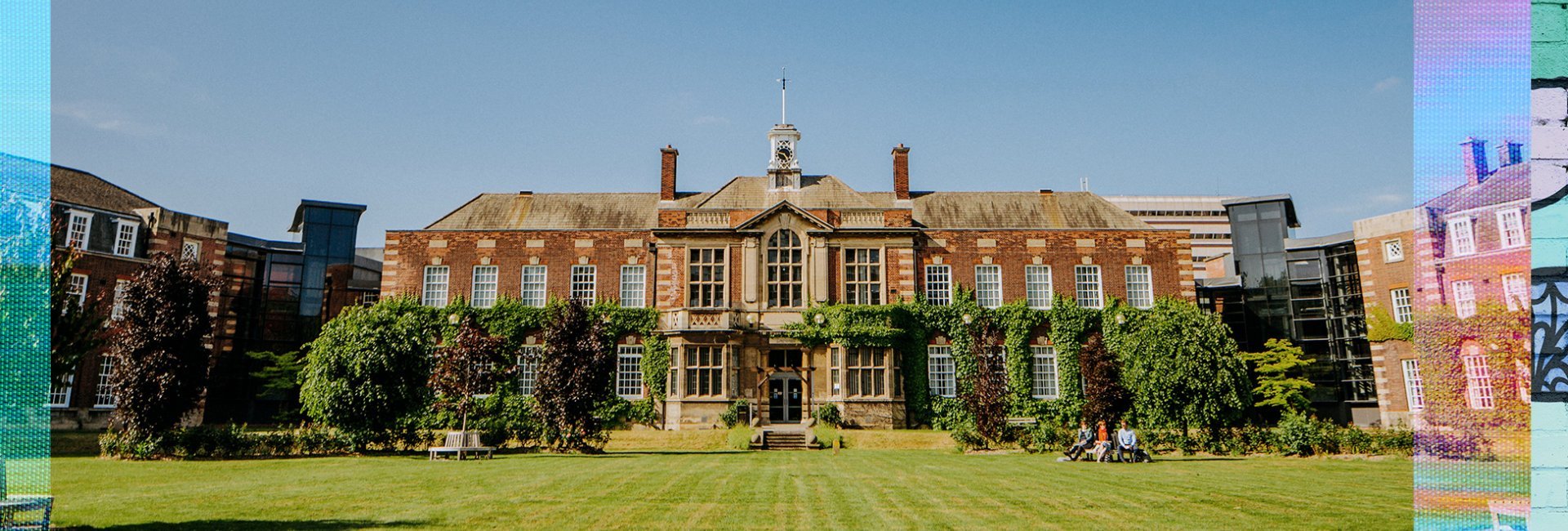
University of Hull - Open Day Event - 11th July 2026
11 Jul 2026, 09:00
Kingston upon Hull
Pursue your creative ambition – whether that’s as a peripatetic music teacher, a classroom music specialist, an animateur, or an arts practitioner working with diverse communities.
On our Music (Community and Education) degree, you'll study core skills such as curriculum design, project management, music theory, and music software to develop diverse musical and technical skills.
Through practical projects, your work will culminate in a large-scale project, becoming a stepping-stone for your career. You’ll benefit from our partnerships with Opera North and the Royal Philharmonic Orchestra (RPO), with the RPO offering masterclasses, career advice, one-to-one tuition and opportunities for work experience.
The BA Music (Community and Education) shares modules with the BA Music program, but focuses on community and education in assessments and specialist groups.
Why study at Hull?
Learn from performance-led staff: Our staff include experienced DJs, band members, stage performers and session musicians, who are actively making and performing music.
100% employability: A perfect 100% of our students are in work or further study 15 months after graduating.¹
Industry-standard facilities: Get exclusive access to our 400-seat concert venue, professional recording studios, ambisonic studios, and rehearsal spaces.
Where could this take me?
Our Music (Community and Education) degree will give you an advantage when it comes to finding a career in this fast-moving, competitive industry. You’ll graduate with a professional portfolio to boost your CV, and you’ll have access to our network of professional partners, offering opportunities for live projects, work experience, masterclasses, and more.
Career paths include becoming an animateur, music workshop leader, or community arts worker. Our graduates also go on to become teachers, youth workers, and music therapists.
¹ (Music) UK domicile full-time first degree leavers; Higher Education Graduate Outcomes statistics, for the academic year 2020/21, published by HESA June 2023.
Core modules include:   
 
Creating Recorded Music
Creating Live Music
Core Music Techniques
Music, Criticism and Culture
Music and its Histories
The Future of the Arts
Questioning Music
Working in Music
Optional modules include:
Professional Music Skills
Music & Sound for Media
You'll be assessed through a combination of written, practical and coursework assessments throughout your degree.
Written assessment typically includes exams and multiple choice tests.
Practical is an assessment of your skills and competencies. This could include presentations, school experience, work experience or laboratory work.
Coursework typically includes essays, written assignments, dissertations, research projects or producing a portfolio of your work.
The following entry points are available for this course:
Applicants should be at a minimum of Grade 7 standard in their instrumental or vocal studies. Musicians who can demonstrate performance at this level but who have not taken practical examinations are also encouraged to apply.
Applicants with other qualifications are welcome to apply.
| Test | Grade | Additional details |
|---|---|---|
| IELTS (Academic) | 6 | This course requires IELTS 6.0 overall, with at least 5.5 in each skill. For other English language proficiency qualifications accepted by the University please visit www.hull.ac.uk |
| Institution's Own Test | 60% overall (with minimum 55% in each skill) |
Please click below for a list of the English language qualifications we accept. https://www.hull.ac.uk/Choose-Hull/Study-at-Hull/Admissions/English-language-requirements.aspx
We’re helping more people to find their extraordinary.
Students often face barriers that make it more difficult for them to access higher education. That’s why we’ve introduced our contextual offers. By providing offers that take your background and experiences into account, we are helping to break down those barriers for all aspiring university students.
This section shows the range of grades students (with UK A-Levels or Pearson BTEC Level 3 National Extended Diplomas) who received offers were previously accepted with (learn more). It is designed to support your research but does not guarantee whether you will or won't get a place. Admissions teams consider various factors, including interviews, subject requirements, and entrance tests. Check all course entry requirements for eligibility.
We are unable to show previous accepted grades for this course. This could be because the course is new, it's a postgraduate course, there isn't enough historical data, or the provider has opted out of sharing their entry grades data for this course - learn more.
Operated by the Office for Students
Employment after 15 months (Most common jobs)
Go onto work and study
The number of student respondents and response rates can be important in interpreting the data – it is important to note your experience may be different from theirs. This data will be based on the subject area rather than the specific course. Read more about this data on the Discover Uni website.
| Location | Fee | Year |
|---|---|---|
| England | £9790 | Year 1 |
| Northern Ireland | £9790 | Year 1 |
| Scotland | £9790 | Year 1 |
| Wales | £9790 | Year 1 |
| Channel Islands | £9790 | Year 1 |
| Republic of Ireland | £9790 | Year 1 |
| International | £17500 | Year 1 |
Tuition fee status depends on a number of criteria and varies according to where in the UK you will study. For further guidance on the criteria for home or overseas tuition fees, please refer to the UKCISA website.
No additional fees or cost information has been supplied for this course, please contact the provider directly.
Admissions Office
Cottingham Road
Hull
HU6 7RX
Visit our website Visit our course page
Email:study@hull.ac.uk
Phone:01482 466100