Course contact details
Admissions (Undergraduate)
Email:admissions@stir.ac.uk
Phone:01786 467044
University of Stirling
Stirling
FK9 4LA

People and nature are inseparable. By studying ecology and conservation, you’ll be equipped to help tackle global challenges such as climate change, habitat loss and species decline.
Now is the ideal time to study an ecology and conservation degree. The global market for environmental, conservation and wildlife organisations is forecast to reach £31.61 billion ($41.45 billion) by 2029 (The Business Research Company April 2025). Government and parts of the private sector are both committed to solving environmental issues. This leads to a growing demand for ecology and conservation graduates.
The BSc (Hons) Ecology and Conservation course teaches you core science skills. It provides practical training in field, laboratory and analytical techniques.
On the course, you’ll:
Explore how animals, plants, fungi and microorganisms interact with their environment.
Study how people influence the biosphere.
Learn how to protect natural systems.
Understand the policies and management strategies that are designed to safeguard biodiversity and ecosystem services.
Develop in-demand computational and analytical skills, including:
Geographical Information Systems (GIS) for creating, managing and visualising spatial data.
Remote sensing techniques for monitoring environmental change.
Advanced statistical analysis using R.
You’ll carry out an independent research project on an ecological or environmental question. Past projects have included:
Assessing the implications of rewilding for freshwater biodiversity.
Examining the impacts of oil-palm dominated landscapes on plant communities.
Quantifying the response of biological communities to woodland restoration.
Our ecology and conservation course gives you practical fieldwork experience in different settings.
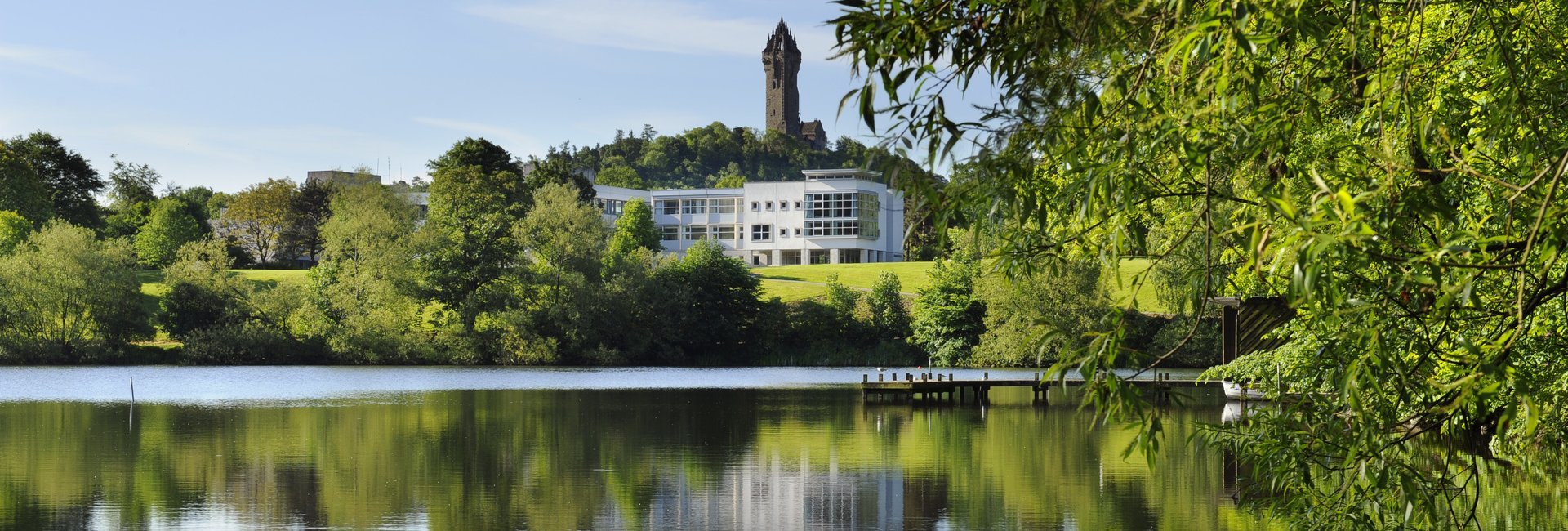
You’ll develop practical skills in a variety of environments, starting with our biodiverse campus. Short trips to nearby sites introduce you to environmental monitoring, flora and fauna identification, plant ecology, and landscape history and management.
You’ll also have the option to take part in one of our immersive residential field courses:
A 7-day field ecology and animal biology course at the Merops Field Station in southern France. It introduces you to the process of designing, conducting and analysing your own scientific project.
A 10-day field course to South Africa to develop your field research skills. It develops your understanding of different physical and environmental processes and ecosystem functioning. Learn about the conservation and management challenges of international landscapes.
These are the current locations for field trips, but they are subject to change.
On either trip you’ll gain knowledge on:
Regional biogeography
Ecosystem processes
Anthropogenic impacts
Conservation practices
Anthropogenic impacts
The course fees do not include travel, accommodation, and subsistence on residential field courses.
You can take an optional placement with an organisation working in conservation or environmental management. These include environmental charities, government agencies and industry partners.
Previous students have completed placements with:
Royal Society for the Protection of Birds (RSPB)
Highland Wildlife Park
Butterfly Conservation
Bumblebee Conservation Trust
Scottish Water
Bat Conservation Trust
Royal Botanic Garden Edinburgh
Water of Leith Conservation Trust
The Conservation Volunteers
Forest Research
The following entry points are available for this course:
| Test | Grade | Additional details |
|---|---|---|
| IELTS (Academic) | 6 | Obtain IELTS 6.0 with 5.5 minimum in each skill or equivalent. |
If you don’t meet the entry requirements there are English language courses which can help you prepare for your degree: https://www.stir.ac.uk/international/international-students/pre-sessional-english-language-courses/https://www.stir.ac.uk/international/international-students/english-language-requirements/
The minimum grade requirements apply to specific categories of 'widening access' applicants domiciled in Scotland who may be eligible for a contextual offer.
This section shows the range of grades that students who received offers were previously accepted on to this course with (learn more).
It is designed to support your research but does not guarantee whether you will or won't get a place.
Admissions teams consider various factors, including interviews, subject requirements, and entrance tests. Check all course entry requirements for eligibility.
Historical entry grades data is not currently available for University of Stirling - we are working with them to try and make it available soon - learn more.
This report uses your grades to show how students with similar results have done when applying to this course in the past. Sometimes, there isn’t data for every possible set of grades. When that happens, universities and colleges occasionally fill in the gaps for sets of grades that are typically accepted.
| Location | Fee | Year |
|---|---|---|
| England, Wales, Northern Ireland, Channel Islands & Republic of Ireland | £10050 | |
| Scotland | £1820 |
Tuition fee status depends on a number of criteria and varies according to where in the UK you will study. For further guidance on the criteria for home or overseas tuition fees, please refer to the UKCISA website.
Scottish students can apply to the Student Award Agency for Scotland (SAAS) to have tuition fees paid by the Scottish government.
Students from the rest of the UK can apply for financial assistance, including a loan to cover the full cost of the tuition fees, from the Lifelong Learning Entitlement (LLE).
Fee information for International and EU students, can be found on the course webpage:
https://www.stir.ac.uk/courses/
The University of Stirling offers a range of scholarships, further information can be found on our website: https://www.stir.ac.uk/scholarships/
Email:admissions@stir.ac.uk
Phone:01786 467044
Stirling
FK9 4LA
At University of Stirling