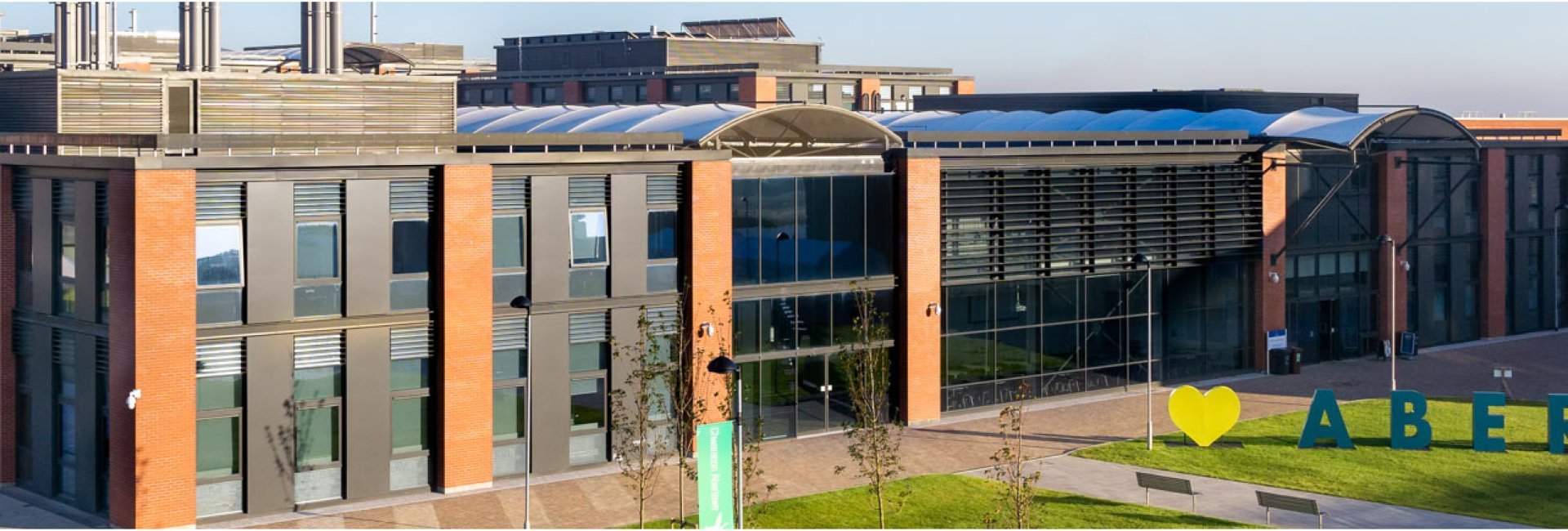
Undergraduate On-Campus Open Day at Swansea University - Singleton Park Campus and Bay Campus - 13 June 2026
13 Jun 2026, 07:30
Swansea
If you’re worried about meeting our entry requirements, why not consider the LLB Law with a Foundation Year. The Foundation Year gives you an exciting introduction to higher education, setting you up with the skills, confidence, and knowledge that you’ll need to be successful on your undergraduate degree. It’s ideal if you need a little more support after further education or are returning to education after a gap. The Foundation Year (level 3) will be delivered by The College, Swansea University (TCSU) on the Bay Campus. Years 2-4 (levels 4-6) will be delivered by the School of Law on the Singleton Campus.
The LLB programme at Swansea University has been carefully designed to be an intellectually rigorous and innovative programme that prepares you for a wide range of careers.
Grounded in a commitment to academic excellence, and informed by research, the programme combines both theory and practice, enabling you to gain a detailed understanding of how the law works within its broader social, political and economic context. You will be required to critically engage with legal principles and their impact on society, developing analytical thinking, ethical reasoning, and a global perspective.
You will gain a comprehensive understanding of the foundations of legal knowledge, including Contract Law, Tort Law, Criminal Law, Public Law, Land Law, Equity and Trusts, and EU Law. These core subjects satisfy the academic stage of training required by the Bar Standards Board, and provide a strong basis for those wishing to take the Solicitors Qualifying Examination (SQE).
As your studies progress, you can tailor your degree through a wide range of optional modules in areas such as Human Rights, Medical Law, Cybercrime, Environmental Law, Family Law and World Trade. This flexibility allows you to pursue your interests whilst developing specialist expertise.
Our LLB programme places a strong emphasis on equipping you with the skills necessary for professional life. The curriculum is carefully designed to reflect the evolving landscape of legal education, including the changes introduced by the Solicitors Qualifying Examination (SQE), while maintaining the value of a traditional law degree.
You will be supported throughout the programme in developing a broad range of skills, such as legal writing, oral presentation and problem-solving. The inclusion of multiple-choice question (MCQ) assessments, which are a key feature of the SQE, ensures that you are prepared for contemporary professional requirements.
Opportunities to gain real-world experience are embedded throughout the degree, including participation in the Law Clinic, where you can provide advice to clients under supervision, and there are opportunities to take part in mooting, negotiation, and client interviewing competitions.
In Year 0, you will typically study areas including: Critical Thinking; Legal Skills; Foundations in Law; Criminal Law; Contract law; Tort Law.
In Year 1, you will typically study areas including: Public Law; Law Professionalism and Ethics; Contract Law; Tort Law.
In Year 2, you will typically study areas including: Equity and Trusts; Commercial Sales; Environmental Law 1 - Regulatory Law Approaches; Medical Law; Negotiations; Human Rights Law; Foundations in Legal Practice; Media Law; Criminal Law; Land Law.
In Year 3, you will typically study areas including: Employment Law: Rights and Obligations; Counter-terrorism Law; Criminal Evidence; Cybercrime; Law Dissertation; Clinical Legal Education; Law of Succession; World Trade Law; Employment Law: Enforcing Rights.
We offer a variety of assessment methods within our programmes.
In addition to traditional examinations and essays, examples of alternative assessment may include:
• Writing a letter of advice to a client
• Preparing a legal briefing
• Blog and poster writing
• Group-based tasks
• Oral presentations
Throughout your undergraduate law degree, you will develop excellent research and analytical skills and learn to present your ideas effectively both verbally and in writing.
For a full breakdown of course structure and assessment please visit our course pages at: www.swansea.ac.uk/undergraduate/courses/law or get in touch with us at study@swansea.ac.uk
The following entry points are available for this course:
If you are an International Student, please visit our International pages for more information about entry requirements: http://www.swansea.ac.uk/international/students/requirements/
Discover what it's like to study Law with a Foundation Year at Swansea University: insights on the course, making friends, personal statement tips, uni prep, and recommended books, podcasts, and videos.
Swansea University accepts the Advanced Skills Baccalaureate Wales as fully equivalent to x1 A-Level.
English Language Requirements at Swansea Universityhttps://www.swansea.ac.uk/admissions/english-language-requirements/
UK applicants who meet course requirements are guaranteed a conditional offer. We assess applications on individual merit. We consider making reduced offers, eg. to Care Leavers or students with extenuating circumstances. We encourage you to disclose any relevant circumstances.
The Advanced Skills Baccalaureate Wales is considered as equivalent to one full A-Level and students can take x2 A-levels alongside this. EPQ students predicted Grade B or above will receive a one-grade offer reduction.
This section shows the range of grades that students who received offers were previously accepted on to this course with (learn more).
It is designed to support your research but does not guarantee whether you will or won't get a place.
Admissions teams consider various factors, including interviews, subject requirements, and entrance tests. Check all course entry requirements for eligibility.
We are unable to show previous accepted grades for this course. This could be because the course is new, it's a postgraduate course, there isn't enough historical data, or the provider has opted out of sharing their entry grades data for this course - learn more.
No fee information has been provided for this course
Tuition fee status depends on a number of criteria and varies according to where in the UK you will study. For further guidance on the criteria for home or overseas tuition fees, please refer to the UKCISA website.
For the latest fee information, please check the individual course page on our website. Our full range of programmes are listed here: https://www.swansea.ac.uk/undergraduate/courses/
Further information on tuition fees can be found here: https://www.swansea.ac.uk/undergraduate/fees-and-funding/tuition-fees/
You may be eligible for funding to help support your study.
To find out about scholarships, bursaries and other funding opportunities that are available please visit the University's scholarships and bursaries page https://www.swansea.ac.uk/undergraduate/scholarships/
Academi Hywel Teifi at Swansea University and the Coleg Cymraeg Cenedlaethol offer a number of generous scholarships and bursaries for students who wish to study through the medium of Welsh or bilingually. For further information about the opportunities available to you, visit the Academi Hywel Teifi Scholarships and Bursaries page https://www.swansea.ac.uk/academi-hywel-teifi/learn/scholarships/
Ask us a question - undergraduate enquiries.
Email:study@swansea.ac.uk
Phone:01792 295111
Singleton Park
Swansea
SA2 8PP
At Swansea University