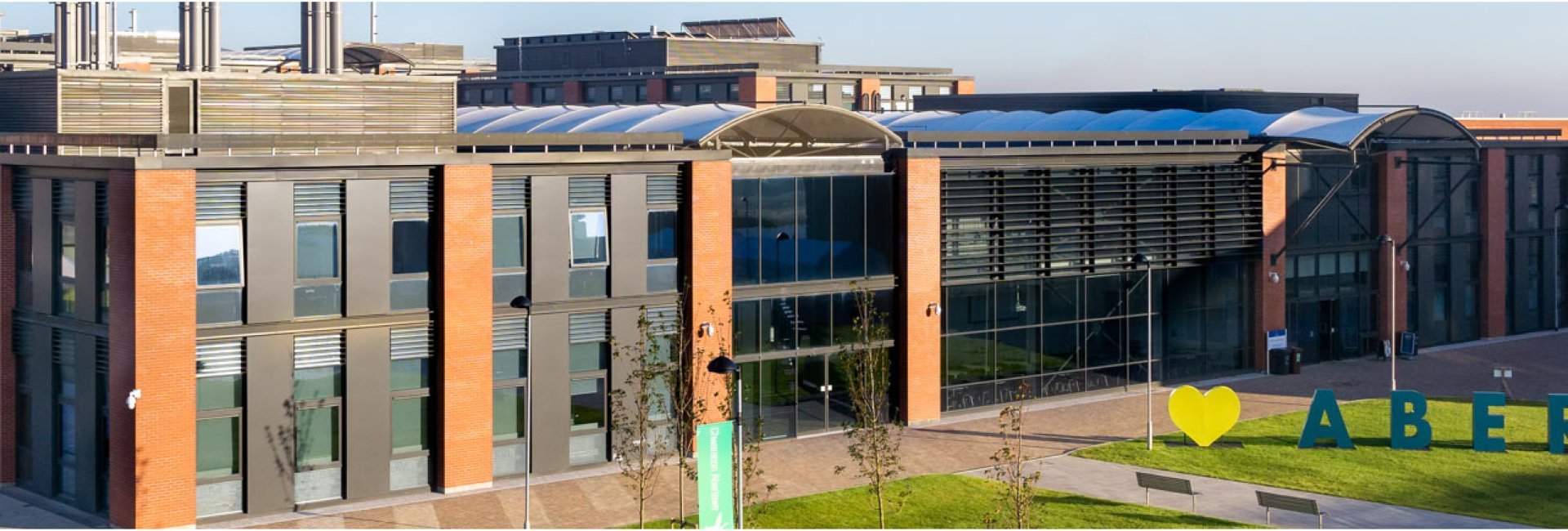
Undergraduate On-Campus Open Day at Swansea University - Singleton Park Campus and Bay Campus - 13 June 2026
13 Jun 2026, 07:30
Swansea
BSc Sport & Exercise Science at Swansea provides you with a solid foundation in understanding, measuring and enhancing human performance and health across diverse contexts – from elite sport to public health and clinical settings.
Our course combines scientific rigour with practice-informed education, empowering you to enhance performance, health and wellbeing across diverse communities. You will study core disciplinary science, such as physiology, biomechanics, psychology, nutrition and ethics, and apply your learning across a range of settings, including laboratories and placements.
You will benefit from a research-led, practice-informed curriculum, developing scientific literacy, ethical awareness, and professional skills, guided each step of the way by our expert academic team.
As you progress through our course, you will have the option to tailor your studies to align with your interests, career plans, or future study, and open the door to progressive opportunities, such as applied learning, placements and research.
BSc Sport & Exercise Science at Swansea University is an Undergraduate Endorsed Course by The Chartered Association of Sport and Exercise Sciences (CASES).
s a BSc Sport & Exercise student at Swansea University, you will have access to specialist laboratories and applied settings that mirror contemporary sport, health and performance environments. You will experience cutting-edge facilities, such as:
Our Biomechanics Lab - featuring multicamera motion capture, force platforms, and wearable sensors.
Our Exercise Physiology Lab - supporting cardiopulmonary assessments, blood collection and analysis, muscle strength and function testing, vascular function testing and environmental physiology.
You will experience a blend of hands-on practical sessions, problem-based learning, and data-driven analysis using industry-standard software and technologies. Your experience will be further enriched through guest lectures, live projects and opportunities for placements and internships that will allow you to connect theory to real-world practice.
This programme includes opportunities to undertake a Year Abroad, enhancing your learning and offering invaluable life experience.
In Year 1, you will typically study areas including: Core Skills I: Research Methods & Ethics in Sport Science; Biomechanics I: Fundamentals and Analytical Techniques; Physiology I: Human Body Systems and Functions; Performance I: Introduction to Sports Performance Science; Psychology I: Foundations in Sport and Exercise; Health I: Metabolic Principles in Sport and Health.
In Year 2, you will typically study areas including: Core Skills II: Research and Professional Development; Performance II: Application of Performance Science to Elite Sport; Psychology II: Concepts in Sport and Exercise Psychology; Physiology II: Exercise Responses and Adaptations in Human Systems; Ethics and Philosophy I: Drug Ethics in Sport; Biomechanics II: Advanced Measurement and Technology in Sport; Nutrition I: Foundations and Challenges in Nutrition for Sport and Health; Health II: Integrated Approaches to Health and Physical Activity.
In Year 3: Modules will be dependent on which partnership University you choose to study at.
In Year 4, you will typically study areas including: Sport and Exercise Sciences Research Dissertation; Sport, Diet and Disease; Paediatric Exercise Science; Sport Integrity, Ethics and Policy; Applied Biomechanics of Human Performance; Health Related Exercise; Applied Sport Psychology; Sport and Exercise Physiology.
We are proud to provide an outstanding educational experience, using the most effective learning and teaching approaches, carefully tailored to suit the specific needs of your course. Apart from a small number of online-only courses, most of our courses consist of in-person, on-campus teaching, enabling full engagement with your lecturers and fellow students. Practical skills sessions, lab work seminars, and workshops predominantly take place in person, allowing for group working and demonstrations. We also operate virtual labs and Simulated Learning Environments which will facilitate greater access to training opportunities in the future. However, our approach also includes the use of some online learning to support and enhance traditional face-to-face teaching. Online learning may take place ‘live’ using software such as Zoom, allowing you to interact with the lecturer and other students and to ask questions. Lecture recordings also allow for more flexibility to revisit material, to revise for assessments and to enhance learning outside of the classroom. Some modules have extra resources in Canvas, such as videos, slides and quizzes enabling further flexible study. This course may offer some modules taught through the medium of Welsh or bilingually for students who consider themselves to be fluent Welsh speakers. For more details on the provision available see the Welsh Provision expander below.
Professionally accredited courses provide industry-wide recognition of the quality of your qualification.
The following entry points are available for this course:
If you are an International Student, please visit our International pages for more information about entry requirements: http://www.swansea.ac.uk/international/students/requirements/
Discover what it's like to study Sport & Exercise Science with a Year Abroad at Swansea University: insights on the course, making friends, personal statement tips, uni prep, and recommended books, podcasts, and videos.
Recommended subjects include: Maths; Biology; Physics; Chemistry; PE or Psychology. However, individual profiles will be considered on a case by case basis.
To include B at A Level Mathematics. Must be in relevant subject. If student is not taking A Level Mathematics, they must achieve a minimum D in ‘Mathematics for Technicians’ and D in ‘Further Mathematics for Technicians’ modules of the BTEC. Students are also required to have minimum two A grades at GCSE, to include a minimum grade B in Mathematics and two other Science subjects.
Considered on an individual basis.
To include 5 at Higher Level or 6 at Standard Level Mathematics and 4 at Higher Level or 5 at Standard Level English Language.
Swansea University accepts the Advanced Skills Baccalaureate Wales as fully equivalent to x1 A-Level.
Accepted in lieu of one non-subject specific grade at A Level.
We recognise the EPQ as an excellent indicator of success.
If you are predicted a grade B or above in the EPQ, you will receive an offer with a one
grade reduction, to include your EPQ with a grade B.
GCSEs: Mathematics C, English Language C.
English Language Requirements at Swansea Universityhttps://www.swansea.ac.uk/admissions/english-language-requirements/
UK applicants who meet course requirements are guaranteed a conditional offer. We assess applications on individual merit. We consider making reduced offers, eg. to Care Leavers or students with extenuating circumstances. We encourage you to disclose any relevant circumstances.
The Advanced Skills Baccalaureate Wales is considered as equivalent to one full A-Level and students can take x2 A-levels alongside this. EPQ students predicted Grade B or above will receive a one-grade offer reduction.
This section shows the range of grades that students who received offers were previously accepted on to this course with (learn more).
It is designed to support your research but does not guarantee whether you will or won't get a place.
Admissions teams consider various factors, including interviews, subject requirements, and entrance tests. Check all course entry requirements for eligibility.
We are unable to show previous accepted grades for this course. This could be because the course is new, it's a postgraduate course, there isn't enough historical data, or the provider has opted out of sharing their entry grades data for this course - learn more.
No fee information has been provided for this course
Tuition fee status depends on a number of criteria and varies according to where in the UK you will study. For further guidance on the criteria for home or overseas tuition fees, please refer to the UKCISA website.
For the latest fee information, please check the individual course page on our website. Our full range of programmes are listed here: https://www.swansea.ac.uk/undergraduate/courses/
Further information on tuition fees can be found here: https://www.swansea.ac.uk/undergraduate/fees-and-funding/tuition-fees/
You may be eligible for funding to help support your study.
To find out about scholarships, bursaries and other funding opportunities that are available please visit the University's scholarships and bursaries page https://www.swansea.ac.uk/undergraduate/scholarships/
Academi Hywel Teifi at Swansea University and the Coleg Cymraeg Cenedlaethol offer a number of generous scholarships and bursaries for students who wish to study through the medium of Welsh or bilingually. For further information about the opportunities available to you, visit the Academi Hywel Teifi Scholarships and Bursaries page https://www.swansea.ac.uk/academi-hywel-teifi/learn/scholarships/
Ask us a question - undergraduate enquiries.
Email:study@swansea.ac.uk
Phone:01792 295111
Singleton Park
Swansea
SA2 8PP
At Swansea University