Skip navigation

Philosophy and Politics with a Year Abroad

Course details
  • BA
  • 4 Years
  • Full-time with time abroad
  • 21 September 2026
  • Undergraduate
Course location
Singleton Park Campus

Course summary

Some of the major issues in recent times, such as the cost-of-living crisis, Brexit, the American presidency of Trump, climate change and Covid-19, have not only generated substantial interest in politics, but have also prompted reflection on key philosophical concepts such as democracy, freedom, truth and justice.

The BA Philosophy and Politics degree at Swansea University enables you to explore fundamental questions about the world around us and the kind of society that we want to live in. These include what it means to be free, the most desirable form of democracy, the nature of the self, and how to live a morally good life. You will also be able to engage with more theoretical issues, such as debates about truth and reality, whilst learning about political methodologies and political institutions.

The programme also offers you opportunities to develop a range of important skills, such as critical reasoning, argument development, and ethical and political analysis. By exploring the ways that philosophy and politics connect, and how they can be combined, you will be able to understand, and engage with, the major social challenges that we face.

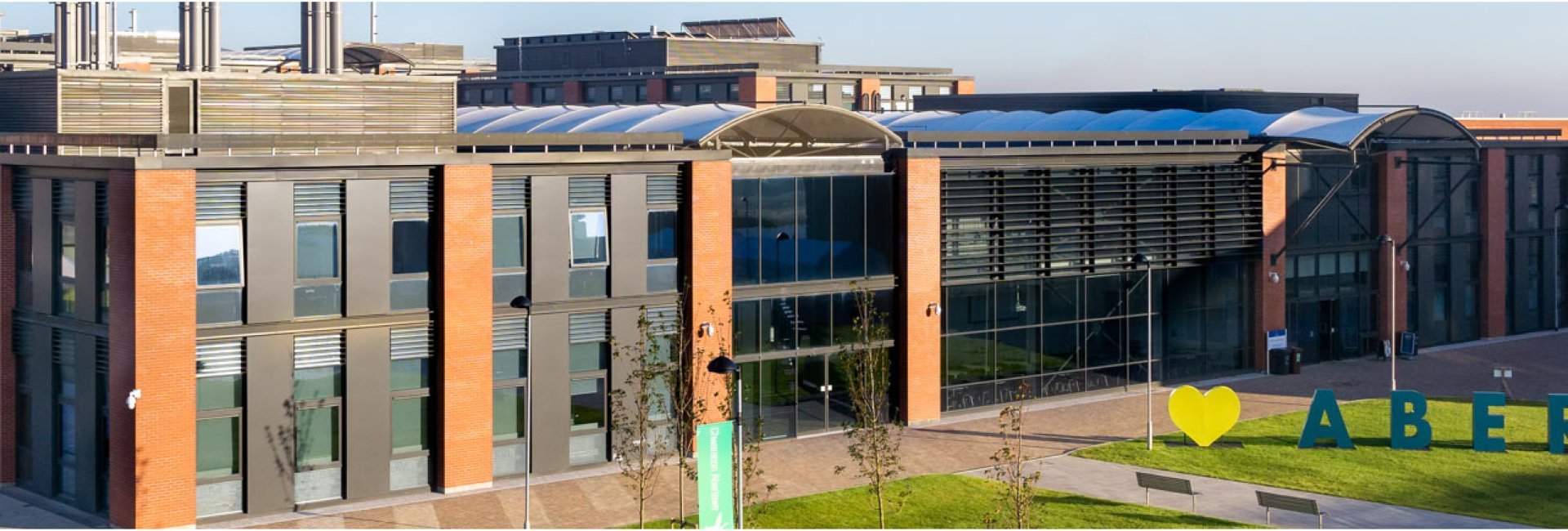
You will study at our Singleton Park Campus, in beautiful parkland, overlooking Swansea Bay on the edge of the Gower Peninsula.

The first year of the programme offers a grounding in core topics in politics and philosophy, including areas such as political philosophy, which sits at the intersection of the two subjects, and demonstrates the important ways in which they can combine and enrich each other. Other modules will introduce you to essential political and research methods, alongside data analysis. This provides a fundamental basis in philosophy and politics, which is built upon in each subsequent year.

In years two and three, you can explore how philosophical visions of ideal societies have been formulated throughout the history of Western society, examining historical attempts to realise these ideals. Other modules will explore historical and contemporary issues across politics and philosophy, and will also consider how equality intersects with economic and political policy, and decision-making.

Reflecting the nature of philosophy and politics, the primary mode of assessment is written essays, in which you can undertake detailed analysis of existing philosophical ideas and arguments, as well as developing your own. However, the programme includes a diverse range of assessment types, including paired critical exchanges, policy reports and analyses, group presentations, audio-visual dialogues, reading diaries and oral exams. These are designed to foster your effective communication skills across a range of media and formats, as well as team-working skills and technological competencies.

This programme includes opportunities to undertake a Semester or Year Abroad, enhancing your learning and offering invaluable life experience.

This course also offers you the opportunity to spend a Year in Industry, in the UK or overseas, enabling you to gain valuable workplace experience. The University advocates for paid-only placements, which on average have a salary of over £20,000. Unpaid placements are considered on a case-by-case basis.

Modules

In Year 1, you will typically study areas including: Interpreting Politics: The Faces and Uses of Power; Foundations in Social Sciences Research and Academic Skills; Disinformation, Ideology, and Bias: Researching and examining political data; Freedom, Justice and Equality: Key Debates in Political Philosophy; Critical Reasoning; Living Well and Doing Good: An Introduction to Ethics.

In Year 2, you will typically study areas including: Global Justice and Human Rights in the Age of Globalisation; The History of Political Thought; Philosophy of the Enlightenment; Philosophy of Mind; The State and Political Institutions; America in Crisis: From the Tet Offensive to Trump; Plato's Republic; A Matter of Life and Death: Exploring Existential Philosophy; Contemporary Moral Controversies; Global Summit Simulation; British Politics and Public Policy.

In Year 3: Modules will be dependent on which partnership University you choose to study at.

In Year 4, you will typically study areas including: Dissertation; The Philosophy and Politics of Identity; Philosophy, Mental Health and Illness; Philosophy of Mind; Researching Politics; Capitalism and Justice; Genocide; Plato's Republic; Reality and Cognition: Topics in Metaphysics and Epistemology; Global Environmental Politics.

Assessment method

We offer a variety of assessment methods within our programmes. In addition to traditional examinations and essays, examples of alternative assessment include:

• Presentations
• Group Work
• Original Writing

Throughout your undergraduate Philosophy and Politics degree, you will develop excellent research and analytical skills and learn to present your ideas effectively both verbally and in writing.

How to apply

Apply by
14 January

This is the deadline for applications to be completed and sent for this course. If the university or college still has places available you can apply after this date, but your application is not guaranteed to be considered.

Application codes

Course code:
LV8A
Institution code:
S93
Campus name:
Singleton Park Campus
Campus Code:
-

Points of entry

The following entry points are available for this course:

  • Year 1

International applicants

If you are an International Student, please visit our International pages for more information about entry requirements: http://www.swansea.ac.uk/international/students/requirements/

Open days

Entry requirements

UCAS Tariff
120 points

A level
BBB

International Baccalaureate Diploma Programme
32 points

International students will also require a score of 4 at Higher Level English Language or Literature, or 5 at Standard Level English Language or Literature.

WJEC Level 3 Advanced Skills Baccalaureate Wales

Swansea University accepts the Advanced Skills Baccalaureate Wales as fully equivalent to x1 A-Level.

Welsh Baccalaureate - Advanced Skills Challenge Certificate (last awarded Summer 2024)

Swansea University will accept the Welsh Baccalaureate - Advanced Skills Challenge Certificate as fully equivalent to one A-Level.

Leaving Certificate - Higher Level (Ireland) (first awarded in 2017)
H3, H3, H3, H3, H3, H3

English language requirements

For applicants whose first language is not English we require a minimum overall IELTS score of 6.0 (or equivalent) and no less than 5.5 in each component.

English Language Requirements at Swansea Universityhttps://www.swansea.ac.uk/admissions/english-language-requirements/

Contextual admissions

Universities and colleges consider more than grades when assessing applications and may make offers based on a range of criteria. Learn more about contextual offers.

UK applicants who meet course requirements are guaranteed a conditional offer. We assess applications on individual merit. We consider making reduced offers, eg. to Care Leavers or students with extenuating circumstances. We encourage you to disclose any relevant circumstances.

The Advanced Skills Baccalaureate Wales is considered as equivalent to one full A-Level and students can take x2 A-levels alongside this. EPQ students predicted Grade B or above will receive a one-grade offer reduction.

Learn more on the Swansea University website

Historical entry grades data

This section shows the range of grades that students who received offers were previously accepted on to this course with (learn more).

It is designed to support your research but does not guarantee whether you will or won't get a place.

Admissions teams consider various factors, including interviews, subject requirements, and entrance tests. Check all course entry requirements for eligibility.

Not enough data available

We are unable to show previous accepted grades for this course. This could be because the course is new, it's a postgraduate course, there isn't enough historical data, or the provider has opted out of sharing their entry grades data for this course - learn more.

Fees and funding

Tuition fees

No fee information has been provided for this course

Tuition fee status depends on a number of criteria and varies according to where in the UK you will study. For further guidance on the criteria for home or overseas tuition fees, please refer to the UKCISA website.

Additional fee information

For the latest fee information, please check the individual course page on our website. Our full range of programmes are listed here: https://www.swansea.ac.uk/undergraduate/courses/

Further information on tuition fees can be found here: https://www.swansea.ac.uk/undergraduate/fees-and-funding/tuition-fees/

Sponsorship information

You may be eligible for funding to help support your study.

To find out about scholarships, bursaries and other funding opportunities that are available please visit the University's scholarships and bursaries page https://www.swansea.ac.uk/undergraduate/scholarships/

Academi Hywel Teifi at Swansea University and the Coleg Cymraeg Cenedlaethol offer a number of generous scholarships and bursaries for students who wish to study through the medium of Welsh or bilingually. For further information about the opportunities available to you, visit the Academi Hywel Teifi Scholarships and Bursaries page https://www.swansea.ac.uk/academi-hywel-teifi/learn/scholarships/

Like this page