Course contact details
Main Contact
Email:admissions@rcs.ac.uk
Phone:0141 332 4101
Fax: 0141 332 8901
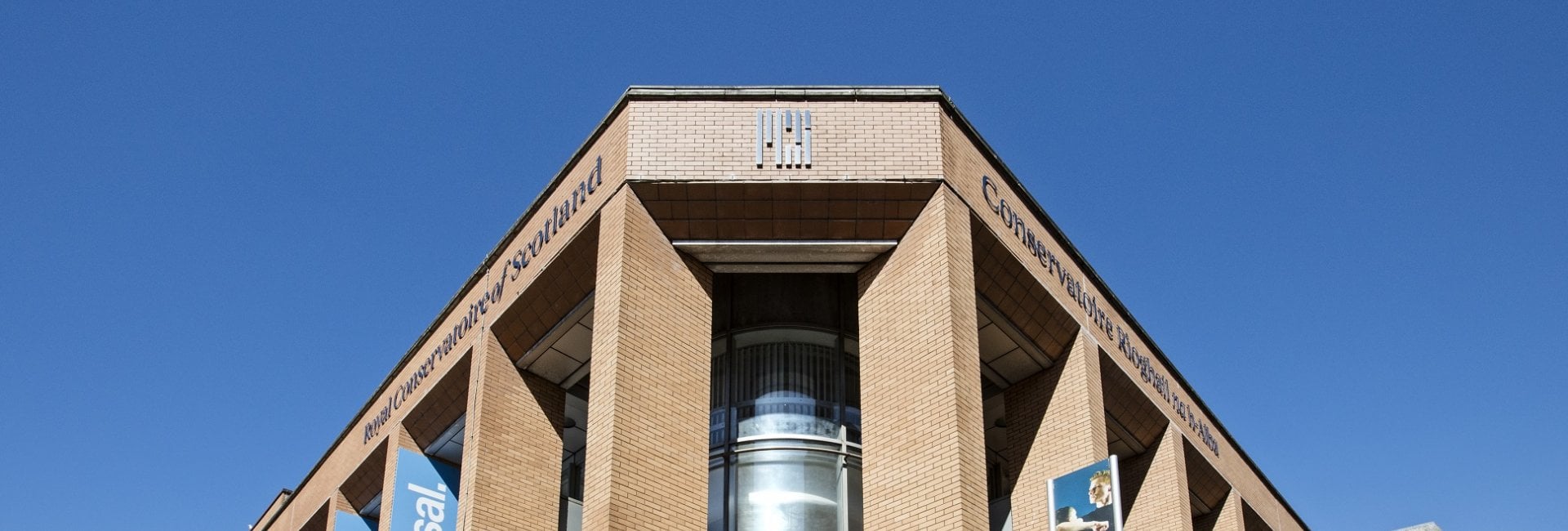
Royal Conservatoire of Scotland
100 Renfrew Street
Glasgow
G2 3DB

Get your ideas on screen: Our filmmaking course is highly relevant and produces graduates with the required industry-specific knowledge and experience to succeed.
BA Filmmaking is a practical filmmaking programme aimed at those passionate about storytelling in cinema and television. It is a rich and challenging environment for students keen to develop their storytelling skills in a specialist area.
The programme will let you dive deep into your chosen specialism and work collaboratively with peers in practical settings. You will choose one of the following specialisms across three years:
Cinematography
Directing
Editing
Production
Sound
Writing
BA Filmmaking has critical thinking and professional development at its core. Our workshops and seminars are designed to enhance your ability to appreciate what has gone before as you craft the stories of the future. You will benefit from industry contacts, attend masterclasses, and gain tuition from industry practitioners. We will help you develop as collaborators to work on student films, tell stories and advance your skills. The programme allows regular opportunities to share work with your peers and the staff team throughout your degree.
We do not accept deferred entry for this programme.
Audition Information
You must select a specilism at the point of entry (via your Acceptd application). There is a two round audition process to this programme, with set tasks and folio submissions, relevant to your specialism required for each round. For detailed information on what to prepare, please see our website for more details.
This course offers the following subject options:
Overview
BA Filmmaking is a practical filmmaking programme aimed at those passionate about storytelling in cinema and television. It is a rich and challenging environment for students keen to develop their storytelling skills in a specialist area.
The programme will let you dive deep into your chosen specialism and work collaboratively with peers in practical settings. The programme will let you choose your specialism across three years:
Cinematography
Directing
Editing
Production
Sound
Writing
Year 1
After getting a taster of all the specialisms at the beginning of Term 1, you will engage with your specialist area. Each teaching week will have a day of specialist teaching, a directed study day, and a self-study day.
Directed study days will embrace many different types of opportunities to develop your craft technically, as well as working with crew members from other areas. This will help you develop collaborative skills and put what you have learned in class into practice.
In your specialist area, you will crew small projects. You will also work on a second year production. This will begin your journey of developing the necessary skills as an assistant and working on a set. You will also work on an academic project that will give context to your practice and develop your ability to place what you do in a historical context.
Year 2
You will continue to develop in your specialist area by applying knowledge in deepening layers and different
environments. You will continue to work in various formats during directed study slots and on bigger productions in your specialist role. You will manage Year 1 students who are crewed to your department. You are also expected to step into an assistant role on a Year 3 production.
Academic progress continues in the form of a larger piece of work. Your Professional Development module will focus on reaching out to the industry in preparation for your work placement in Year 3.
Year 3
This year will focus on your portfolio and the transition into the industry. You will continue to work in your specialist area while preparing for your role on a final year film. We expect you to gain work placement(s) that will enhance your professional development and to lead a department on a production. You will use your knowledge and experience to manage a team, apply your creative and technical skills, and demonstrate how you can work as an effective collaborator.
https://www.rcs.ac.uk/courses/ba-filmmaking/#programme-structure
Please see our website for more information about this course.
The following entry points are available for this course:
More information about alternative entry requirements can be found at the link. https://royal-cons-scotland-assets.s3.amazonaws.com/uploads/2024/03/EU-and-International-Entry-Requirements.pdf
| Test | Grade | Additional details |
|---|---|---|
| IELTS (Academic) | 6.5 | 6.5 with no component below 5.5 |
| TOEFL (iBT) | 88 | Overall score of 88, with minimum scores of: Reading – 18, Listening – 17, Speaking – 20, Writing – 17 |
| PTE Academic | 62 | Overall score of 62 with a minimum of 59 in all components (reading, listening, speaking, writing) |
| Cambridge English Advanced | Overall score of 176 with a minimum of 162 in all components | |
| Cambridge English Proficiency | Overall score of 176 with a minimum of 162 in all components |
https://www.rcs.ac.uk/study/international-students/english-requirements/
This section shows the range of grades that students who received offers were previously accepted on to this course with (learn more).
It is designed to support your research but does not guarantee whether you will or won't get a place.
Admissions teams consider various factors, including interviews, subject requirements, and entrance tests. Check all course entry requirements for eligibility.
We are unable to show previous accepted grades for this course. This could be because the course is new, it's a postgraduate course, there isn't enough historical data, or the provider has opted out of sharing their entry grades data for this course - learn more.
This report uses your grades to show how students with similar results have done when applying to this course in the past. Sometimes, there isn’t data for every possible set of grades. When that happens, universities and colleges occasionally fill in the gaps for sets of grades that are typically accepted.
| Location | Fee | Year |
|---|---|---|
| England, Wales, Northern Ireland, Channel Islands & Republic of Ireland | £9790* | |
| Scotland | £1820* | |
| EU & International | £29786* |
* This is a provisional fee and subject to change.
Tuition fee status depends on a number of criteria and varies according to where in the UK you will study. For further guidance on the criteria for home or overseas tuition fees, please refer to the UKCISA website.
Please note, all new students are required to pay associated programme cost related fees at the start of their studies.
For more information on fees, funding and Scholarship, please see our website.
The School of Stage and Screen scholarships are awarded for a mixture of financial need and merit. Scholarships are applied for and awarded on an annual basis. If you are offered a place at the Conservatoire, you will be sent the relevant link to apply for a Scholarship.
Email:admissions@rcs.ac.uk
Phone:0141 332 4101
Fax: 0141 332 8901
100 Renfrew Street
Glasgow
G2 3DB
At Royal Conservatoire of Scotland