Precision Crop Technology is widely accepted as the future of UK and global farming, helping farmers optimise inputs to feed a growing global population. This course will future proof your learning, preparing you for a career in the ever-changing agricultural sector.
You will learn about a wide variety of components, such as data sensors, connected devices and remote-control tools to ensure you are ready for employment. The course aims to optimise field-level management with regard to crop science (by matching farming practices more closely to crop needs e.g. fertilizer inputs) and environmental protection (by reducing environmental risks and footprint of farming e.g. limiting leaching of nitrogen). You will make use of satellite technology allowing real-time management of crops and fields, to monitor and reduce the environmental impact of farming.
What will I study?
Year 1
-
Academic, Employment and Professional Skills
-
Fundamentals of Business
-
Industry Skills for Agriculture
-
Precision Crop Technology
-
Mechanisation
-
Plant and Soil Science
-
Crop Production
Year 2
-
Robotics and Automated Technology
-
Agronomy
-
Agriculture and the Environment
-
Financial Management and Planning
-
Precision Technology in the Wider Sector
-
Enterprise and Entrepreneurship
-
Introductory Research Analysis.
Learning and Teaching Approach
The programme is delivered with a variety of learning and teaching approaches. For all modules, there are theory lectures delivered, aimed to deliver the core content, provide the underpinning knowledge and facilitate further expansion of such concepts by the students, through independent study.
To complement the theory lectures, students have group seminars that are used to reinforce those concepts delivered theoretically. The seminars focus on delivering using a student-centred approach to enhance the independent learning that takes place outside of the classroom
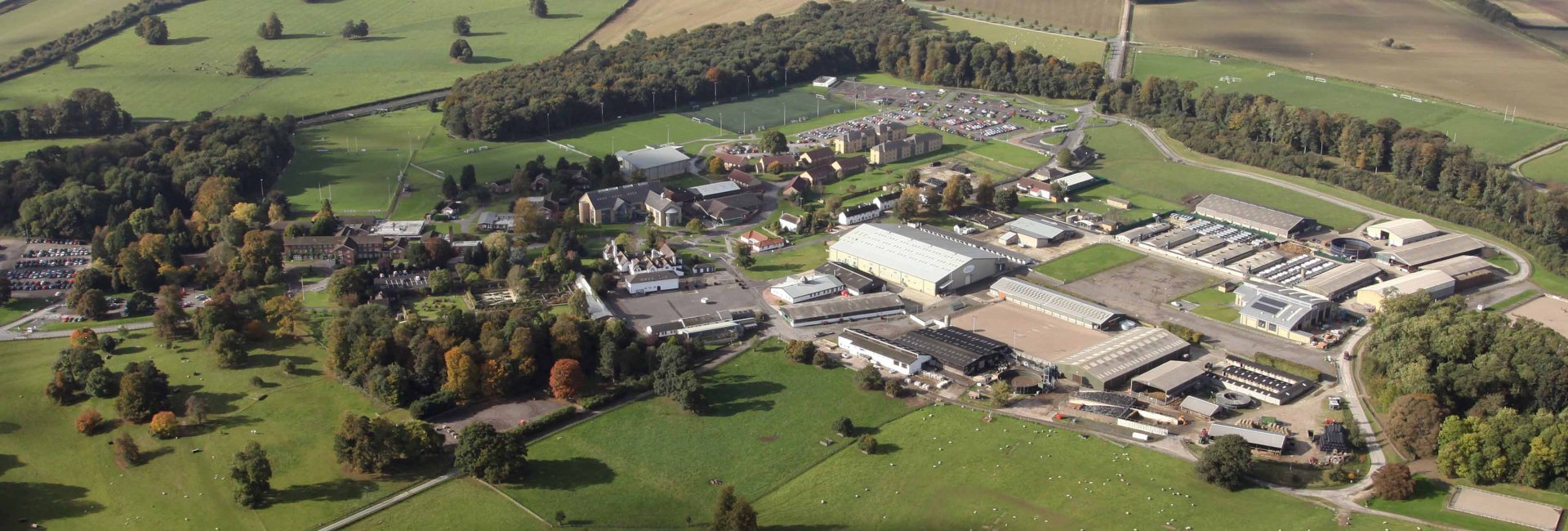
Practical sessions both at the Bishop Burton and Riseholme College Farms are also incorporated into a range of modules on this programme making it extremely applied and prepares students effectively for the workplace. The academic curriculum provided by the programme is supported throughout by the extensive practical facilities offered at both the college’s farms.
Contact Time
Contact time includes approximately 12-14 hours a week to include lectures, seminars, practicals and tutorials.
Students are also expected to carry out a significant amount of independent study in addition to contact time (approximately 25-30 hours a week). Independent study includes reading around the subject, preparing for tutorials and seminars, preparing for, and completing, module assessments and revision for examinations; forming an essential part of a student’s learning journey.
Career Opportunities
Students graduating from this programme could follow careers in machinery dealerships, machinery operators, as technology programmers and trainee agronomists.