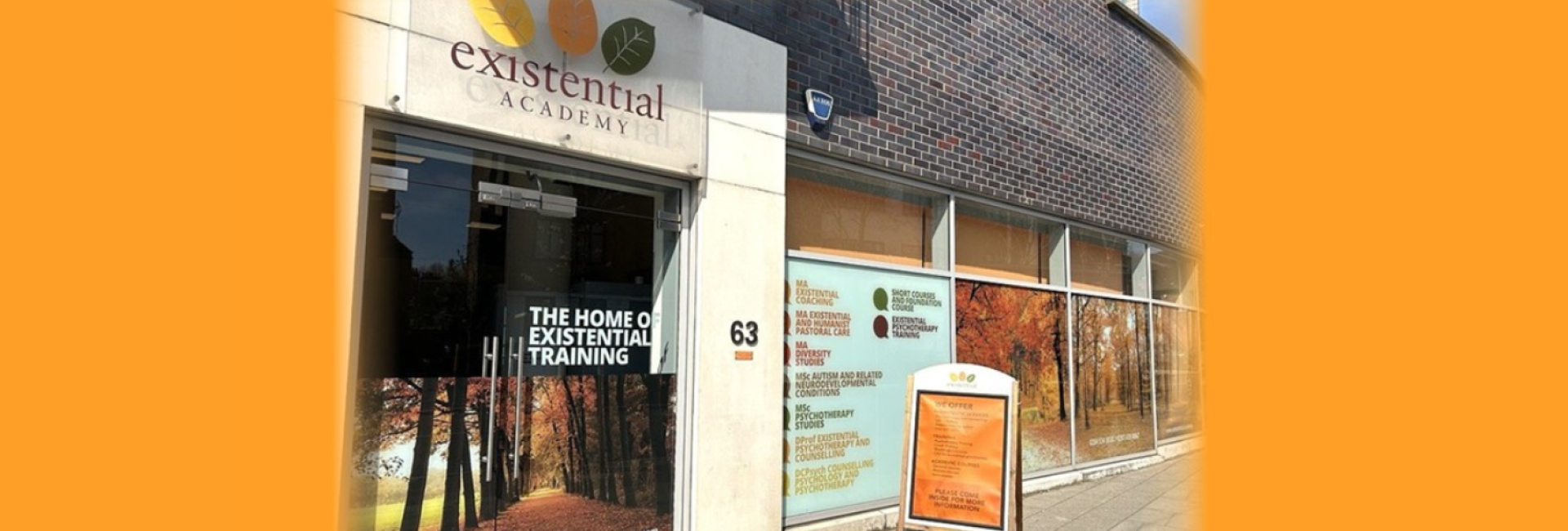
Course contact details
Alice Davies
Email:alice.davies@nspc.org.uk
Phone:0204 534 3030
New School of Psychotherapy and Counselling
The Existential Academy
61-63 Fortune Green Road
London
NW6 1DR

The New School of Psychotherapy and Counselling NSPC has been involved in research and teaching in autism and neurodiversity since its inception in 1998. The online courses provide in-depth theory, understanding of clinical issues and practice, and research skills. NSPC believes that improving the quality and accessibility of services for neurodivergent individuals is paramount. Continued research into neurodivergence, that is led by the neurodivergent community is essential in service of this goal.
The distance learning nature of the course means that students can learn in a flexible format that fits around work and personal commitments. The course is wholly online and is accessed by students across the world. Learning incorporates theory, references to real world settings, skills and research. Students learn together in a collaborative way via an online learning platform, sharing knowledge and experience.
The courses provide professional development for those supporting autistic and neurodivergent individuals. If you are qualified in a relevant professional field, these courses will provide you with detailed knowledge and understanding of neurodivergence which you can then integrate into your practice as a specialist within that area. However, the programmes are also of interest to those wanting to study autism and neurodiversity solely from an academic and research perspective, including parents, carers or neurodivergent individuals who want access to the latest research, and information about services. Features of the course you might like:
• This programme provides students with a flexible, part-time qualification.
• All teaching is online and includes in-depth teaching on autism and other neurodivergent diagnoses.
• Students also look at clinical and practical issues such as development, social and cultural factors.
Year 1*
Assessment: 1000‑word case study and 1500‑word theoretical essay.
Assessment: 2000‑word theoretical essay.
Students critically examine developmental theories and how physical, emotional, cognitive, and social development interact across the lifespan. The module evaluates traditional and non‑normative models of development in relation to neurodivergent experience, including existential perspectives on development.
Assessment: 2000‑word theoretical essay.
Assessment: Research proposal.
Year 2*
Assessment: 1000‑word case study and 1500‑word theoretical essay.
Assessment: 2000‑word theoretical essay.
Assessment: 2000‑word theoretical essay.
One optional module:
Assessment: 2000‑word theoretical essay.
OR
Assessment: 2000‑word theoretical essay.
*The order of modules may vary depending on optional module choice and whether studies begin in September or January.
| Location | Fee | Year |
|---|
Tuition fee status depends on a number of criteria and varies according to where in the UK you will study. For further guidance on the criteria for home or overseas tuition fees, please refer to the UKCISA website.
The cost of individual modules is £1,140.
Students on validated programmes such as our Masters courses are not eligible for Student Finance or DSA. This is because NSPC itself is not directly registered with the Office for Students (OfS). We are actively working on our OfS application. It remains a priority, but it will take time before we’re able to reach the stage where students can apply for loans as it is a lengthy process, and we do not yet have a clear timeline for when students may be able to apply for loans.
For information, see below a list of the organisations that some of the students have contacted regarding bursaries/grants etc
UKCP Bursary: https://www.psychotherapy.org.uk/join-us/ukcp-bursary/
UPCA Bursary and Hardship Fund: https://www.upca.org.uk/upca-bursary-and-hardship-fund/
Black and Asian Applied Psychologists Fund: https://www.bps.org.uk/black-and-asian-psychologists-fund
SEA Fund in honour of Hans W. Cohn: https://existentialanalysis.org.uk/sea-fund-in-honour-of-hans-w-cohn/
Refugee Therapy Centre: https://refugeetherapy.org.uk/
Humanists UK: https://humanists.uk/
Finally, to assist our students, we offer instalment plans that allow you to spread the cost of your tuition fees over the term, rather than paying the full amount upfront. We do not expect all fees to be paid in advance. There is a small admin fee of £20 per module for using the instalment plan.
Email:alice.davies@nspc.org.uk
Phone:0204 534 3030
The Existential Academy
61-63 Fortune Green Road
London
NW6 1DR
At New School of Psychotherapy and Counselling