Course contact details
Admissions
Email:admissions@bishopburton.ac.uk
Phone:01964 553000
Fax: 01964 553101
University Centre Bishop Burton
Bishop Burton
Beverley
HU17 8QG

This course will provide you with sound academic and practical knowledge of the disciplines and factors that relate to animal management and welfare. It has been designed to give you the opportunity to acquire knowledge of animal husbandry, anatomy and physiology, animal behaviour, animal nutrition and business.
There is an increasing demand for people with a combination of both academic and practical competence within the animal management sector, therefore, the programme is vocational, with an applied nature of both practical and theoretical aspects fundamental for a career within this area.
What You Study
Animal health and welfare
Business and the business environment
Managing a successful project
Animal husbandry
Animal anatomy and physiology
Animal behaviour in society
Animal collection management
Learning and Teaching Approach
This programme is delivered with a variety of learning and teaching approaches to include all students’ learning styles and preferences. For all modules, theory lectures are delivered that aim to deliver the core content and provide the underpinning knowledge.
You will have group seminars / practical sessions that are used to reinforce concepts delivered theoretically. The teaching methods focus on facilitating a student centred approach to enhance the independent learning that takes place outside of the classroom.
This is a vocational programme with an applied nature that is emphasised throughout the programme. It includes business and the opportunity for students to gain skills in managing a project – providing excellent transferable skills and enable students to set up their own business.
There is a strong emphasis on applying theoretical knowledge to practical situations using our excellent animal facilities.
The course content is specifically designed to be appropriate to the needs of the animal management industry and to enable students to progress to the second year of the FdSc Animal Management & Behaviour.
What is the contact time?
Approximately 17-21 hours a week to include lectures, seminars, work experience, practicals and tutorials. Students are also expected to carry out a significant amount of private study (approx. 25-30 hours a week) in addition to contact time. The part-time route incorporates approximately 9-13 hours of contact time per week, and independent study of (approximately 12-15 hours a week). Students can expect to receive their timetables during induction week.
What else can I expect?
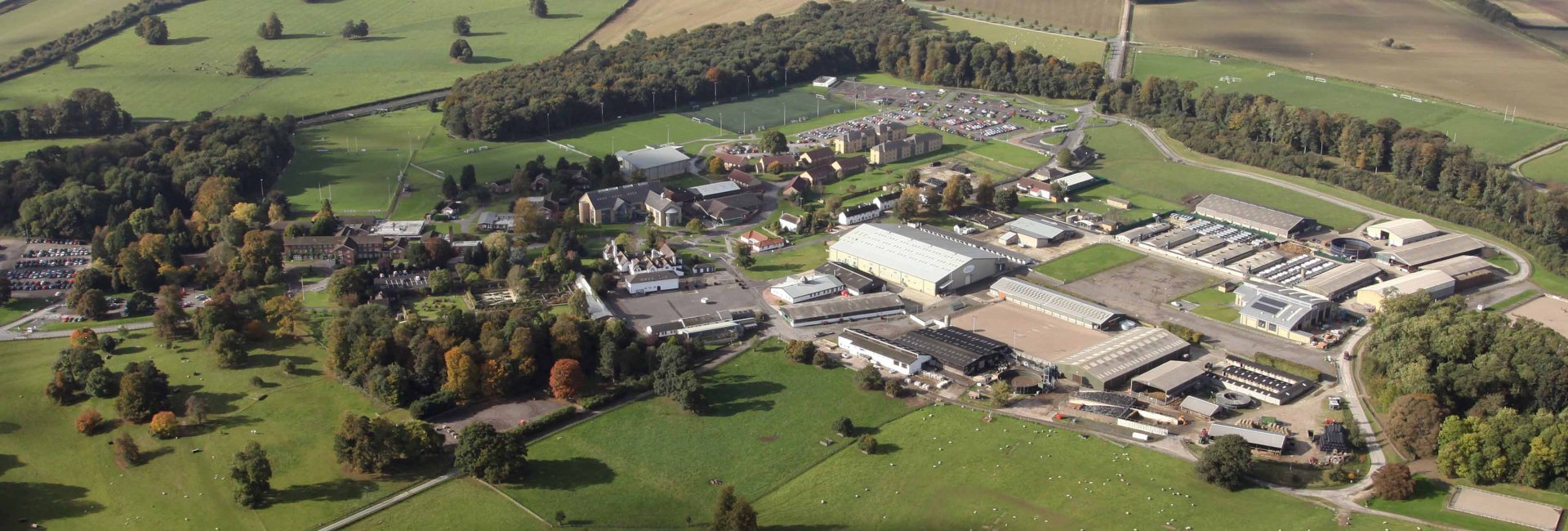
Animal Management Unit housing a wide range of species including meerkats, racoon dogs, primates, alpacas, marsupials, invertebrates, tropical and marine fish, reptiles, rodents and a nocturnal house.
Dedicated dog training area, commercial dog kennels and grooming facilities, commercial sheep and beef enterprises, equine yard and schools.
Additional facilities include Science Centre, IT suites, dedicated University Centre, study spaces and social areas, and modern Learning Resources Centre.
Online Virtual Learning Environment (VLE) used to enhance and facilitate teaching and independent learning on all programmes.
Our experienced Life Coaches are on hand to help you through your University journey from mentoring and coaching to health, wellbeing and resilience. Learn more about how our Life Coaches can support you: https://www.bishopburton.ac.uk/university-centre/life-skills-team-at-ucbb
Students have access to a range of support through our study skills, and health and wellbeing teams. Further information can be found on our website: https://www.bishopburton.ac.uk/student-life/student-support
Relevant extra-curricular activity and/or work experience is encouraged of all students in order to enhance learning.
What will I study?
Animal health and welfare
Business and the business environment
Animal husbandry
Animal anatomy and physiology
Animal behaviour in society
Animal nutrition
Animal collection management
Managing a successful project.
You will be assessed in a variety of ways, including written assignments, presentations, practical demonstrations and project work. There are no formal examinations. Opportunities for feedback on assessments are available prior to the final submission to support your development and achievement. Staff aim to return assessed work within a 20 working day timeframe (not including holidays) so that you can most benefit from the feedback.
The following entry points are available for this course:
University Centre Bishop Burton and Riseholme College welcome applicants from overseas. You will need to be issued with a Confirmation of Acceptance for Studies (CAS) to apply for your student visa to the UK. You will need to pay your course fees in full prior to a CAS being sent to you. In order for us to process this and for us to comply with our duties as a Sponsor we are required to check other aspects of your application, for example your financial status. For more details please visit www.bishopburton.ac.uk/student-life/international-students
Life and/or experience of non-traditional students will be taken into account when considering applications. The successful completion of an entry task may be required when considering applications without the required formal entry qualifications.
Advanced entry may be possible due to prior experience or certificated learning; applicants will be invited to complete the recognition of prior learning approval process.
This section shows the range of grades that students who received offers were previously accepted on to this course with (learn more).
It is designed to support your research but does not guarantee whether you will or won't get a place.
Admissions teams consider various factors, including interviews, subject requirements, and entrance tests. Check all course entry requirements for eligibility.
We are unable to show previous accepted grades for this course. This could be because the course is new, it's a postgraduate course, there isn't enough historical data, or the provider has opted out of sharing their entry grades data for this course - learn more.
This report uses your grades to show how students with similar results have done when applying to this course in the past. Sometimes, there isn’t data for every possible set of grades. When that happens, universities and colleges occasionally fill in the gaps for sets of grades that are typically accepted.
| Location | Fee | Year |
|---|
Tuition fee status depends on a number of criteria and varies according to where in the UK you will study. For further guidance on the criteria for home or overseas tuition fees, please refer to the UKCISA website.
No additional fees or cost information has been supplied for this course, please contact the provider directly.
Email:admissions@bishopburton.ac.uk
Phone:01964 553000
Fax: 01964 553101
Bishop Burton
Beverley
HU17 8QG
At University Centre Bishop Burton