Course contact details
Main Contact
Email:admissions@bishopburton.ac.uk
Phone:01964 553000
Admissions
Email:admissions@bishopburton.ac.uk
Phone:01964 553000
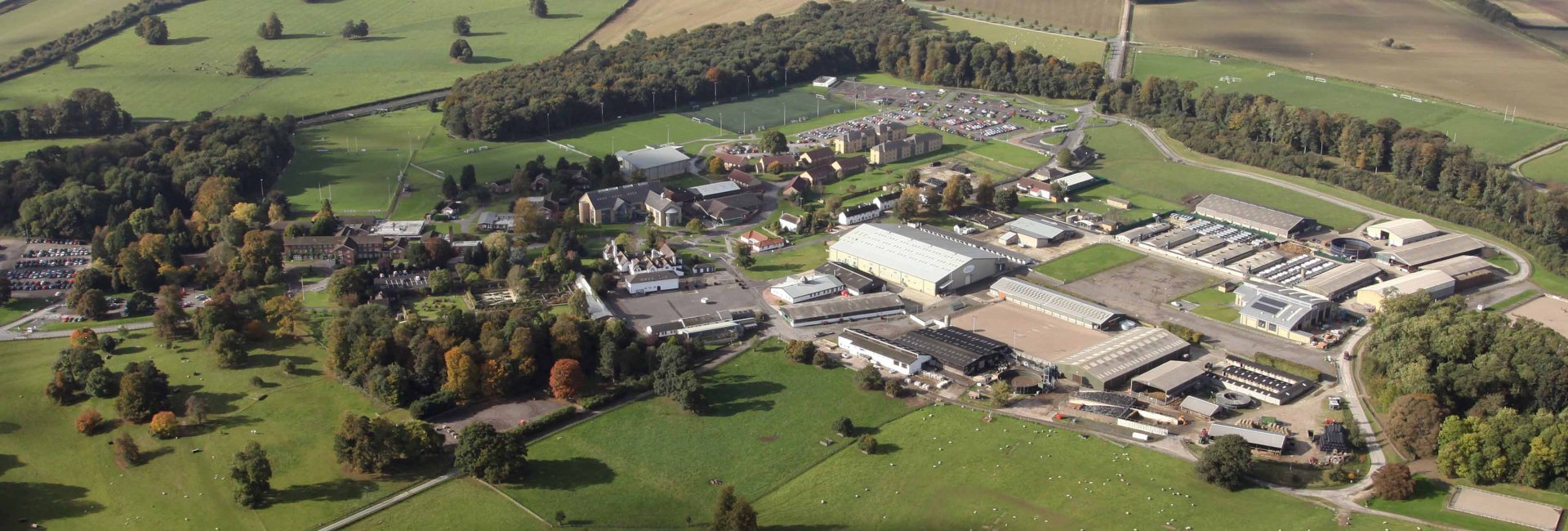
University Centre Bishop Burton
Bishop Burton
Beverley
HU17 8QG

Equestrian sport is benefitting from advances in technology and analysis techniques to improve both rider and equine performance. This degree programme will equip you with the knowledge, skills and insight to be part of this progression.
There is demand within the equine industry for highly qualified coaches, and our programme incorporates applied modules at all levels so that you can develop into a coach who can apply scientific training and coaching techniques to equestrian sport.
During the final year you will develop skills in coaching specialist populations, equipping you with confidence and experience to provide inclusive practice, supporting widening participation in equine sport.
Our coaching and equitation modules are taught in line with industry qualifications and you will be encouraged and supported to complete British Horse Society stages alongside your degree in preparation for entering the industry in instructor-based roles, in either a freelance capacity or within equine centres.
You will study a breadth of scientific modules such as horse anatomy, exercise physiology and sport injury, giving you sound underpinning for entering applied equine facility settings. You will also obtain key business acumen to prepare to manage your own business or work within management roles. You will also develop valuable skills in reflective practice, communication and evaluation, which are essential for working in performance settings.
Students can access free British Horse Society exam training onsite during their studies, the examination cost and BHS membership is an additional cost (exams can be undertaken onsite).
Course Aims
Develop you into a capable and confident coach, skilled at developing performance and fitness of the horse and rider with an underpinning of highly relevant sport science knowledge
Give you sound academic knowledge of coaching styles, techniques and strategies available for athletic performance in sports particularly the equestrian athlete.
Provide you with the theoretical underpinning of scientific principles of sport science, fitness and training to develop performance.
Learning and Teaching Approach
This programme is delivered with a variety of learning and teaching approaches, utilising excellent onsite resources and extensive industry links for applied aspects. For all modules, there are theory lectures delivered, aimed at providing the core content and underpinning knowledge. Lectures are used to convey the basic concepts, and facilitate further expansion of such concepts by the students, through independent study. To complement the theory lectures, students have group seminars and practical sessions that are used to reinforce those concepts delivered theoretically. This programme has a focus on practical ability in a yard and coaching setting, therefore many modules will have theory content supported by active development of practical skills utilising specialist equipment.
Contact Time
Contact time includes approximately 12-13 hours a week in the first two years and 9-11 hours a week in the final year, incorporating lectures, seminars, practicals and tutorials.
You are also expected to carry out a significant amount of independent study in addition to contact time (approximately 25-30 hours a week). Independent study includes reading around the subject, preparing for tutorials and seminars, preparing for, and completing, module assessments and revision for examinations; forming an essential part of your learning journey.
Career Opportunities
A career within coaching settings in all disciplines, rider psychology, equine product development and sales, yard managerial roles, as a self-employed coach, rider performance and rehab specialist. You could also gain positions within the wide area of the application of equine sport science and/or coaching to horse performance and physiology, rider performance and psychology.
Year 1
Academic, Employment and Professional Skills
Equine Health and Husbandry
Equine Sport Coaching
Equine Anatomy and Physiology
Introduction to Research Skills
Equine Multi-Disciplinary Team
Introduction to Sport Science
Equitation* or Equine Nutrition (*A ridden assessment will be required. Option modules will run where there are sufficient student numbers, otherwise an alternative option module may be offered.)
Year 2
Research Methods and Analysis
Equine Exercise Physiology
Rider Health and Fitness
Enterprise and Entrepreneurship
Advanced Equine Coaching
Sport Psychology and Behaviour Changes
Option Module: Advanced Equitation* or Equine Behaviour and Welfare (*A ridden assessment will be required. Option modules will run where there are sufficient student numbers, otherwise an alternative option module may be offered.)
Year 3
Dissertation
Rider Performance
Applied Equine Biomechanics
Coaching Specialist Populations
Equine Sport Injury
Contemporary Issues in Equestrianism
The programme will incorporate a variety of assessment methods across each academic year. The mix of assessments will seek to challenge and evaluate your knowledge, understanding and skills. Assessments for this programme may include written assignments, time-constrained assessments, logbooks and portfolios, practical assessments, seminars and presentations, project-based assessments, examinations and a dissertation. Tutors provide support for assessments in class. There will also be opportunity for formative assessment and feedback during the delivery of each module to monitor learning, and to support and prepare you for the summative assessments which make up the module. Feedback on your summative assessments will be given which will allow you to guide efforts and activities in subsequent modules. Staff aim to return assessed work within a 20 working day timeframe (not including holidays) in order that students can most benefit from the feedback.
The following entry points are available for this course:
Equitation modules require riding standards to be at the level of working towards BHS Stage 2.
Life and/or experience of non-traditional students will be taken into account when considering applications. The successful completion of an entry task may be required when considering applications without the required formal entry qualifications.
Advanced entry may be possible due to prior experience or certificated learning; applicants will need to complete the recognition of prior learning approval process.
Entry requirements for students joining after Year 1: students should have a suitable HNC for year 2 entry
If first language is not English, GCSE grade C/4 English or equivalent is not held, English language proficiency level such as International English Language Testing System (IELTS) 6.0 overall (with a minimum 5.5 in each skill) will need evidencing.
This section shows the range of grades that students who received offers were previously accepted on to this course with (learn more).
It is designed to support your research but does not guarantee whether you will or won't get a place.
Admissions teams consider various factors, including interviews, subject requirements, and entrance tests. Check all course entry requirements for eligibility.
We are unable to show previous accepted grades for this course. This could be because the course is new, it's a postgraduate course, there isn't enough historical data, or the provider has opted out of sharing their entry grades data for this course - learn more.
This report uses your grades to show how students with similar results have done when applying to this course in the past. Sometimes, there isn’t data for every possible set of grades. When that happens, universities and colleges occasionally fill in the gaps for sets of grades that are typically accepted.
| Location | Fee | Year |
|---|---|---|
| England, Scotland, Wales & Northern Ireland | £9250 | |
| International | £13177 |
Tuition fee status depends on a number of criteria and varies according to where in the UK you will study. For further guidance on the criteria for home or overseas tuition fees, please refer to the UKCISA website.
No additional fees or cost information has been supplied for this course, please contact the provider directly.
Email:admissions@bishopburton.ac.uk
Phone:01964 553000
Email:admissions@bishopburton.ac.uk
Phone:01964 553000
Bishop Burton
Beverley
HU17 8QG
At University Centre Bishop Burton