Course contact details
Main Contact
Email:admissions@rcs.ac.uk
Phone:0141 332 4101
Fax: 0141 332 8901
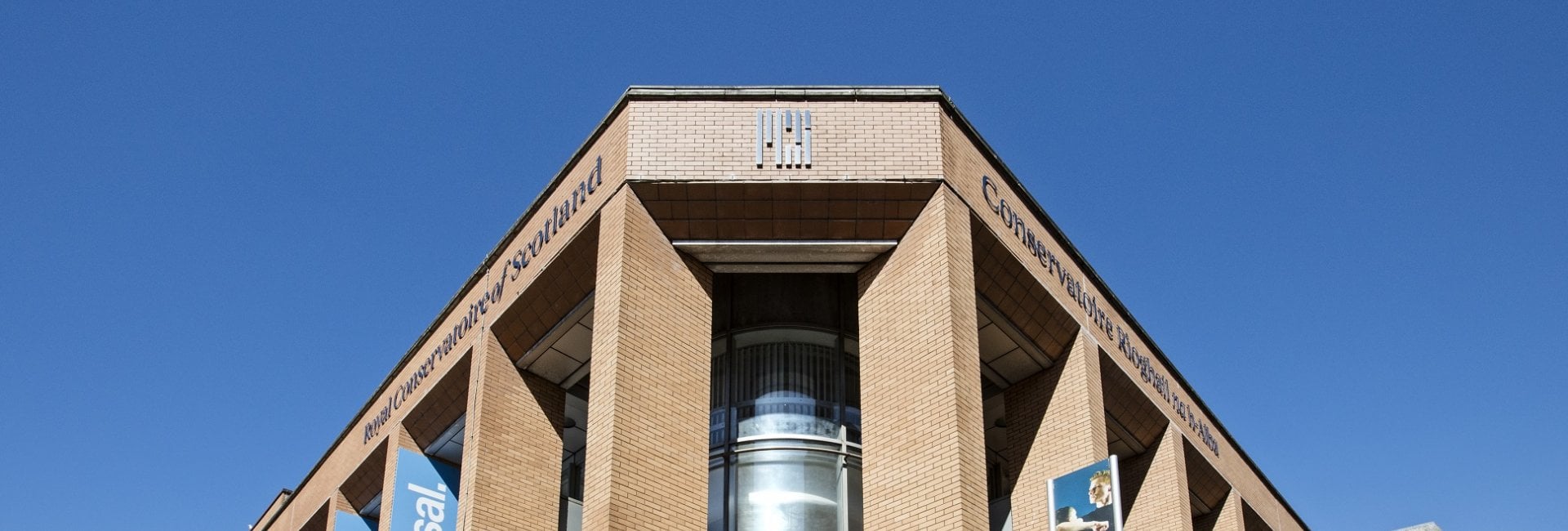
Royal Conservatoire of Scotland
100 Renfrew Street
Glasgow
G2 3DB

The application deadline for this programme is 31st May 2027
Join a vibrant online community from across the world, sharing in a journey of professional enquiry and development designed to enhance your practice as an arts educator.
Shape the Future of Arts Education – Wherever You Are
Join a dynamic, international network of arts educators through our part-time, hybrid MEd in Learning and Teaching in the Arts course – a flexible, master’s programme designed to fit around your professional life and arts education practice.
Whether you’re teaching in a studio, classroom, rehearsal space, or community setting, this three-year programme invites you to critically explore and evolve your approach to arts education. Through a blend of online and in-person sessions, one-to-one tutorials, and collaborative learning, you’ll engage with a diverse community of peers who share your passion for teaching and the arts.
During the course you’ll design research projects that reflect your unique interests, context, and learners – building a strong evidence base that connects your practice to educational theory, discipline-specific discourse, and professional standards. In your final year, you’ll carry out a self-directed project that makes a real impact in your educational setting.
Wherever you’re based, this programme is built to support your growth as an educator, artist, and researcher.
Ready to innovate, collaborate, and elevate your practice? We warmly invite you to join us.
During the application and audition process, you must select which instrument(s) you wish to specialise in for the duration of your course. On this course, you can choose from the following options:
For all courses, you must select at least one specialism from the 'primary' list. For those studying primary/secondary pathways, two instruments may be selected – one from the 'primary' list and one from the 'secondary' list. Joint pathway students may select any two instruments from either list.
Explore, Create, Transform: A Deep Dive into Arts Education
Our MEd in Learning and Teaching in the Arts supports arts educators in a sustained journey of enquiry across three interconnected strands:
Teaching Practice Enquiry
Delve into the art of teaching within an arts context. You’ll explore learning theories, design impactful learning experiences that meet quality standards, and develop the skills to critically evaluate and enhance your own teaching practice.
Arts Practice Enquiry
Engage with the wider conversations shaping your discipline – social, political, economic, cultural, and sustainability debates – and design a personalised programme of learning that nurtures your growth as an artist.
Professional Enquiry
Lead a major-scale project in an area where you see potential for innovation and transformation. This is your opportunity to generate new knowledge, challenge assumptions, and shape future practice in arts education.
Across all three strands, you’ll build confidence in academic writing, research, and scholarship – equipping you to share your insights with wider professional and academic communities.
Flexible, Blended Learning That Fits Your Life
Delivered part-time over three years, the programme combines hybrid sessions (with options to join in person or online), online seminars, one-to-one tutorials, and independent study. Whether you’re based in the UK or internationally, the structure is designed to support your professional commitments and local context.
https://www.rcs.ac.uk/courses/med-learning-teaching/#programme-structure
More information about what the course entails can be found on our website.
The following entry points are available for this course:
| Test | Grade | Additional details |
|---|---|---|
| IELTS (Academic) | 7 | 7.0 with a minimum score of 7.0 in speaking and no component below 6.5 |
| TOEFL (iBT) | 94 | Overall score of 94, with minimum component scores of: Reading – 19, Listening – 20, Speaking – 23, Writing – 24 |
| PTE Academic | 66 | Overall score of 66 with a minimum of 66 in speaking and no component below 62 |
| Cambridge English Advanced | Overall score of 185 with a minimum of 185 in speaking and no component below 176 | |
| Cambridge English Proficiency | Overall score of 185 with a minimum of 185 in speaking and no component below 176 |
https://www.rcs.ac.uk/study/international-students/english-requirements/
In the event of a successful assessment, applicants may be invited for a further interview prior to being made an offer.
Remote assessment recordings may be accepted in the event that you cannot attend an assessment in person.
| Location | On-time Fee |
|---|---|
| Online | No Fee Charged |
| Location | On-time Fee |
|---|---|
| Online | Not Applicable |
All applicants need to complete an Acceptd account profile and application regardless of which location you choose, this is part of the audition process (https://app.getacceptd.com/rcs) and needs to be completed once your UCAS application has been submitted. For further information on what to prepare for the interview, please see our website - https://www.rcs.ac.uk/courses/med-learning-teaching/ If you have any questions, please contact: hello@rcs.ac.uk.
| Location | Fee | Year |
|---|---|---|
| England, Scotland, Wales, Northern Ireland, Channel Islands, Republic of Ireland, EU & International | £5736* |
* This is a provisional fee and subject to change.
Tuition fee status depends on a number of criteria and varies according to where in the UK you will study. For further guidance on the criteria for home or overseas tuition fees, please refer to the UKCISA website.
Please note, all new students are required to pay associated programme cost related fees at the start of their studies.
For more information on fees, funding and scholarship, please see our website.
There are currently no RCS scholarships available for this programme. You may be eligible for funding via the student loans companies relevant to your country, more information can be found on our website.
https://www.rcs.ac.uk/study/fees-funding/#sources-of-funding
Email:admissions@rcs.ac.uk
Phone:0141 332 4101
Fax: 0141 332 8901
100 Renfrew Street
Glasgow
G2 3DB
At Royal Conservatoire of Scotland