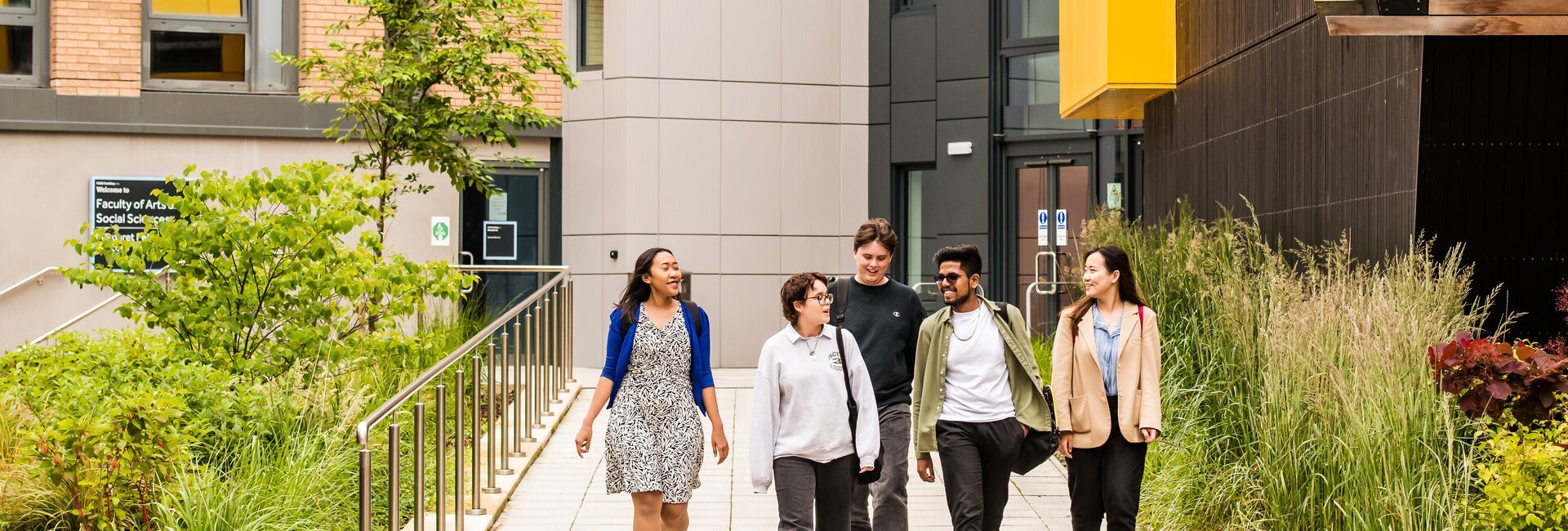
Ready to see the world of crime and criminal justice differently? Interested in how crime impacts communities and individuals differently depending on where they live or who they are? Join us to unpick theories and perspectives that explain today’s most pressing social and crime-related issues.
This is a thought-provoking degree that covers complex, challenging topics from criminal justice and youth crime to social justice and climate change, racism and hate, power and inequalities. Your lecturers are experts in their field, supportive and encouraging, and the course is enriched by input from professionals working in NGOs, charities, the police, and more.
Why Lancaster?
-
Critically explore crime and society: A stimulating degree that examines important issues through a social justice lens.
-
Exceptional academic support: Work closely with engaged lecturers who value your ideas and are committed to helping you grow as a criminologist and social scientist.
-
Explore today’s challenges: on topics such as social control, racism and hate, poverty stigma, drug-related crimes, sex offences, organised crime, and human rights violations.
-
Unlock your career potential: Access tailored career advice to discover diverse pathways and practical steps you can take to achieve your goals for a rewarding career in the criminal justice system, the public sector, and beyond.
-
Build connections: Network with experts from NGOs, charities, law enforcement, and other criminal justice organisations.
-
Take a path towards action and impact: Explore today’s issues, become part of a better tomorrow.
-
Work with leading experts: Our academics advise the United Nations and the EU, influence drug policies in the UK and overseas and work with national and local criminal justice agencies.
Crime, inequality and injustice
Rapid change. Rising crime. Public rage against society’s systems and inequalities. Get ready to unravel the big issues affecting our society with a combined degree in Sociology and Criminology. From anti-migrant movements and hate crime to sex work, social control and climate change, you’ll look at the cultural, political and economic contexts of crime and criminal justice and explore the social circumstances that influence people’s actions.
We will encourage you to understand the bigger picture of criminality. Why do some communities have higher rates of crime than others? Why do well-intended preventative campaigns fail to reach many people? You will build the skills to understand criminal justice and respond to social challenges in meaningful, creative ways.
Questions of justice
Our definitions and relationship with crime is shaped by our sense of who we are as a society. Who decides what counts as ‘wrong’? Why is ‘justice’ such a contested word? What does it mean to ‘police’?
You will engage with questions of morality, explore philosophical debates, and undertake deep self-reflection to focus on the meanings, values and judgements that frame crime. In doing so you will learn to ask and answer such difficult questions with evidence and confidence.
Your Placement Year
You'll spend your third year in a paid, graduate-level position, where you’ll work for between nine and twelve months in the type of role that you might be considering for after you graduate. A very wide range of companies and organisations offer placements across all sectors.
If you are unsuccessful in securing a suitable placement for your third year, you will be able to transfer to the equivalent non-placement degree scheme and continue with your studies at Lancaster, finishing your degree after your third year.
Important Information
For the most up-to-date course information and more details, we recommend that you revisit our website before submitting your application.