Course contact details
Undergraduate Admissions
Email:ugadmissions@southampton.ac.uk
Phone:023 8059 4732
University of Southampton
Highfield
Southampton
SO17 1BJ

Summary:
Biochemistry is where life’s biggest questions are explored. How do cells function? How do molecules interact to sustain life? How can this knowledge shape the future of medicine, biotechnology and forensic science?
On this integrated masters degree, you will go further. Build a deep understanding of biochemistry at every level, from molecules to complex biological systems, while developing the skills to investigate and solve real scientific challenges.
At Southampton, your learning is shaped by research that is advancing the field. You will explore modern biochemistry at the forefront of discovery, preparing you to play a part in the next generation of scientific breakthroughs.
Key features of the course:
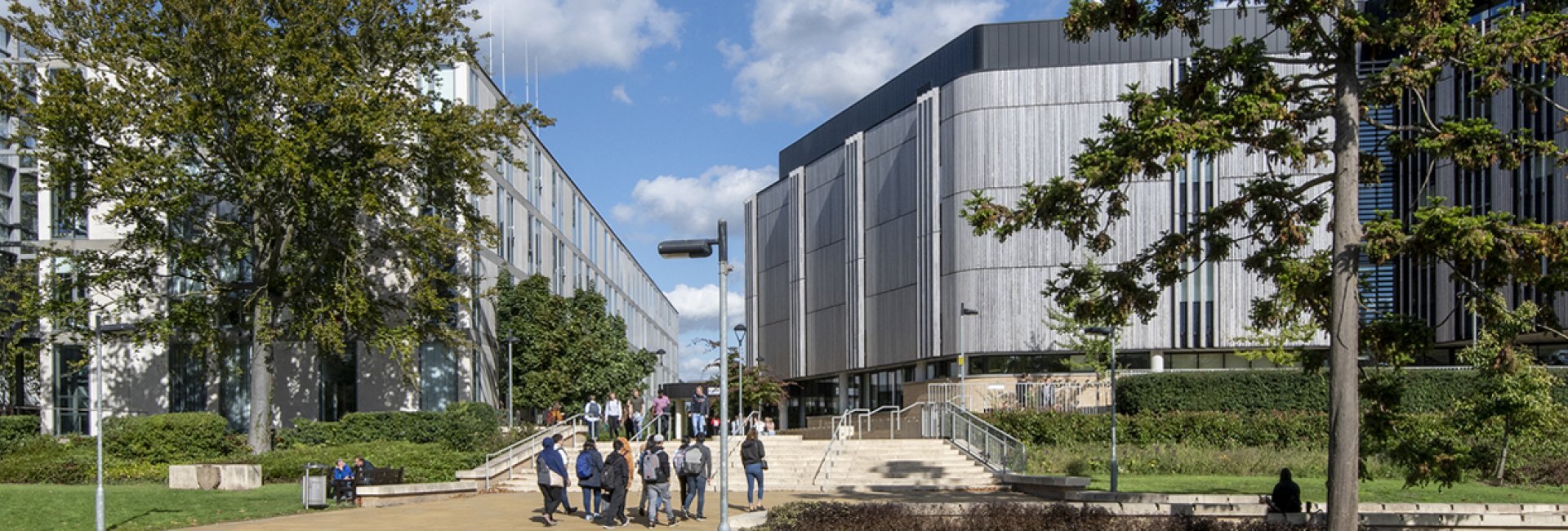
Study in our multi-million pound Life Sciences building, a space designed for discovery, where you will learn alongside researchers whose work is shaping the future of science.
Develop practical, real-world skills that prepare you for careers in industry, research and beyond.
Expand your horizons with opportunities to study abroad at partner universities around the world, experiencing new approaches to science and different cultures.
Shape your degree around your interests and ambitions, culminating in an extensive final year research project that gives you the chance to work alongside experts in the field, with access to cutting-edge faciliites.
Join a university where 96% of Biological Sciences graduates were in employment or further study 15 months after graduating (Graduate Outcomes 2022/23, published 2025).
Student support:
From day one, you will be part of a welcoming Biological Sciences community, where researchers and students work together, sharing ideas and discoveries.
Your Personal Academic Tutor will support you throughout your degree, offering guidance on your studies and helping you prepare for your next steps, whether that is a career in industry, research or further study.
Further information:
This programme has the Advanced Royal Society of Biology accreditation, meaning your degree is recognised and valued across the sector.
Throughout this course you'll explore the breadth of the discipline, with a mixture of compulsory and optional modules that offer you the flexibility to tailor your degree to your interests and ambitions.
You will also have opportunities to tailor your learning through student-selected units and an elective placement. Module structure may vary to keep your learning up to date
For full list of all modules available, please visit the course page.
You'll learn, and be assessed, through a range of methods designed to equip you with the skills you need for success after graduating.
The learning activities include lectures, classes and tutorials, coursework, individual and group projects, and independent learning.
The assessment methods include coursework, laboratory reports and essays, individual and group projects, oral presentations, written and practical exams.
This is the equal consideration deadline. You can still apply after this date, but your application may not receive guaranteed consideration.

University of Southampton has participated in the Teaching Excellence Framework. These ratings were awarded in 2023, for four years.
See why these ratings were awarded
What does this TEF outcome mean?
The following entry points are available for this course:
Applicants must hold GCSE English Language (or GCSE English), Mathematics and Science (minimum grade C/4). https://www.southampton.ac.uk/biosci/undergraduate/courses/c701_master_of_biochemistry.page#entry_requirements
| Test | Grade | Additional details |
|---|---|---|
| IELTS (Academic) | 6.5 | Band C: 6.5 with 6.0 in each component |
All programmes at the University of Southampton are taught and assessed in the medium of English (other than those in modern foreign languages). Therefore, all applicants must demonstrate they possess at least a minimum standard of English language proficiency.https://www.southampton.ac.uk/studentadmin/admissions/admissions-policies/language.page
Most of the students who previously enrolled on this course joined us with grades lower than our published entry criteria. After receiving their grades, we carefully considered each students’ individual circumstances before confirming their place on their chosen course.
We encourage everyone with the potential to succeed to apply, regardless of their background. Applicants who qualify for contextual admissions will be made an offer lower than the typical offer for that programme.
This section shows the range of grades that students who received offers were previously accepted on to this course with (learn more).
It is designed to support your research but does not guarantee whether you will or won't get a place.
Admissions teams consider various factors, including interviews, subject requirements, and entrance tests. Check all course entry requirements for eligibility.
We are unable to show previous accepted grades for this course. This could be because the course is new, it's a postgraduate course, there isn't enough historical data, or the provider has opted out of sharing their entry grades data for this course - learn more.
This report uses your grades to show how students with similar results have done when applying to this course in the past. Sometimes, there isn’t data for every possible set of grades. When that happens, universities and colleges occasionally fill in the gaps for sets of grades that are typically accepted.
| Location | Fee | Year |
|---|---|---|
| England, Scotland, Wales, Northern Ireland, Channel Islands & Republic of Ireland | £10050 | |
| EU & International | TBC |
Tuition fee status depends on a number of criteria and varies according to where in the UK you will study. For further guidance on the criteria for home or overseas tuition fees, please refer to the UKCISA website.
Please see our website for further details and updates regarding tuition fees.
We anticipate that international tuition fee levels for 2027 entry will be confirmed in August 2026.
Email:ugadmissions@southampton.ac.uk
Phone:023 8059 4732
Highfield
Southampton
SO17 1BJ
At University of Southampton