Skip navigation

Economics with a Year in Industry (January Start)

Course details
  • BSc (Hons)
  • 1 Years
  • Full-time
  • January 2027
  • Undergraduate
Course location
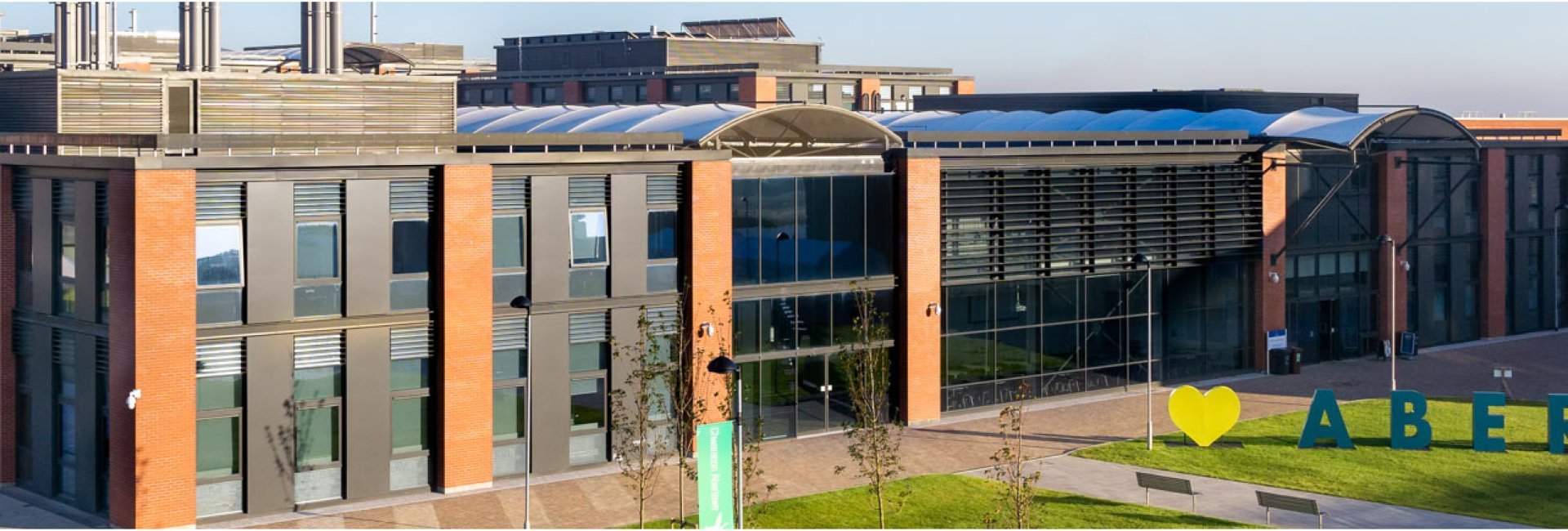
Bay Campus
Awarded by:
Swansea University (Prifysgol Abertawe)

Course summary

Our BSc Economics degree provides a strong foundation in modern economic principles and the key issues shaping today’s global landscape. Teaching at Swansea is research-led, and our academic staff draw on both scholarly expertise and real-world experience, giving you insights that connect economic theory with practice.

You will study core areas of economic theory alongside mathematical and statistical training, developing the analytical tools and technical skills essential for a successful career in economics. Early modules build a broad base of knowledge across microeconomics, macroeconomics, statistics, finance, accounting, and research methodology. As you progress, you can increasingly tailor your studies through specialist modules in areas such as development economics, international finance and behavioural economics.

Designed to stay relevant to the demands of a modern economy, the BSc (Hons) Economics is well suited whether you aspire to work as a professional economist, explore careers across financial and economic sectors, or pursue postgraduate study.

This course also offers you the opportunity to spend a Year in Industry, in the UK or overseas, enabling you to gain valuable workplace experience. The University advocates for paid-only placements, which on average have a salary of over £20,000. Unpaid placements are considered on a case-by-case basis.

Modules

You will typically study areas including: Intermediate Microeconomics; Problems and Decision-Making in Economics; Intermediate Macro-economics; Economic Policy; Introductory Econometrics; Economic Development; Economies of the Middle and Far East; Mathematical Economics; Environmental & Resource Economics; Managerial Economics; Management Science; Global Business Environment: International Political Economy; Investments: Assets; Equities and Bonds; Financial Markets and Institutions; International Business; Advanced Macroeconomics; Applied International Macroeconomics; Applied Money and Banking Economics; and more.

In Year 3: Year spent in Industry.

How to apply

Apply by
14 January

This is the deadline for applications to be completed and sent for this course. If the university or college still has places available you can apply after this date, but your application is not guaranteed to be considered.

Application codes

Course code:
LW1X
Institution code:
S93
Campus name:
Bay Campus
Campus Code:
B

Points of entry

The following entry points are available for this course:

  • Year 1

International applicants

If you are an International Student, please visit our International pages for more information about entry requirements: http://www.swansea.ac.uk/international/students/requirements/

Open days

Entry requirements

UCAS Tariff
112 - 120 points

A level
BBB - BBC

WJEC Level 3 Advanced Skills Baccalaureate Wales

Swansea University accepts the Advanced Skills Baccalaureate Wales as fully equivalent to x1 A-Level.

Contextual admissions

Universities and colleges consider more than grades when assessing applications and may make offers based on a range of criteria. Learn more about contextual offers.

UK applicants who meet course requirements are guaranteed a conditional offer. We assess applications on individual merit. We consider making reduced offers, eg. to Care Leavers or students with extenuating circumstances. We encourage you to disclose any relevant circumstances.

The Advanced Skills Baccalaureate Wales is considered as equivalent to one full A-Level and students can take x2 A-levels alongside this. EPQ students predicted Grade B or above will receive a one-grade offer reduction.

Learn more on the Swansea University website

Historical entry grades data

This section shows the range of grades that students who received offers were previously accepted on to this course with (learn more).

It is designed to support your research but does not guarantee whether you will or won't get a place.

Admissions teams consider various factors, including interviews, subject requirements, and entrance tests. Check all course entry requirements for eligibility.

Not enough data available

We are unable to show previous accepted grades for this course. This could be because the course is new, it's a postgraduate course, there isn't enough historical data, or the provider has opted out of sharing their entry grades data for this course - learn more.

Fees and funding

Tuition fees

No fee information has been provided for this course

Tuition fee status depends on a number of criteria and varies according to where in the UK you will study. For further guidance on the criteria for home or overseas tuition fees, please refer to the UKCISA website.

Additional fee information

For the latest fee information, please check the individual course page on our website. Our full range of programmes are listed here: https://www.swansea.ac.uk/undergraduate/courses/

Further information on tuition fees can be found here: https://www.swansea.ac.uk/undergraduate/fees-and-funding/tuition-fees/

Sponsorship information

You may be eligible for funding to help support your study.

To find out about scholarships, bursaries and other funding opportunities that are available please visit the University’s scholarships and bursaries page https://www.swansea.ac.uk/undergraduate/scholarships/

Academi Hywel Teifi at Swansea University and the Coleg Cymraeg Cenedlaethol offer a number of generous scholarships and bursaries for students who wish to study through the medium of Welsh or bilingually. For further information about the opportunities available to you, visit the Academi Hywel Teifi Scholarships and Bursaries page https://www.swansea.ac.uk/academi-hywel-teifi/learn/scholarships/

Like this page