Skip navigation
You are viewing our beta course page.

Photography

Course details
  • BA (Hons)
  • 3 Years
  • Full-time
  • 28/09/2026
  • Undergraduate
Course location
Brighton

Course summary

A Brighton Photography degree prepares you for creative and professional paths including editorial, documentary, fashion and commercial photography, working independently or as part of a creative team, as a photographer, artist, curator or photo editor.

Studying here at Brighton, you’ll be part of a community that helps you grow, no matter what your background. This course is packed with opportunities to build real-world experience, including a paid placement after year two. Our inclusive approach to learning will help you go further; we’ll make sure you play to your strengths and learn in ways that suit you best.

Top reasons to choose this course

  • Explore diverse photographic practices: you’ll work with both analogue and digital media, experimenting with lighting, darkrooms, full-kit studios and industry-standard equipment.

  • Highly experienced artists and photographers teach the course, supported by skilled technicians who’ll guide you through studios, darkrooms and post-production.

  • A flexible curriculum with option modules so you can combine theory and practice and tailor your work to your creative ambitions.

  • Engage with visiting photographers, writers, curators and media professionals, gaining insights into both creative practice and the business of photography.

  • Opportunities to exhibit your work throughout the course, culminating in a major public graduate show.

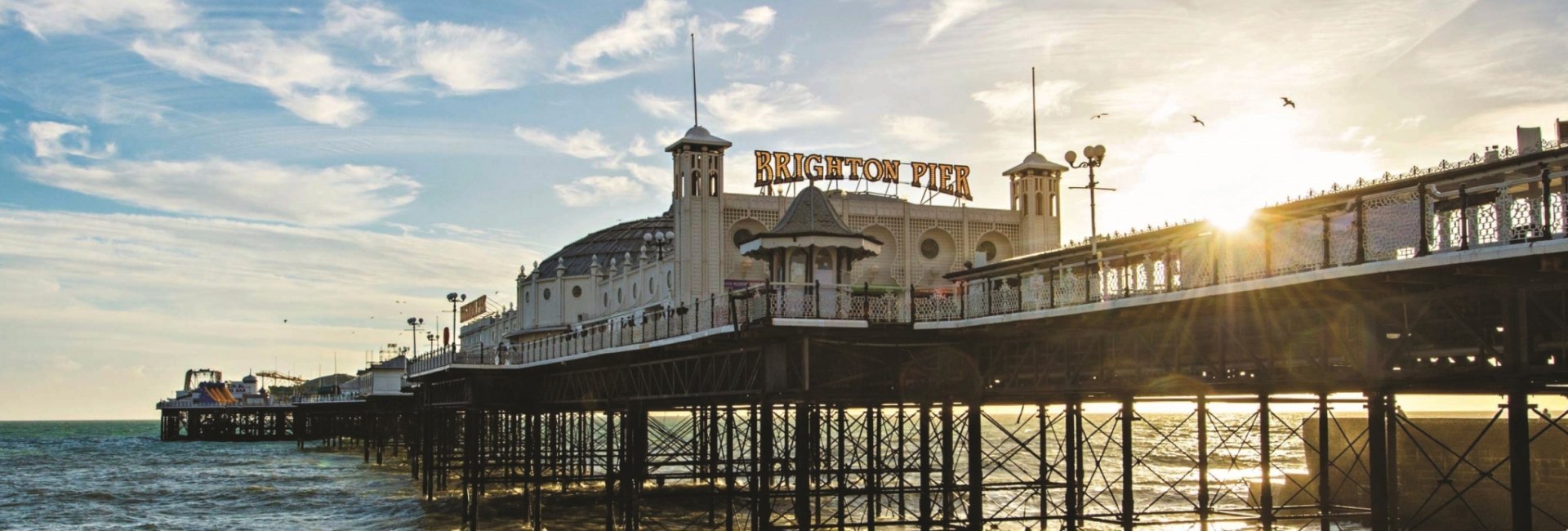
  • Located in central Brighton, you’ll be part of a vibrant art and media community with a strong creative culture and progressive environment.

Why Brighton is a great place to study Photography
Brighton is a city with creativity at its heart, making it the perfect setting to study Photography. From renowned galleries and studios to a thriving network of freelance artists, the city offers endless inspiration and opportunities to engage with the creative community.

Our long heritage in art and design education means you’ll be part of a diverse network of creatives, with access to opportunities and industry connections that extend beyond the campus.

Named one of the best cities on the planet and third best city in the UK by Time Out, Brighton is also a bustling hub for fashion, design and film.

Modules

Year 1
You’ll develop core analogue and digital photography skills across four themed practice modules exploring identity, place, narrative and time. Alongside this, you’ll study the histories and theories of photography to strengthen your ability to analyse images and understand their cultural contexts.

Core modules
Photography and Identity
Photography and Place
The Real and the Imagined
Stillness and Time
Origins and Histories of Photography (Perspectives on Photography 1)
Photographic Documents and Photographic Fictions (Perspectives on Photography 2)

Year 2
You’ll shape your own creative direction by choosing from a range of themed projects and experimenting with media such as moving image and sound. You’ll deepen your understanding of contemporary photographic theory while developing professional skills through exhibitions, independent projects and written proposals. This year prepares you for the self-directed approach of your final year, with regular lectures, seminars and feedback to support your growth.

Core modules
Creative Process for Exhibition
Design for Publication
Concepts and Theories in Contemporary Photography (Perspectives on Photography 3)
Commercial Photography Practices
Research Themes, Methodologies and Proposal (Perspectives on Photography 4)

Optional placement year
An optional placement year gives you the chance to apply your skills in a professional setting, gain industry experience and build valuable contacts before returning for your final year.

Final year
You’ll focus on developing a distinctive personal practice through two major self-directed projects and a piece of written research, applying all the technical, conceptual and professional skills you’ve built through the course. You’ll dive deeply into a photographic topic of your choice while producing ambitious, conceptually-driven visual work. Professional practice sessions and visiting speakers will help you prepare for creative careers and postgraduate pathways.

Core modules
Extended Essay (Perspectives on Photography 5)
Independent Practice 1
Independent Practice 2
Professional Practice
Dissertation (Perspectives on Photography 5)

How to apply

Apply by
14 January

This is the deadline for applications to be completed and sent for this course. If the university or college still has places available you can apply after this date, but your application is not guaranteed to be considered.

Application codes

Course code:
W640
Institution code:
B72
Campus name:
Brighton
Campus Code:
B

Points of entry

The following entry points are available for this course:

  • Year 1
  • Year 2

Open days

Entry requirements

Qualification requirements

UCAS Tariff - 104 - 120 points

Your portfolio of work is the most important part of your applications for this course. It’s not just about finished work, this is your opportunity to show us your thinking, ideas and abilities. We will assess it alongside your UCAS application.

A level - BCC - BBB

Pearson BTEC Level 3 National Extended Diploma (first teaching from September 2016) - MMM - DDM

Access to HE Diploma - M: 24 credits

International Baccalaureate Diploma Programme - 26 points

Must include at least three subjects at Higher Level.

Leaving Certificate - Higher Level (Ireland) (first awarded in 2017) - H2, H3, H3, H3, H3

Or equivalent combination of grades.

GCSE/National 4/National 5

A minimum of English Language and Mathematics at grade C/4

A foundation diploma is not a requirement for entry – it is just one of a range of qualifications (for example, A level, BTEC or Access Diploma etc) that is accepted for admission to the course.

Additional entry requirements

Portfolio

English language requirements

TestGradeAdditional details
IELTS (Academic)66.0 overall with a minimum of 5.5. in each element, or equivalent English Language qualification.

Review our English Language requirements https://www.brighton.ac.uk/international/applying-here/how-to-apply/english-language-requirements/index.aspx

Contextual admissions

Universities and colleges consider more than grades when assessing applications and may make offers based on a range of criteria. Learn more about contextual offers.

At Brighton we recognise that not everyone's background provides the same advantages, and we know that grades are not the only indicator of potential.

If you meet our contextual admissions criteria we will make you an offer which is at least 16 UCAS points lower than our standard offer. You may also be eligible for additional financial and practical support from us through the Brighton Boost cost of living support package.

Learn more on the University of Brighton website

Historical entry grades data BETA

This section shows the range of grades students (with UK A-Levels or Pearson BTEC Level 3 National Extended Diplomas) who received offers were previously accepted with (learn more). It is designed to support your research but does not guarantee whether you will or won't get a place. Admissions teams consider various factors, including interviews, subject requirements, and entrance tests. Check all course entry requirements for eligibility.

Data from:
This course and 2 other cinematics and photography courses
Date range:
2022-2024

Offer rate for UK school & college leavers

74% Students aged 17/18 who applied to this course were offered a place.

How do you compare?

See how students with your grades have been accepted onto this course in the past.

Student Outcomes

Operated by the Office for Students

65 Employment after 15 months (Most common jobs)

75 Go onto work and study

The number of student respondents and response rates can be important in interpreting the data – it is important to note your experience may be different from theirs. This data will be based on the subject area rather than the specific course. Read more about this data on the Discover Uni website.

Fees and funding

Tuition fees

LocationFeeYear
England£9535Year 1
Northern Ireland£9535Year 1
Scotland£9535Year 1
Wales£9535Year 1
Channel Islands£9535Year 1
Republic of Ireland£9535Year 1
EU£17250Year 1
International£17250Year 1

Tuition fee status depends on a number of criteria and varies according to where in the UK you will study. For further guidance on the criteria for home or overseas tuition fees, please refer to the UKCISA website.

Additional fee information

The fees listed in the table above are for full-time UK undergraduate students in academic year 2025-26. You will pay further fees in each year of your course. Fees may increase each year. UK undergraduate and certain postgraduate fees are regulated by the UK government. The annual fee increase will not exceed the UK government's maximum regulated tuition fee limit set for the relevant academic year. Many of our courses include the option of a salaried placement year. Tuition fees for a placement year are charged at a lower rate of £1850. The international tuition fees listed above are for full-time courses during the academic year 2025-26. Further tuition fees are payable in each year of study. Non-regulated tuition fees, which usually apply to international students and UK postgraduate students* are subject to an annual increase of a maximum of 5% or the Consumer Prices Index (CPI), whichever is higher.
*Some designated postgraduate courses are regulated by the UK government – the annual fee increase for eligible UK / Home students on these designated courses will not exceed the UK government’s regulated tuition fee limit set for the relevant academic year.

Like this page