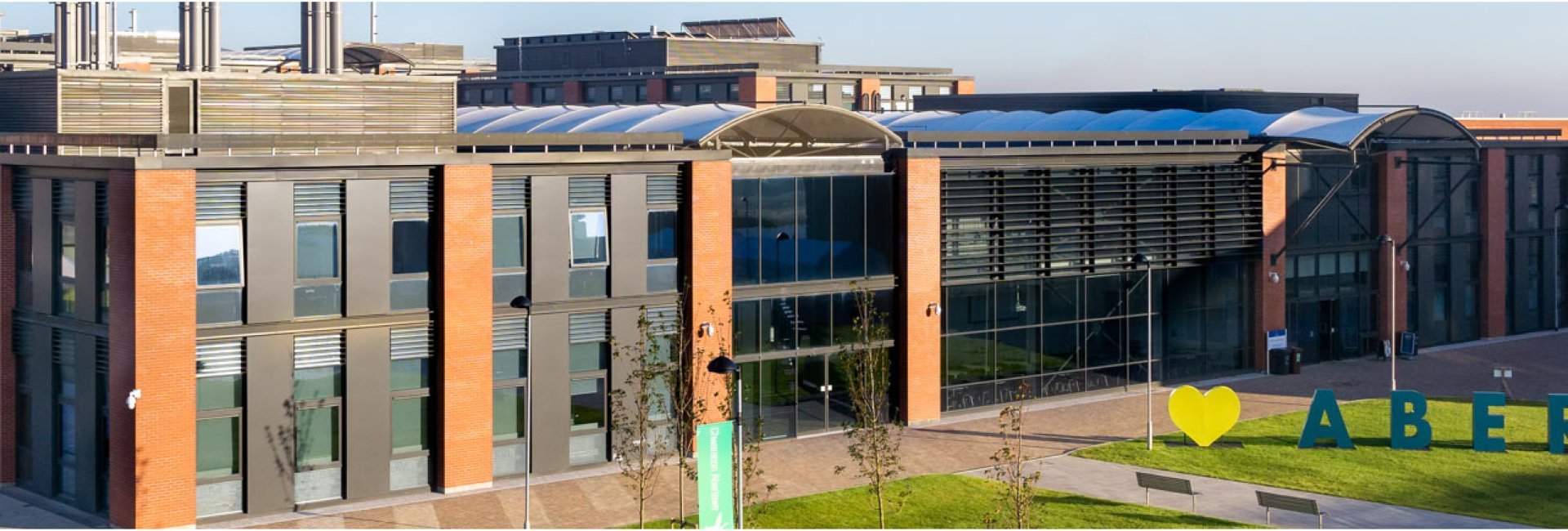
Undergraduate On-Campus Open Day at Swansea University - Singleton Park Campus and Bay Campus - 28 March 2026
28 Mar 2026, 08:30
Swansea
Successful innovation is dependent on the selection and performance of key materials. From cars, aeroplanes and cruise ships, to sports and musical instruments, prosthetics, mobile phones and flexible solar cells, the right materials can help to define technological progress. Materials Science and Engineering explores how the properties of matter can be controlled, enhanced and manipulated to not only improve performance in existing applications but also to establish new technological applications.
Our Materials Science and Engineering degrees will equip you with a comprehensive understanding of materials science and engineering, developing your analytical abilities alongside hands-on experience of advanced equipment, to meet the evolving demands of the UK materials industry and global research sectors, including aerospace, automotive, manufacturing, sports and energy generation.
You will be prepared to respond to pressing global challenges, including climate change, energy transition, resource scarcity and social equity, and will work to consider the broader social and environmental implications of engineering design.
The programme is studied as a 3-year Bachelors of Engineering (BEng), or a 4-year Integrated Master of Engineering (MEng) which meets the academic requirement for registration as a Chartered Engineer. Both our BEng and MEng courses include options to study with a Year Abroad, a Year in Industry and a Foundation Year.
Engineering at Swansea University has a global reputation and attracts students from across the world. Based at our beachfront Bay Campus, overlooking Swansea Bay, Materials Science and Engineering at Swansea University is ranked:
• A UK Top 10 course (Complete University Guide 2026)*
• 2nd in the UK for Student Satisfaction (Complete University Guide 2026)*
• 5th in the UK for Career Prospects (Guardian University Guide 2026)*
• 7th in the UK for Student Experience (Times Good University Guide 2026)
• 9th in the UK for Research (Times Good University Guide 2026)*
Assessed under Materials Technology
*Assessed under General Engineering
In Year 1, you will typically study areas including:
Introduction to Materials Engineering, Materials Resources, Engineering Analysis for Materials, Mechanical Properties of Materials, Instrumental and Analytical Chemistry, Data analysis and simulation
In Year 2, you will typically study areas including:
Software Engineering, AI, Machine Learning and Data Analysis, Research Project Preparation, Functional and Smart Materials, Microstructure Evolution and Control in Metallic Materials, Order and Disorder in Materials, Polymers: Structure and Processing
The third year of this course will be spent on an industry placement. You will have the opportunity to gain real-world industry experience and develop your employability skill set. We have a strong network of industry contacts, and you will receive dedicated support from our employability team, ranging from CV advice to mock interviews.
In Year 4, you will typically study areas including:
Advanced Optical Materials and Devices, Fracture and Fatigue, Individual Engineering Project, Microstructure and Characterisation, Propulsion, Composite Materials, Ceramics
In your final year, you will typically study areas including:
Nanoscale Structures and Devices, Structural Integrity of Aerospace Metals, Sustainability and Environmental Assessment, Power Generation Systems, Socio-Technical Engineering, Additive Manufacturing, Simulation Based Product Design, Aerospace Materials Engineering
Practical skills sessions, lab work seminars, and workshops predominantly take place in person, allowing for group working and demonstrations. We also operate virtual labs and Simulated Learning Environments which will facilitate greater access to training opportunities in the future. However, our approach also includes the use of some online learning to support and enhance traditional face-to-face teaching.
Professionally accredited courses provide industry-wide recognition of the quality of your qualification.
The following entry points are available for this course:
If you are an International Student, please visit our International pages for more information about entry requirements:- http://www.swansea.ac.uk/international/students/requirements/
Discover what it's like to study Materials Science and Engineering with a Year in Industry at Swansea University: insights on the course, making friends, personal statement tips, uni prep, and recommended books, podcasts, and videos.
GCSEs: Mathematics C, English Language C.
English Language Requirements at Swansea University https://www.swansea.ac.uk/admissions/english-language-requirements/
UK applicants who meet course requirements are guaranteed a conditional offer. We assess applications on individual merit. We consider making reduced offers, eg. to Care Leavers or students with extenuating circumstances. We encourage you to disclose any relevant circumstances.
The Advanced Skills Baccalaureate Wales is considered as equivalent to one full A-Level and students can take x2 A-levels alongside this. EPQ students predicted Grade B or above will receive a one-grade offer reduction.
This section shows the range of grades students (with UK A-Levels or Pearson BTEC Level 3 National Extended Diplomas) who received offers were previously accepted with (learn more). It is designed to support your research but does not guarantee whether you will or won't get a place. Admissions teams consider various factors, including interviews, subject requirements, and entrance tests. Check all course entry requirements for eligibility.
Students aged 17/18 who applied to this course were offered a place.
See how students with your grades have been accepted onto this course in the past.
Operated by the Office for Students
Employment after 15 months (Most common jobs)
Go onto work and study
The number of student respondents and response rates can be important in interpreting the data – it is important to note your experience may be different from theirs. This data will be based on the subject area rather than the specific course. Read more about this data on the Discover Uni website.
No fee information has been provided for this course
Tuition fee status depends on a number of criteria and varies according to where in the UK you will study. For further guidance on the criteria for home or overseas tuition fees, please refer to the UKCISA website.
For the latest fee information, please check the individual course page on our website. Our full range of programmes are listed here: https://www.swansea.ac.uk/undergraduate/courses/
Further information on tuition fees can be found here: https://www.swansea.ac.uk/undergraduate/fees-and-funding/tuition-fees/
Singleton Park
Swansea
SA2 8PP
Visit our website Visit our course page
Ask us a question - undergraduate enquiries.
Email:study@swansea.ac.uk
Phone:01792 295111