Course contact details
Admissions
Email:admissions@bishopburton.ac.uk
Phone:01964 553000
University Centre Bishop Burton
Bishop Burton
Beverley
HU17 8QG

The BSc (Hons) Precision Agriculture programme will prepare you to be a farmer or agricultural technologist of the future. You will gain the skills and knowledge required to develop and manage adaptable, innovative, sustainable and successful business ventures within the agriculture sector.
By studying a broad spectrum of modules, you will have the key attributes to go into higher level graduate roles, including the opportunity to tailor your learning to your career goals with option modules.
You will learn how to operate key software packages such as Farmplan, Gate Keeper and Livestock Manager, which is utilised within 80% of UK farming businesses in the UK, enabling them to evaluate farm data to reduce inputs and improve outputs on the farm, which is seen as a key outcome for any farm business manager.
Coures Aims
Provide you with a sound academic understanding of the broad range of areas relating to global and regional crop and livestock production and the underpinning scientific, economic and business principles.
Help you to develop your proactivity and independence, enabling you to apply and develop your own perspectives and explore alternative solutions within the dynamic agriculture sector.
Develop your skills and knowledge to be an effective manager within agricultural and environmental businesses.
Equip you with the vocational skills that are essential for entering a diverse range of employment opportunities within the global agriculture sector.
Facilitate you into and through high level employment in agriculture and related sectors, including technological advances.
Facilitate your development of transferable skills, allowing you to apply your knowledge and skills to the social and environmental context of agricultural management.
Provide you with the skills to use, evaluate and implement new technologies within the agricultural sector.
Ensure that you are empowered to make advancement in sustainably managing the environment through technological advances.
Learning and Teaching Approach
The programme is delivered with a variety of learning and teaching approaches. For all modules, there are theory lectures delivered, aimed to deliver the core content, provide the underpinning knowledge and facilitate further expansion of such concepts by the students, through independent study.
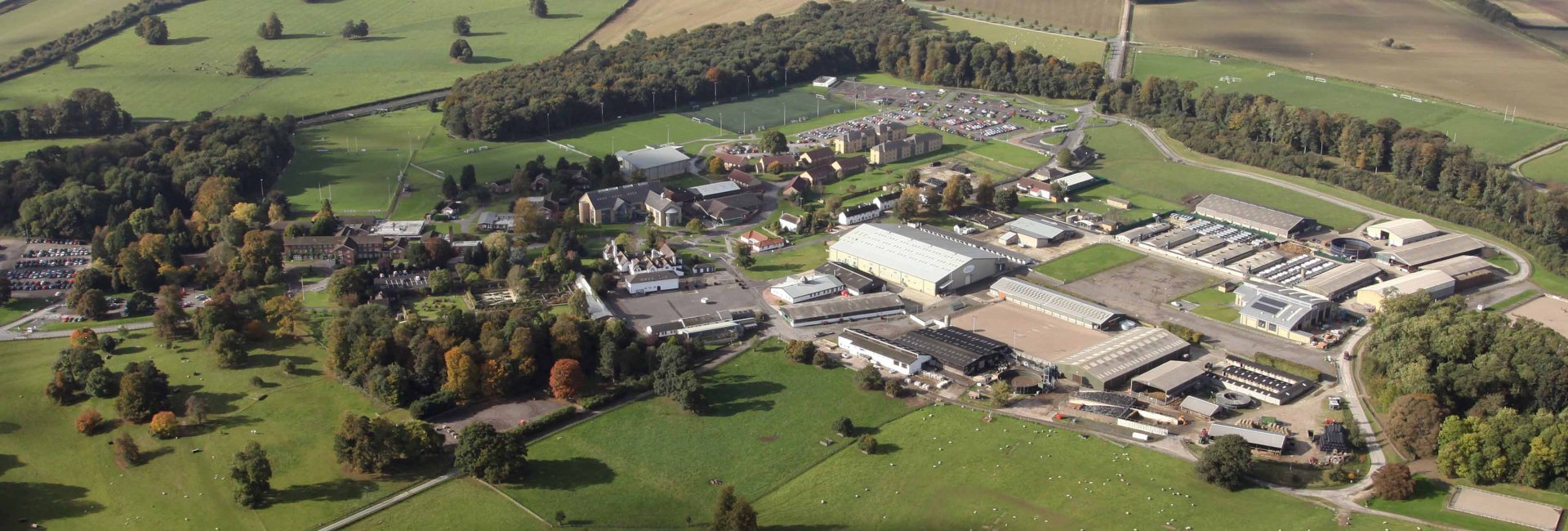
To complement the theory lectures, students have group seminars that are used to reinforce those concepts delivered theoretically. The seminars focus on delivering using a student-centred approach to enhance the independent learning that takes place outside of the classroom Practical sessions both at the Bishop Burton Farm are also incorporated into a range of modules on this programme making it extremely applied and prepares students effectively for the workplace. The academic curriculum provided by the programme is supported throughout by the extensive practical facilities offered at the college’s farm.
Contact Time
Contact time includes approximately 16 hours a week to include lectures, seminars, practicals and tutorials. Students are also expected to carry out a significant amount of independent study in addition to contact time (approximately 25-30 hours a week). Independent study includes reading around the subject, preparing for tutorials and seminars, preparing for, and completing, module assessments and revision; forming an essential part of a student’s learning journey.
Career Opportunities
Careers in farm management, machinery dealerships, as technology programmers and trainee agronomists.
Year 1
Academic, Employment and Professional Skills
Fundamentals of Business
Livestock Production
Mechanisation
Plant and Soil Science
Crop Production
Applied Precision Agriculture
Introduction to Research Skills
Year 2
Agriculture and the Environment
Financial Management and Planning
Enterprise and Entrepreneurship
Research Methods and Analysis
Option modules: You will either choose Precision Technology in the Wider Sector, and Agronomy; or
Livestock Science, and Robotics & Automated Technology (Option modules will run where there are sufficient student numbers, otherwise an alternative option module may be offered.)
Year 3
Dissertation
Sustainable Food Production
Rural Strategic Business Management
Option modules: Advanced Agronomic Technology, Advanced Livestock Science, Rural Operations Management and Rural Marketing Management (Option modules will run where there are sufficient student numbers, otherwise an alternative option module may be offered.)
This course may be available at alternative locations, please check if other course options are available.
Course optionsLife and/or experience of non-traditional students will be taken into account when considering applications. The successful completion of an entry task may be required when considering applications without the required formal entry qualifications.
Advanced entry may be possible due to prior experience or certificated learning; applicants will be invited to complete the accreditation of prior learning approval process.
Entry requirements for students joining after Year 1: For years 2 and 3 entry, the University of Lincoln APEL process will need to be completed. You will be contacted by a member of our academic team.
If first language is not English, GCSE grade C/4 English or equivalent is not held, English language proficiency level such as International English Language Testing System (IELTS) 6.0 overall (with a minimum 5.5 in each skill) will need evidencing.
This section shows the range of grades that students who received offers were previously accepted on to this course with (learn more).
It is designed to support your research but does not guarantee whether you will or won't get a place.
Admissions teams consider various factors, including interviews, subject requirements, and entrance tests. Check all course entry requirements for eligibility.
This course may have Historical entry grades data available, please select a course option to view.
Course optionsThis report uses your grades to show how students with similar results have done when applying to this course in the past. Sometimes, there isn’t data for every possible set of grades. When that happens, universities and colleges occasionally fill in the gaps for sets of grades that are typically accepted.
| Location | Fee | Year |
|---|---|---|
| England, Scotland, Wales & Northern Ireland | £9250 | |
| International | £13177 |
Tuition fee status depends on a number of criteria and varies according to where in the UK you will study. For further guidance on the criteria for home or overseas tuition fees, please refer to the UKCISA website.
No additional fees or cost information has been supplied for this course, please contact the provider directly.
Email:admissions@bishopburton.ac.uk
Phone:01964 553000
Bishop Burton
Beverley
HU17 8QG
At University Centre Bishop Burton