Clearing contact details
Admissions
Email:admissions@rau.ac.uk
Phone:01285 889912
Fax: 01285 650219
Course contact details
Admissions
Email:admissions@rau.ac.uk
Phone:01285 889912
Royal Agricultural University
Stroud Road
Cirencester
GL7 6JS

People, society and governments are becoming increasingly aware of environmental problems, many of which are now becoming critical, such as a range of problems linked to climate change. In order to address these pressing issues, a framework of supporting policy, funding and hence employment, is developing, requiring graduates who have the right skills and knowledge in environmental sustainability, and who can make a difference after securing professional work in this sector.
The BSc/BA Environment and Sustainability will help students to ‘make a difference’, giving them the contextual overview of key issues from the global to local scales, and examining the various factors at play and how these interact. In turn, the suite of modules will allow for a more detailed examination of specific aspects, with some flexibility for students to tailor their study towards their own areas of interest, helping bolster career pathways etc.
In the final year, students can choose either a BSc or BA award depending on which modules they select.
• The BSc award focuses on how all things environmental work and why, exploring the science, process and mechanisms behind this, optimizing sustainable management decisions.
• The BA award considers how environmental things work, but places emphasis on the role of society and people, policy and frameworks, and how each of these can act as drivers of change.
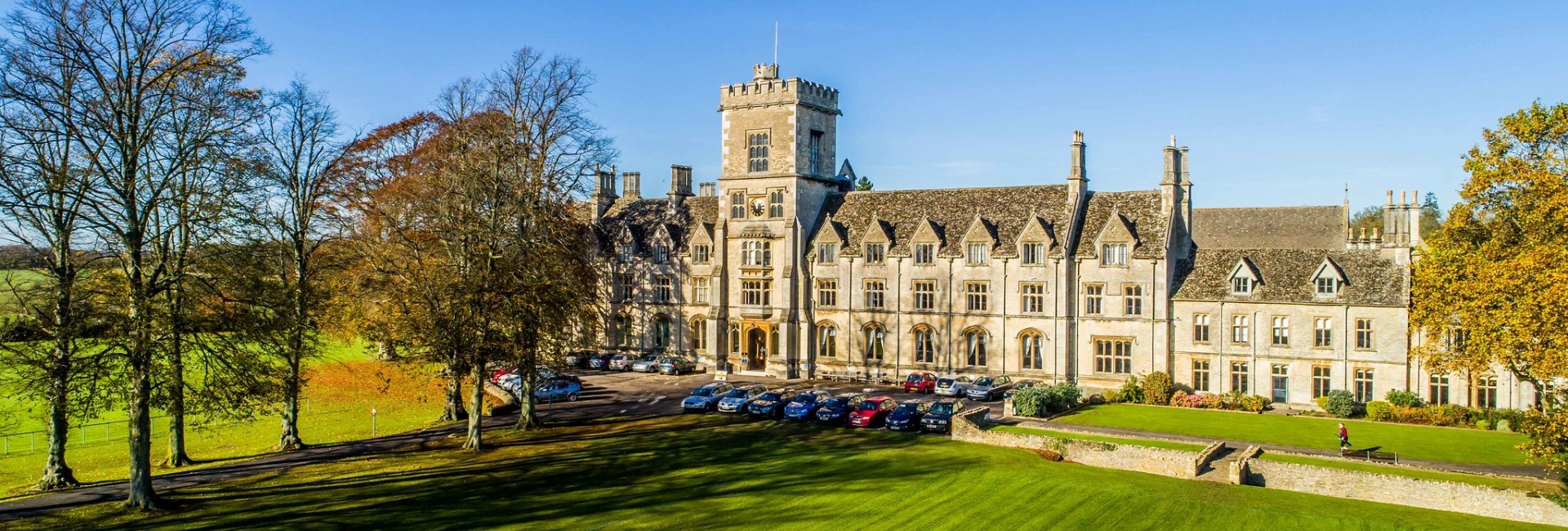
The Royal Agricultural University has a sustained and exemplary history of teaching students, dating back to 1845. The BSc/ BA Environment and Sustainability course benefits from this, particularly so from the land-based perspective where it is able to integrate important elements of agriculture, food production and retail into sustainable environmental management systems.
The modules available for this degree are shown below. They may change for your year of study as we regularly review our module offerings to ensure they’re informed by the latest research and teaching methods.
For information about course structure and the modules you will be studying, please visit the RAU course webpage: https://www.rau.ac.uk/courses/undergraduate/bsc-ba-environment-sustainability
A range of assessment techniques are applied throughout the programme to test learning outcomes of each module. These will be clearly identified on the VLE/ Gateway pages for each module, and could include:
• Essays
• Reports – either academic research or professional
• Case studies
• Group work exercises
• Oral presentations
• In-class / in-lab / in field tests – e.g. multiple choice, short answer
Exams
• Skills observation
• Peer review
• Professional practice report
• Subject specific exercise
• Academic poster
• Research proposal
• Dissertation
This course is available in Clearing. If you have submitted an application, you can add this course. If you haven’t sent us an application yet, you can do this until 24th September 2026.
This is the equal consideration deadline. You can still apply after this date, but your application may not receive guaranteed consideration.

Royal Agricultural University has participated in the Teaching Excellence Framework. These ratings were awarded in 2023, for four years.
See why these ratings were awarded
What does this TEF outcome mean?
The following entry points are available for this course:
https://www.rau.ac.uk/student-life/international-students .
Find out more about qualification requirements for this course.
| Test | Grade | Additional details |
|---|---|---|
| IELTS (Academic) | 6 | none of the four elements below 5.5 |
English language requirementshttps://www.rau.ac.uk/student-life/international-students/english-language-requirements
At the Royal Agricultural University we want to encourage students from a wide range of backgrounds to participate in higher education. The additional insight gained through contextual information allows us to recognise a student’s achievements and identify their potential to succeed in the context of their background and experience. We are, therefore, committed to offering all eligible students a contextual offer, which is 8 UCAS tariff points lower than our standard offer.
This section shows the range of grades that students who received offers were previously accepted on to this course with (learn more).
It is designed to support your research but does not guarantee whether you will or won't get a place.
Admissions teams consider various factors, including interviews, subject requirements, and entrance tests. Check all course entry requirements for eligibility.
We are unable to show previous accepted grades for this course. This could be because the course is new, it's a postgraduate course, there isn't enough historical data, or the provider has opted out of sharing their entry grades data for this course - learn more.
This report uses your grades to show how students with similar results have done when applying to this course in the past. Sometimes, there isn’t data for every possible set of grades. When that happens, universities and colleges occasionally fill in the gaps for sets of grades that are typically accepted.
| Location | Fee | Year |
|---|
Tuition fee status depends on a number of criteria and varies according to where in the UK you will study. For further guidance on the criteria for home or overseas tuition fees, please refer to the UKCISA website.
No additional fees or cost information has been supplied for this course, please contact the provider directly.
see rau website
Email:admissions@rau.ac.uk
Phone:01285 889912
Fax: 01285 650219
Email:admissions@rau.ac.uk
Phone:01285 889912
Stroud Road
Cirencester
GL7 6JS
At Royal Agricultural University