Course summary
The Foundation Degree in Integrated Engineering provides a solid foundation in general engineering science and mathematics, with specialisms in mechanical, electrical, and manufacturing engineering. The programme is regulated by the Quality Assurance Agency for Higher Education and the Office for Students and the qualification is awarded by Sheffield Hallam University.
Validated by Sheffield Hallam University, this two-year programme has been designed in consultation with local employers who have expressed a need for engineering technicians to have specialist knowledge and an appreciation of the challenges across the various engineering disciplines.
The Foundation Degree programme provides the opportunity for progression from Level 3 courses such as the BTEC Extended Diploma (following a further year’s study) to an honours degree in Engineering. The programme is accredited by the Institution of Engineering and Technology (IET) on behalf of the Engineering Council and hence will partly meet the academic requirement for registration as an Incorporated Engineer.
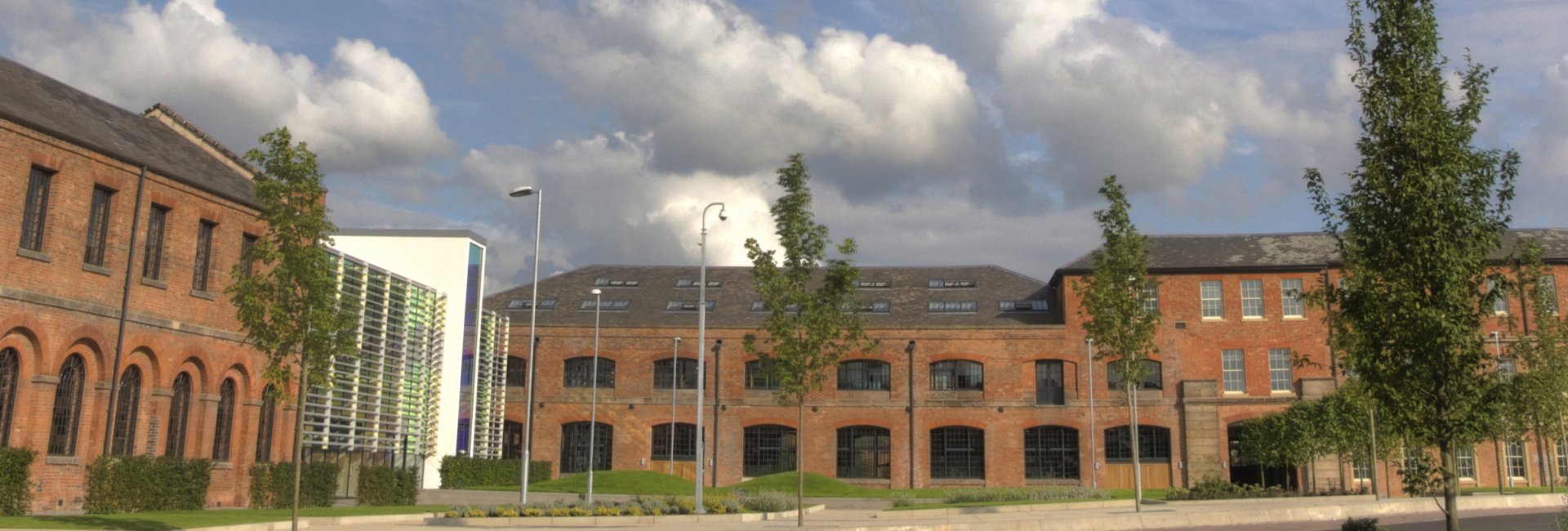
The programme is generally offered as a day-release (1 day per week) programme for those already in the workplace, either as a standalone qualification or part of a higher apprenticeship. Delivery occurs at our Roundhouse Campus and students are generally on site for nine hours of class time for 36 weeks per year.
Over the two years, the programme is based upon 12 modules covering major topics relating to mechanical, electrical, or manufacturing engineering. Each module is worth 20 credits and 240 credits are required to achieve the Foundation Degree qualifications. In addition to the time spent in College, it is expected that at least the same amount of time is spent working outside the College on assessments, research, revision and other learning activities.
Further information about the Foundation Degree course can be obtained from the Engineering HE Team Manager.
Modules
There are three pathways available on the FDEng Integrated Engineering (namely Mechanical, Electrical/Electronic and Manufacturing), each comprising a range of specialist and core modules:
Year 1 (all pathways):
Maths and Engineering Science
Engineering Principles
Business and Project Management
Investigative Project
Manufacturing Processes (Mechanical and Manufacturing route), or
Analogue and Digital Electronics I (Electrical/Electronic route).
Year 2:
Mechanical Route:
Engineering Design and Manufacture
Maths for Materials and Design
Materials Engineering
Mechanics of Solids and Dynamics
Thermofluids Engineering
Work-Based Project
Manufacturing Route:
Engineering Design and Manufacture
Maths for Materials and Design
Materials Engineering
Process Improvement and Lean Operations
Production and Operations Management
Work-Based Project
Electrical/Electronic Route:
Analogue and Digital Electronics II
Machines and Drives
Maths and Control
Microprocessor Systems
Introduction to PLCs
Work-Based Project
Assessment method
Each module has a different approach to assessment, optimised for the materials studied and skills acquired. There is a common theme of high quality presentation, referenced research and in-depth analysis that runs through all assessments, be they examinations, seminars, coursework or laboratory reports.
The intensity of the programme means that any prospective student must be able to make the commitment to study extensively outside of normal College hours.
Qualified teacher status (QTS)
To work as a teacher at a state school in England or Wales, you will need to achieve qualified teacher status (QTS). This is offered on this course for the following level:
- Course does not award QTS