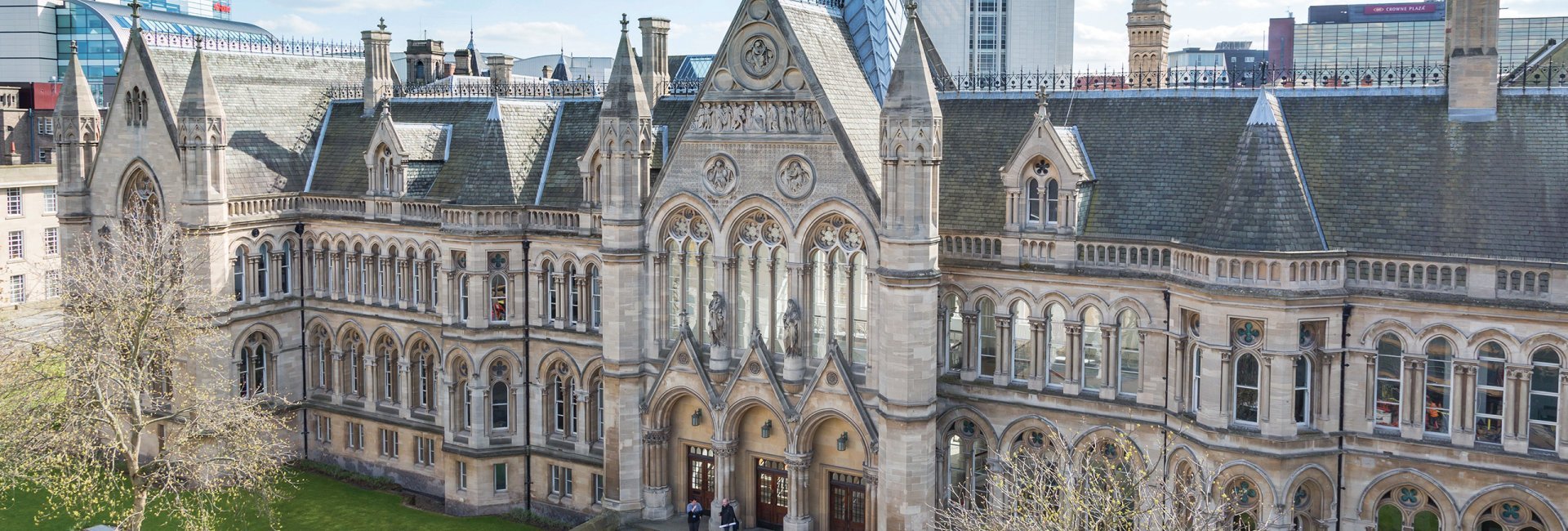
Nottingham Trent University - 7 March Open Day
7 Mar 2026, 09:00
Nottingham
The BSc (Hons) Psychology with Sociology degree is a British Psychological Society (BPS) accredited course that combines comprehensive training in psychology with the study of the structure and dynamics of social systems and society as a whole.
The course covers all the core areas of Psychology stipulated by the BPS curriculum. This accounts for two-thirds of the course and includes the workings of the brain; the processes and mechanisms of human thinking, feeling and behaviour; and how psychologists, psychological research and therapy can make a tangible and positive difference to people’s lives and society. The remaining third of the curriculum considers the social structures of society and sociological perspectives on issues such as crime, gender and poverty.
You'll be taught by our team of over 150 expert psychologists in one of the largest Psychology departments in the UK, and will be able to take advantage of our innovative Psychology laboratories, exclusively for use by you to carry out your research and data analysis.
Our teaching is delivered by scholars who are recognised as world-leading as evidenced by the 2021 Research Excellence Framework (REF).
Our Psychology courses are accredited by the British Psychological Society (BPS) so as long as you graduate with at least a 2.2 honours degree you will be eligible to receive the Graduate Basis for Chartered Membership of the BPS – a necessary qualification if you wish to pursue further training and a career as a professional psychologist.
Why study Psychology at NTU
All of our courses offer work-like experience and we'll support you to find a placement. Through our sandwich years or in-module placement opportunities, you'll get the opportunity to apply your knowledge in the real world.
Tailor your learning experience through optional modules and pathways. We offer a wide range of optional modules which are taught by experts in their field. In your final year you'll be able to choose modules related to this specialism as well as a completely free choice from the modules outlined below.
Get involved in our amazing UK and overseas opportunities such as field trips and international summer schools. You could even study abroad for a year at a partner university, or take part in NTU SHIELD, our mental health and wellbeing service for adolescents experiencing difficulties or challenges.
Your future employability and careers prospects are endless. In addition to working directly in Psychology, you will also develop transferable skills in communication, management, analysis and insight that are highly sought in many areas.
In the first two years of your degree, you'll complete an introduction to psychology and core modules in biological, social, developmental, and cognitive psychology, and you'll undertake training in research methods and statistics.
In sociology, you'll complete additional modules covering social structure and social life, thinking sociologically, classical sociological theory, and another sociology module of your choice.
In your final year, you'll sit a further core module in psychology, and can tailor your studies (often with a view to future employment opportunities) by choosing from a range of optional psychology and sociology modules. In your final year you'll also complete a research project in psychology, focused on a topic of your choosing under the supervision of a research-active member of staff.
Year One Core modules are: Introduction to Psychology, Research Design and Practice (One), Analysing Data: Methods and Tools (One), Foundations of Social Theory; What is Society? and Identity, Culture and Student Life.
Year Two core modules are: Brain, Behaviour and Cognition: Understanding the Mind; Social Evolution and Individual Development; Analysing Data: Methods and Tools (Two); Reseach Design and Practice (Two); Analytical Thinking in Psychology; and Constructing Modern Societies.
Final year core modules are: Psychology Research Project, and Psychological Applications to Work Settings. You also have the choice of optional modules where you will pick two optional modules one from Set One and one from Set Two. See the website for more information on optional modules.
Throughout this course, you'll be assessed using a variety of methods including coursework, written exams, presentations, and multiple choice phase tests.
Professionally accredited courses provide industry-wide recognition of the quality of your qualification.
The following entry points are available for this course:
A lower offer may be made based on a range of factors, including your background (such as where you live and the school or college you attended), your experiences and individual circumstances (you may have been in care, for example). This is called a contextual offer and we get data from UCAS to make these decisions. NTU offers a student experience like no other, and this approach helps us to find students who have the potential to succeed here, but may have faced barriers that can make it more difficult to access university.
We also consider equivalent qualifications and combinations. Please contact Nottingham Trent University Admissions team for further information.
NTU makes contextual offers for this course to give everyone a fair chance to access their chosen degree.
Contextual offers are lower than our standard entry criteria or may be an unconditional offer for courses that require a portfolio. We also take individual circumstances into account when we receive results and may accept grades lower than our published criteria.
We use a range of data from UCAS to make our offers and more information on our approach is available at the link below.
This section shows the range of grades students (with UK A-Levels or Pearson BTEC Level 3 National Extended Diplomas) who received offers were previously accepted with (learn more). It is designed to support your research but does not guarantee whether you will or won't get a place. Admissions teams consider various factors, including interviews, subject requirements, and entrance tests. Check all course entry requirements for eligibility.
Students aged 17/18 who applied to this course were offered a place.
See how students with your grades have been accepted onto this course in the past.
Operated by the Office for Students
Employment after 15 months (Most common jobs)
Go onto work and study
The number of student respondents and response rates can be important in interpreting the data – it is important to note your experience may be different from theirs. This data will be based on the subject area rather than the specific course. Read more about this data on the Discover Uni website.
| Location | Fee | Year |
|---|---|---|
| England | £9790 | Year 1 |
| Northern Ireland | £9790 | Year 1 |
| Scotland | £9790 | Year 1 |
| Wales | £9790 | Year 1 |
| EU | £17950 | Year 1 |
| International | £17950 | Year 1 |
Tuition fee status depends on a number of criteria and varies according to where in the UK you will study. For further guidance on the criteria for home or overseas tuition fees, please refer to the UKCISA website.
The tuition fees above are subject to parliamentary procedure. They haven't been confirmed yet, but we expect them to be finalised by May 2026. The level of tuition fees for the second and subsequent years of your undergraduate course may increase in line with inflation and as specified by the UK government.
50 Shakespeare Street
Nottingham
NG1 4FQ
Visit our website Visit our course page
Phone:+44(0)115 848 4200
Phone:+44 (0) 115 848 4200