Course contact details
Admissions Team
Email:admissions@hartpury.ac.uk
Phone:01452 702333
Hartpury University
Hartpury House
Hartpury
Gloucester
GL19 3BE

If you want to progress into an agricultural management career, helping to find solutions to the world's most pressing issue of food production and land use, then this is the ideal course for you.
You don’t need to have an agricultural background; you simply need the passion and drive to work within a fast-changing industry and make that difference.
You'll learn how to build a productive, resilient and sustainable industry - whether as a farm manager, agronomist, economist, policymaker, researcher, scientist or consultant – career opportunities are diverse.
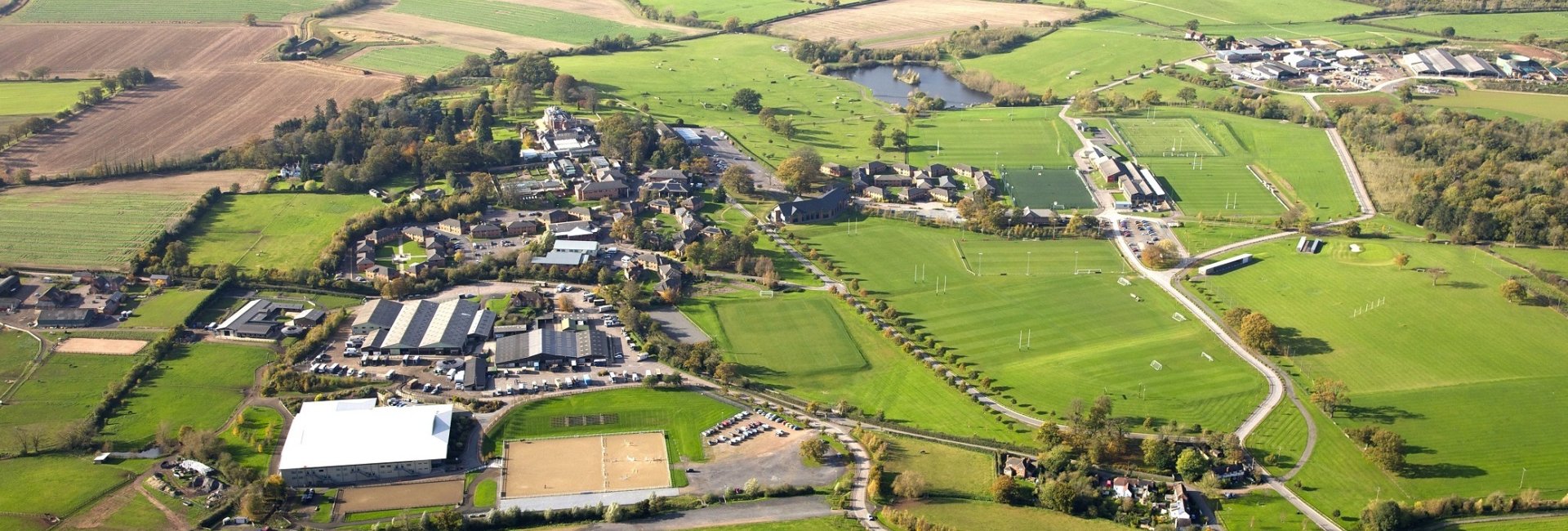
The extensive industry experience of lecturers, an on-campus commercial farm that supplies Muller, Sainsbury's and Glencore, as well as our £2 million Agri-Tech Centre, will prepare you to make that positive impact on the future.
You'll have access to 400 hectares of commercial farmland, real-world business briefs and industry placements. You’ll benefit from up to 300 hours working and applying your knowledge as part of your degree. This includes a supported work placement in the first year of study and periods of industry engagement in years two and three that count as credits towards your degree meaning you'll graduate ready for employment.
Our modules are developed regularly to reflect student and industry demands, ensuring you’re well prepared to enter skilled employment on graduation. The majority of courses are comprised of both compulsory and optional modules, the latter of which you'll be able to choose from to suit your interests and career goals. Most courses also include work placement learning, to help you gain essential experience for your future.
Modules include: Introduction to Livestock Science, Introduction to Crop Science, Soil and Grassland Management, Introduction to Agricultural Technologies, Farm Business Management and Agricultural Policy, Research Methods for Agricultural and Animal Scientists, Agronomy, Livestock Health and Disease, Industry Engagement in Agriculture, Dissertation, Agricultural Social Licence and One Health, Developments in Crop Science, Developments in Crop/Livestock Science, Skills for Agriculture, Agricultural Placement.
Modules are sometimes subject to change.
Optional modules change each year - you can attend introductory sessions before deciding which ones to study. For more information, please visit https://www.hartpury.ac.uk/university/courses/undergraduate/bsc-hons-agriculture/

Hartpury University has participated in the Teaching Excellence Framework. These ratings were awarded in 2023, for four years.
See why these ratings were awarded
What does this TEF outcome mean?
This course may be available at alternative locations, please check if other course options are available.
Course optionsIn addition to the above, we require a minimum of five GCSEs at grade 9-4 (A*-C), to include English and Maths. We will consider equivalencies including but not limited to functional skills level 2, Irish Ordinary level, National 5s, IB standard level.
We will consider combinations of level three qualifications.
We welcome applications from individuals with equivalent, non-UK qualifications and mature students (over 21). We may interview as part of the application process.
The minimum academic entry requirement for this programme is 72 UCAS tariff points, providing this is combined with relevant experience.
We strive to ensure our admissions processes promote fair access and equality of opportunity, and align with sector good practice. A Contextual Offer is a lower than normal tariff offer that recognises the potential of students whose personal circumstances may have restricted achievement at school or college.
Further details can be found in the Contextual Offer Statement.
This section shows the range of grades that students who received offers were previously accepted on to this course with (learn more).
It is designed to support your research but does not guarantee whether you will or won't get a place.
Admissions teams consider various factors, including interviews, subject requirements, and entrance tests. Check all course entry requirements for eligibility.
This course may have Historical entry grades data available, please select a course option to view.
Course optionsThis report uses your grades to show how students with similar results have done when applying to this course in the past. Sometimes, there isn’t data for every possible set of grades. When that happens, universities and colleges occasionally fill in the gaps for sets of grades that are typically accepted.
| Location | Fee | Year |
|---|---|---|
| England, Scotland, Wales, Northern Ireland, Channel Islands & Republic of Ireland | £10050 |
Tuition fee status depends on a number of criteria and varies according to where in the UK you will study. For further guidance on the criteria for home or overseas tuition fees, please refer to the UKCISA website.
For full fee details including sandwich year, international tuition fees, bursaries and additional costs relating to this programme please visit the course page on our website.
Studying a degree is a worthwhile investment, providing opportunities and experiences to help you to carve out a rewarding and successful future. We know that accessing funding, in the form of loans, grants, bursaries and scholarships, can make studying a degree possible for many students.
Alongside government loans, Hartpury University and our partners offer a range of financial support packages to eligible students applying for our courses. Please visit our student finance page for more information on what’s on offer to help you with your study costs: http://www.hartpury.ac.uk/university/facilities/life-at-hartpury/finance/
Email:admissions@hartpury.ac.uk
Phone:01452 702333
Hartpury House
Hartpury
Gloucester
GL19 3BE
At Hartpury University