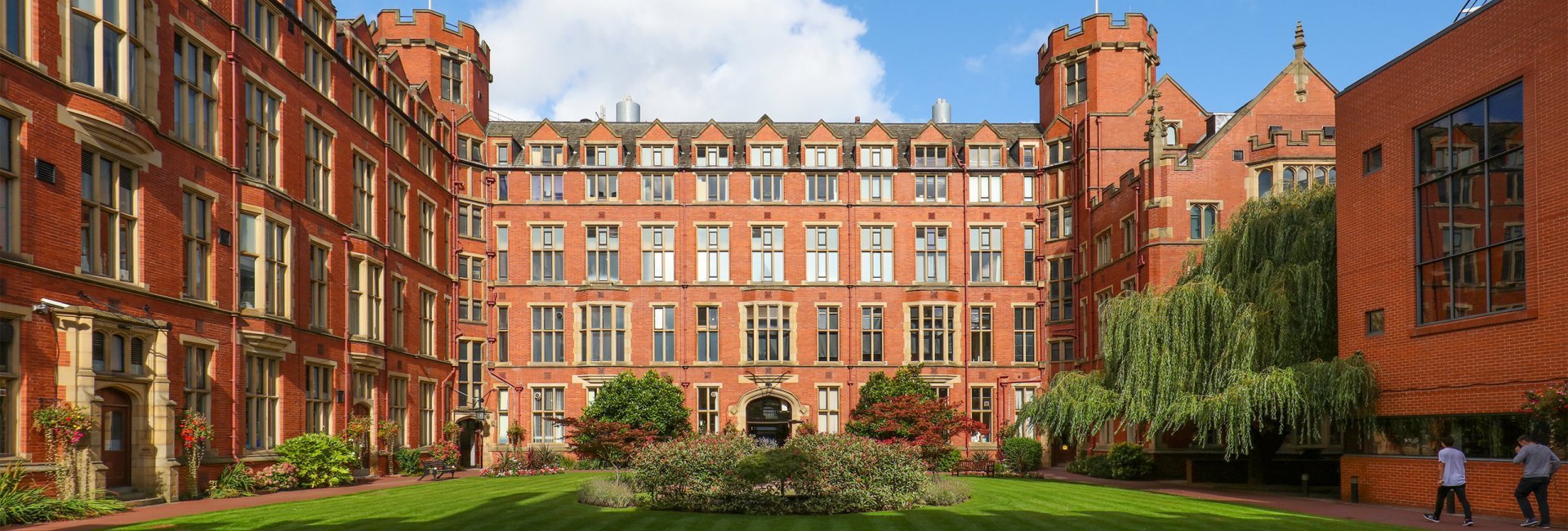
University of Sheffield - undergraduate open day
20 Jun 2026, 09:00
Sheffield

This programme is a one-year extension to our BSc degree, allowing further specialisation. In addition to advanced taught modules, including topics such as Computer Vision, Reinforcement Learning and Digital Forensics, you will undertake a significant group research project in a specialist area.
Embark on a transformative journey with our hands-on and comprehensive four-year MComp in Computer Science, where you will learn the fundamentals of computer science and work collaboratively on a specialised research project.
Delve into the core concepts of computer science to develop your problem-solving skills, and learn how to apply your knowledge to engineer solutions that shape our digital world.
In this ever-evolving field there are no shortage of subjects to explore, and you will have the chance to experiment with cutting-edge technologies to develop your skills. These include speech recognition, voice synthesis, text summarisation, and machine learning to name a few.
Core modules in years one and two will provide you with the foundations of computer science, while in the later years a range of optional modules will allow you to tailor your studies to your own interests. These include topics such as software reengineering, cyber security, and more.
On top of these specialised modules, the focus of your third year is a dissertation project, where you will have scope for creative and intellectual exploration through a year long individual project guided by one of your lecturers.
In your fourth year you will be able to specialise further and get the chance to work alongside our research staff as part of a group research project. Plus, you will have the option to participate in Genesys Solutions – our student-led software development organisation – throughout your final year, solving customer’s problems, using agile software engineering and lean startup practice.
As well as learning to program and think critically, you will be encouraged to work in teams, develop your communication skills, and think about the impact of your work in a real-world context. These are essential for a career in industry or research, and demonstrate the well-rounded education our programme will provide you.
Accreditation
This course is accredited by the British Computer Society (BCS). It fully meets the requirements for Chartered Information Technology Professional (CITP) and Chartered Engineer (CEng).
Why study this course?
Research-led teaching - Engage in a substantial piece of group research, culminating with the possible production of a paper, as well as a final conference-style presentation.
Be part of a student-led software company - Support real customers to solve genuine problems, using agile software engineering and lean startup practice – preparing you for an exciting and varied career.
Specialist teaching and facilities - You will have access to the latest hardware, software and operating systems, high-spec graphics computers, and a robotics arena in our dedicated computer labs. Our lecturers are renowned computer scientists, and their research shapes our teaching.
Professional skills and group work - Professional, communication and presentation skills help to create more employable computer scientists and software engineers. These are extremely valuable to companies, making you a well-rounded and highly prized candidate.
Support throughout your degree - Our dedicated student welfare advisor provides support - for example, if you are feeling down, overwhelmed or struggling to adjust to student life.
This is the equal consideration deadline. You can still apply after this date, but your application may not receive guaranteed consideration.

University of Sheffield has participated in the Teaching Excellence Framework. These ratings were awarded in 2023, for four years.
See why these ratings were awarded
What does this TEF outcome mean?
The following entry points are available for this course:
A*AA including Maths; AAA including Maths and Computer Science
Distinction in the Digital Production, Design and Development T Level, including grade A in the core component + A in A Level Maths
Award of Access to HE Diploma in a relevant subject, with 45 credits at Level 3, including 42 at Distinction (to include 18 credits in Maths), and 3 at Merit
AAAAA in Scottish Highers + A in Maths at Advanced Higher; AAABB in Scottish Highers + AA in Maths and Computing Science at Advanced Higher
in Engineering, Applied Science, IT or Computing + A in A Level Maths
38, with 6 in HL Maths; 36, with 6 in HL Maths and Computer Science. 36, with 6 in HL Maths, and A in a Computer Science based Extended Essay; 34, with 6 in HL Maths and 5 in HL Computer Science, and A in a Computer Science based Extended Essay.
in Engineering, Applied Science (inc Biomedical Science, Analytical & Forensic Science or Physical Science), IT or Computing + A in A Level Maths
including Maths
To find out if you're eligible for additional consideration or an alternative offer, visit: ww.sheffield.ac.uk/undergraduate/apply/access-sheffield https://www.sheffield.ac.uk/undergraduate
You must demonstrate that your English is good enough for you to successfully complete your course. For this course we require: GCSE English Language at grade 4/C; IELTS grade of 6.5 with a minimum of 6.0 in each component; or an alternative acceptable English language qualificationhttps://www.sheffield.ac.uk/undergraduate/apply/english-language
The entry grades data only represents a proportion of our cohort. We accept a broad range of qualifications on our degrees and we're committed to ensuring all students with the potential to succeed at Sheffield are informed and feel encouraged to apply. If you meet one or more of our Access Sheffield criteria, we may be able to give your application additional consideration when we receive it and when exam results are released.
This section shows the range of grades that students who received offers were previously accepted on to this course with (learn more).
It is designed to support your research but does not guarantee whether you will or won't get a place.
Admissions teams consider various factors, including interviews, subject requirements, and entrance tests. Check all course entry requirements for eligibility.
We are unable to show previous accepted grades for this course. This could be because the course is new, it's a postgraduate course, there isn't enough historical data, or the provider has opted out of sharing their entry grades data for this course - learn more.
No fee information has been provided for this course
Tuition fee status depends on a number of criteria and varies according to where in the UK you will study. For further guidance on the criteria for home or overseas tuition fees, please refer to the UKCISA website.
Tuition fees for 2027 entry have not been confirmed. Please use 2026-27 information as a guide.
Phone:0114 222 8030
Western Bank
Sheffield
S10 2TN
At University of Sheffield