Course contact details
Course enquiries
Phone:01273 644644
University of Brighton
Mithras House
Lewes Road
Brighton
BN2 4AT

A Brighton Product Design degree prepares you for careers in areas such as product design and development, user experience design, sustainable innovation and manufacturing, and gives you the skills to start your own venture in tech and design-led industries.
At Brighton you’ll be part of a community that helps you grow, no matter what your background. Our integrated foundation year course offers an extra year to prepare you for study at degree level.
You’ll learn in a supportive studio culture and work on real-world projects like the Fixperts initiative. Placements and work experience further develop your skills and confidence. Our inclusive approach to learning means we’ll help you play to your strengths and learn in ways that suit you best.
Brighton graduates are working in sectors including consumer goods and medical devices, sustainable innovations and social enterprises, or have successfully set up their own entrepreneurial ventures in design, engineering and innovation.
Top reasons to choose this course
Foundation year that offers a route into product design if you don’t have the required qualifications, are changing career or returning to study.
Accredited by the Institution of Engineering Designers (IED) – giving your degree professional recognition and supporting your pathway to chartered status.
Brighton’s vibrant creative community – study in a city known for its design culture, with opportunities to connect with local studios and attend exhibitions and events.
Industry engagement and live briefs – work on real-world projects and collaborate with professional designers to gain practical experience.
Boost your CV with work experience opportunities, including an optional placement year, internships and industry-led projects.
Collaborative studio environment – share ideas and projects with peers across design, engineering and creative disciplines in a supportive, professional setting.
Learn specialist technical skills – master CAD software, 3D modelling, digital rendering, prototyping and advanced manufacturing techniques.
Hands-on experience from day one – work on live client briefs, socially-driven projects and collaborative studio assignments that mirror professional practice.
Learn in specialist facilities – access dedicated design studios, fabrication workshops and digital labs equipped for prototyping, CAD and visualisation.
Showcase your work – exhibit at Brighton’s end-of-year show and connect with industry professionals.
Why Brighton is a great place to study Product Design
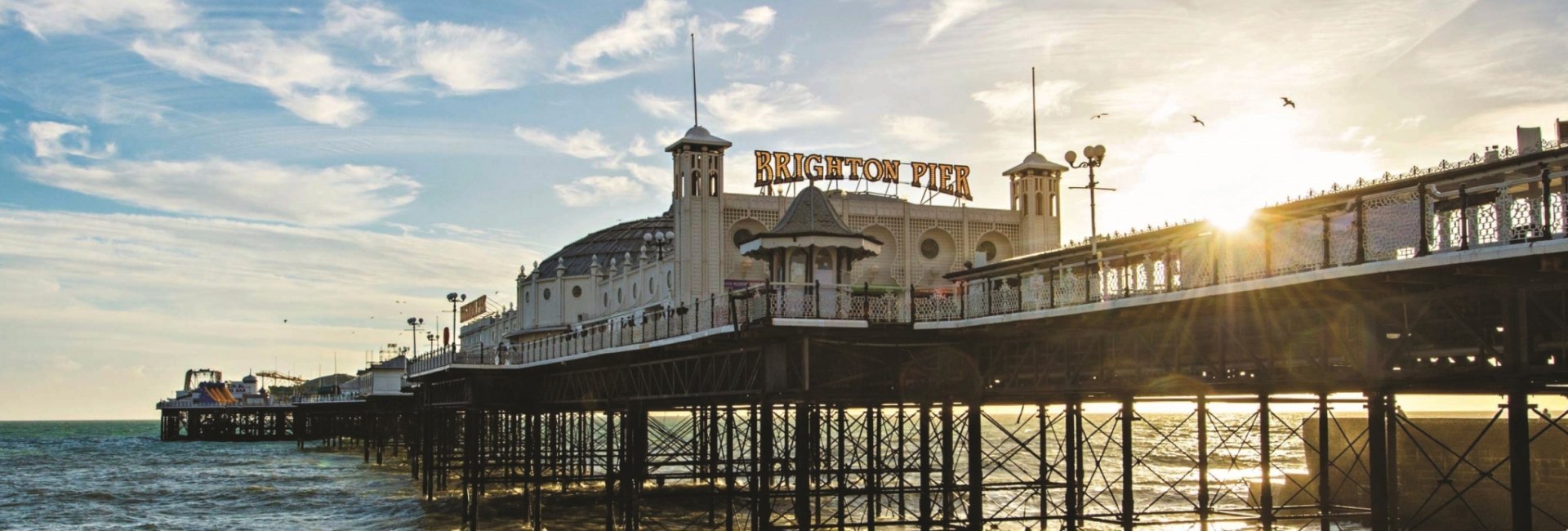
Brighton & Hove is a creative city with a progressive design culture that values sustainability and community.
Brighton is just under an hour from central London and is named one of the best cities on the planet and the third best city in the UK by Time Out.
Foundation year
Term 1 will concentrate on analogue skills, introducing you to observational and hand-drawing skills as well as physical/3D modelling techniques, enabling you to understand different scales.
In term 2, you’ll build on the skills you’ve learned and combine them with digital practice. You’ll be introduced to digital drawing, modelling and fabrication, and representation and communication techniques. Projects will develop your knowledge of the design process and technical ability.
Term 3 focuses on a final project within your chosen discipline and course. You’ll produce a portfolio where you’ll document your development and your final design project. The project will be specific to your discipline and draw together all the skills learnt over the year, preparing you for your degree. It will include physical hand drawings, photography, models, digital work and discipline-specific outputs.
Year 1
Your first year introduces the foundations of product design, focusing on creativity, making and critical thinking. You’ll develop essential skills in 2D, 3D and digital design, learn prototyping and design for manufacture and explore inclusive design through real-world problem-solving projects. You’ll also gain an understanding of design history and global movements, building analytical and critical thinking skills to challenge dominant narratives.
Technical workshops will introduce you to digital fabrication and manufacturing technologies, including CAD/CAM, 3D printing, electronics and wireless communication, giving you hands-on experience with industry-standard tools.
Core modules
Design Practice: Creativity, Prototyping and Communication
Design Cultures: Histories and Theories
Design Practice: Inclusive Design
Design Technologies: Digital Manufacturing
Year 2
In your second year, you’ll focus on designing products for real markets, taking ideas from concept through to prototype. You’ll explore interactive technologies and smart systems, learning how to make products responsive and connected while considering sustainability and responsible design approaches to address global challenges.
Alongside this, you’ll deepen your understanding of contemporary design issues and begin shaping your own research interests, preparing for your final year project and future career pathways.
Core modules
Design Practice: Design to Market
Design Cultures: Contemporary Issues in Design
Design Practice: Responsible Design
Design Technologies: Interactions and Experiences
Optional Placement Year
After year two, you can choose a salaried professional placement, gaining hands-on experience with product design consultancies, manufacturing companies or innovation teams. This year allows you to apply your academic knowledge to real-world projects such as prototyping, digital fabrication and sustainable product development.
The placement builds your employability and confidence, giving you a competitive edge for careers in product design and related fields.
Final year
In your final year, you’ll define your design specialism and focus on your professional ambitions. Early projects help you refine your approach and build specialist skills, while your dissertation allows you to explore a subject in depth and develop a critically reflective position.
In the second part of the year, you’ll undertake a major self-directed project that integrates everything you’ve learned across design practice and technologies. This is your opportunity to create a fully resolved product that demonstrates your creativity, technical expertise and strategic thinking.
You’ll showcase your work at Brighton’s end-of-year show and New Designers in London – an exciting chance to present your vision to industry professionals and the public.
Core modules
Design Practice: Professional Practices
Design Cultures: Dissertation
Design Practice: Self-directed Project
Design Technologies: Self-directed Project

University of Brighton has participated in the Teaching Excellence Framework. These ratings were awarded in 2023, for four years.
See why these ratings were awarded
What does this TEF outcome mean?
This course may be available at alternative locations, please check if other course options are available.
Course options| Test | Grade | Additional details |
|---|---|---|
| IELTS (Academic) | 6 | 6.0 overall with a minimum of 5.5. in each element, or equivalent English Language qualification. |
At Brighton we recognise that not everyone's background provides the same advantages, and we know that grades are not the only indicator of potential.
If you meet our contextual admissions criteria we will make you an offer which is at least 16 UCAS points lower than our standard offer. You may also be eligible for additional financial and practical support from us through the Brighton Boost cost of living support package.
This section shows the range of grades that students who received offers were previously accepted on to this course with (learn more).
It is designed to support your research but does not guarantee whether you will or won't get a place.
Admissions teams consider various factors, including interviews, subject requirements, and entrance tests. Check all course entry requirements for eligibility.
This course may have Historical entry grades data available, please select a course option to view.
Course optionsThis report uses your grades to show how students with similar results have done when applying to this course in the past. Sometimes, there isn’t data for every possible set of grades. When that happens, universities and colleges occasionally fill in the gaps for sets of grades that are typically accepted.
| Location | Fee | Year |
|---|---|---|
| England, Scotland, Wales & Northern Ireland | £10050 | |
| International | TBC |
Tuition fee status depends on a number of criteria and varies according to where in the UK you will study. For further guidance on the criteria for home or overseas tuition fees, please refer to the UKCISA website.
No additional fees or cost information has been supplied for this course, please contact the provider directly.
Phone:01273 644644
Mithras House
Lewes Road
Brighton
BN2 4AT
At University of Brighton