Course contact details
Main Contact
Email:admissions@rcs.ac.uk
Phone:0141 332 4101
Fax: 0141 332 8901
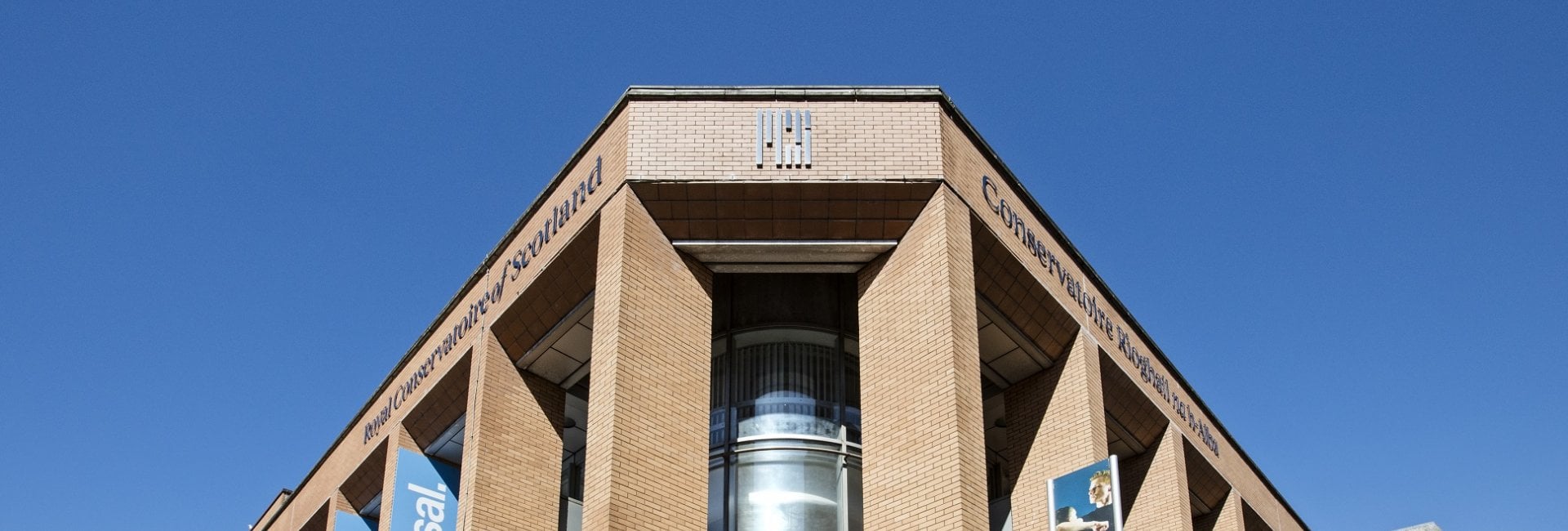
Royal Conservatoire of Scotland
100 Renfrew Street
Glasgow
G2 3DB

This degree is dedicated to traditional and folk music, and to the music of the Scottish Highland Bagpipe. Aspiring performers on this course explore Scotland’s unique and dynamic musical traditions as a conceptual, critical and creative framework within which to achieve a historically informed yet distinctively personal voice as a piper and artist. This is interwoven with a solid basis in contemporary and eclectic performance practice.
The Royal Conservatoire of Scotland and The National Piping Centre offer a specialist degree that allows pipers to study piping within the context of Scottish traditional music to the highest level. This unique course offers the chance for students to concentrate on the total study of piping in all forms, whilst also developing their performance skills under some of the best players in the world. Students receive instruction individually and in small groups and workshop settings. The degree includes substantial study of the history, repertoire, traditions, performance practice and organology of the bagpipes, producing expert performers with a deep understanding of their own, and other, traditions.
The nature of the Highland bagpipe and its repertoire, defined by highly individual and highly complex parameters of performance and musical structure, demands a teaching approach which integrates the instrument with the rest of Scottish traditional music while simultaneously respecting its uniqueness. The piping degree is therefore carefully structured to give the most thorough grounding possible in vital specialisms such as solo piping, piobaireachd, light music, and piping in a folk ensemble context, whilst sharing the same structure and range of contextual curriculum as in the main Traditional Music department.
The two programmes share an immense amount of common ground and the institutional emphasis is always on co-operation.
Please note, the international deadline for this programme is the 1st December 2026, but we would encourage applicants to apply early where possible
During the application and audition process, you must select which instrument(s) you wish to specialise in for the duration of your course. On this course, you can choose from the following options:
For all courses, you must select at least one specialism from the 'primary' list. For those studying primary/secondary pathways, two instruments may be selected – one from the 'primary' list and one from the 'secondary' list. Joint pathway students may select any two instruments from either list.
Year 1
Performance (Piping) 1: 60 Credits
Principal Study one-to-one lessons
Principal Study Group
Dept-wide Performance Classes
Performing Light Music of the 20th Century
The Piobaireachd Pit 1
A Concise History of Piping
Folk Ensemble Level 1
Trad Musicianship 1
Healthy Practice Seminars
Critical Programme Notes
Concepts in Traditional Music: 10 Credits
ePortfolio of Research Tasks
Pecha Kucha Presentation
Creative Skills in Traditional Music 1: 10 Credits
Traditional Music Theory Exam
Composition Folio of Tunes
Scottish Traditional Repertoire 1: 10 Credits
Performance
Programme Notes
Introduction to Professional Skills for Musicians: 10 Credits
Music Leadership: 10 Credits
Creative Citizenship: 10 Credits
Year 2
Performance (Piping) 2: 60 Credits
Principal Study one-to-one lessons
Principal Study Group
Dept-wide Performance Classes
Performing Light Music of the 19th Century
The Piobaireachd Pit 2
Folk Ensemble Level 2
Trad Musicianship 2
Healthy Practice Seminars
Critical Programme Notes
Traditional Music Research Portfolio: 10 Credits
ePortfolio of Research Tasks
Presentation
Creative Skills in Traditional Music 2: 10 Credits
Portfolio of Multi-Instrumental Compositions
Continuous Observation
Scottish Traditional Repertoire 2: 10 credits
Performance
Programme Notes
Peak Performance Training: 10 credits
Continuous Observation
Portfolio of class tasks, rationale and development plan
The Teaching Musician: 10 Credits
Option module: 10 credits
Year 3
Performance 3 (Piping): 60 Credits
Principal Study one-to-one lessons
Principal Study Group
Dept-wide Performance Classes
Performing Light Music of the 21st Century
The Piobaireachd Pit 3
Folk Ensemble Level 3
Professional Skills and Standards
Gaelic for Fèisean
Critical Programme Notes
Minor Research Project: 10 Credits
ePortfolio of Project
Presentation
Scottish Traditional Repertoire 3: 10 credits
Performance
Programme notes
The Freelance Musician: 10 Credits
Contextual elective: 10 credits
Musicianship elective: 10 credits
Option module: 10 Credits
Year 4
Performance 4 (Piping): 60 Credits
Principal Study one-to-one lessons
Principal Study Group
Dept-wide Performance Classes
Piping Concert Arrangement and Leadership
Professional Skills and Standards
Viva examination
Major Research Project: 20 credits
EPortfolio of project
Presentation
Professional Development Options: 20 credits
IXP and Electives: 20 credits
https://www.rcs.ac.uk/courses/bmus-traditional-music-piping/#programme-structure
More information about what the course entails can be found on our website.
The following entry points are available for this course:
More information about our entrance requirements and international equivalencies can be found on our website.
Entry requirements for students joining after Year 1: Applications for direct entry beyond Year 1 will be considered on a case-by-case basis and in accordance with the Royal Conservatoire’s Recognition of Prior (Experiential) Learning policy. Please email admissions@rcs.ac.uk for more information.
We do not offer deferred entry. https://www.rcs.ac.uk/courses/bmus-traditional-music-piping/#entry-requirements
| Test | Grade | Additional details |
|---|---|---|
| IELTS (Academic) | 6 | 6.0 with no component below 5.5 |
| TOEFL (iBT) | 80 | Overall score of 80, with minimum scores of: Reading – 18, Listening – 17, Speaking – 20, Writing – 17 |
| PTE Academic | 59 | Overall score of 59 with a minimum of 59 in all components (reading, listening, speaking, writing) |
| Cambridge English Advanced | Overall score of 169 with a minimum of 162 in all components | |
| Cambridge English Proficiency | Overall score of 169 with a minimum of 162 in all components |
https://www.rcs.ac.uk/study/international-students/english-requirements/
In the event of a successful assessment, applicants may be invited for a further interview prior to being made an offer.
Remote assessment recordings may be accepted in the event that you cannot attend an assessment in person.
| Location | On-time Fee |
|---|---|
| RCS (Glasgow) | £65 |
| Recording | £65 |
| Location | On-time Fee |
|---|---|
| RCS (Glasgow) | Not Applicable |
| Recording | Not Applicable |
All applicants need to complete an Acceptd account profile and application regardless of which location you choose, this is part of the audition process (https://app.getacceptd.com/rcs) and needs to be completed once your UCAS application has been submitted. All live in-person auditions will be scheduled through the Acceptd platform. If you don't have an acceptd application, we won't be able to audition you. Applicants submitting performance recordings via our Acceptd platform, may be asked to a follow-up live online interview with the department you are applying for. For the best audition experience, we would encourage all UK applicants (and where possible international applicants) to attend in person. You can view the audition requirements and what to prepare for this course at the following page on our website: https://www.rcs.ac.uk/courses/bmus-traditional-music-piping/.
| Location | Fee | Year |
|---|---|---|
| England, Wales, Northern Ireland, Channel Islands & Republic of Ireland | £9790* | |
| Scotland | £1820* | |
| EU & International | £29786* |
* This is a provisional fee and subject to change.
Tuition fee status depends on a number of criteria and varies according to where in the UK you will study. For further guidance on the criteria for home or overseas tuition fees, please refer to the UKCISA website.
Please note, all new students are required to pay associated programme cost related fees at the start of their studies.
For more information on fees, funding and Scholarship, please see our website.
Within the School of Music, the majority of scholarship awards are made following an audition and offer of a place at the RCS. Scholarships are made based on ability and potential with some for financial need. Many School of Music scholarships are made for the duration of the programme. There is no separate scholarship application for the School of Music as everyone is automatically considered.
Email:admissions@rcs.ac.uk
Phone:0141 332 4101
Fax: 0141 332 8901
100 Renfrew Street
Glasgow
G2 3DB
At Royal Conservatoire of Scotland