Course contact details
UAL Admissions
Email:admissions@arts.ac.uk
University of the Arts London
272 High Holborn
London
WC1V 7EY

BA Fine Art: Computational Arts at Camberwell College of Arts invites you to experiment with new tools and approaches to art. You will explore how technologies influence art and culture
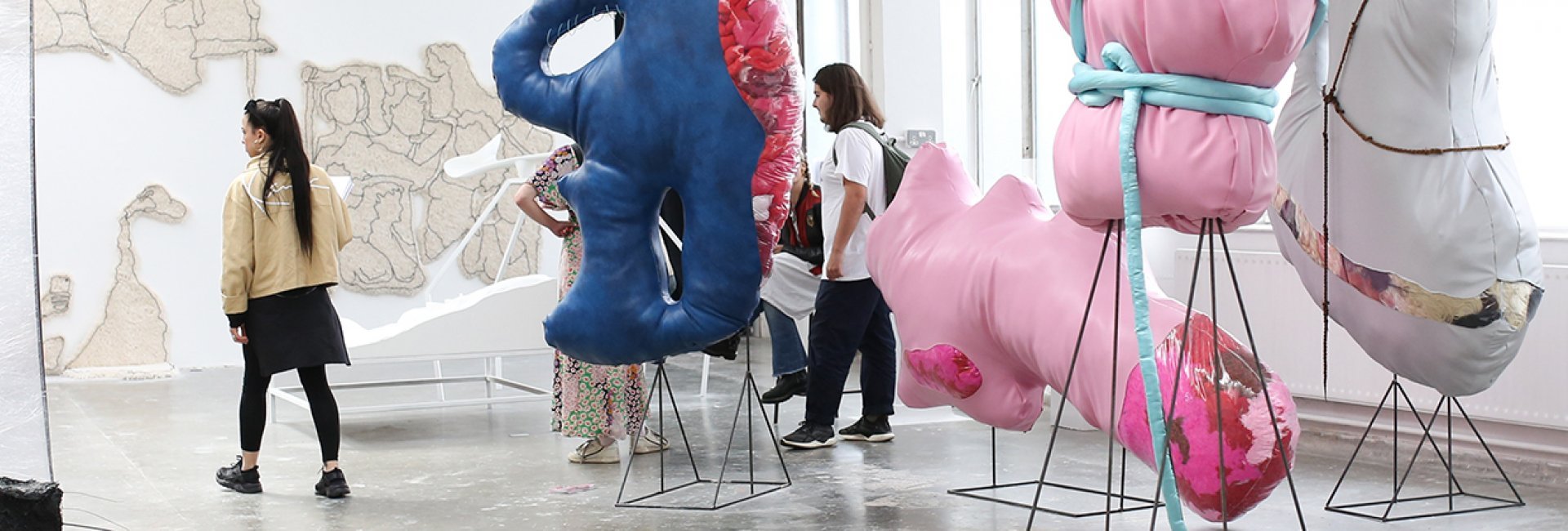
The course enables you to develop your art practice through computers, software, and emerging technologies. You’re invited to explore the intersection of digital media with other fine art disciplines such as sculpture, painting, and photography.
You’ll explore how computational tools can be generative to the arts. You’ll debate and question how technologies shape our experience of the world.
What to expect
• Cutting-edge technology: Explore generative art and machine learning as well as CGI, games engines, virtual reality and digital fabrication.
• New ideas: Engage with debates around technology and society to help you articulate and contextualise your practice in an ethical, relevant and sustainable way.
• Cross-disciplinary skills: Draw upon computational art and fine art tools, methods and discourses to develop your art practice.
• Activities and workshops: Take part in structured activities and practical workshops to develop a variety of digital and traditional art-making skills.
• Software: Work with professional software applications such as Blender, and Unreal Engine.
• Digital equipment: Use our versatile studio space as well as in-course equipment such as specialist computers, projectors, and VR headsets.
• Fine art workshops: Access Camberwell's fine art workshops including printmaking, photography, film, moving image, digital, plastic, ceramics, wood and metalwork.
Industry experience and opportunities
You’ll have the opportunity to exhibit your work on-site, online or at external gallery showcases. During the second year, you’ll be invited to collaborate and network as well as take part in seminars and workshops hosted by external arts organisations.
By the end of this course, you’ll have developed your own art practice. You’ll have acquired a range of skills and knowledge applicable to emerging professional sectors such as virtual production, digital fabrication, machine learning, digital media and virtual reality.
About Camberwell College of Arts
Camberwell College of Arts is a renowned art and design college. Our courses will make you think about your social responsibility, as well as develop your critical and making skills.
We give students the space to explore their creativity. Staff will support and challenge you to rethink current practices. Our facilities embrace both traditional craftsmanship and digital technology.
Our south east London location is also home to a thriving arts scene. The area hosts a variety of galleries, project spaces and studios that our students, staff and graduates work and exhibit in. These include on-site gallery Camberwell Space, Work Form, Garudio Studiage and DKUK. Our international partnerships, projects and exchanges provide opportunities for our students and staff to broaden perspectives and knowledge. They also explore how art and design can support communities in a global context.
Our alumni include:
Matt Clark - Creative Director, United Visual Artists
Matthew Stone - Artist
Aries Moross - Art Director, Studio Moross
Emily Druiff - Consultant, researcher and coach
Errol Donald - Creative Director, curator and educator
Alice Hawkins - Photographer
Jody Barton - Illustrator
Emma Thomas - Co-founder, A Practice for Everyday Life
Jack Sachs - Animator and Illustrator
This is the equal consideration deadline. You can still apply after this date, but your application may not receive guaranteed consideration.

University of the Arts London has participated in the Teaching Excellence Framework. These ratings were awarded in 2023, for four years.
See why these ratings were awarded
What does this TEF outcome mean?
The following entry points are available for this course:
Discover what it's like to study Fine Art: Computational Arts at University of the Arts London: insights on the course, making friends, personal statement tips, uni prep, and recommended books, podcasts, and videos.

This section shows the range of grades that students who received offers were previously accepted on to this course with (learn more).
It is designed to support your research but does not guarantee whether you will or won't get a place.
Admissions teams consider various factors, including interviews, subject requirements, and entrance tests. Check all course entry requirements for eligibility.
We are unable to show previous accepted grades for this course. This could be because the course is new, it's a postgraduate course, there isn't enough historical data, or the provider has opted out of sharing their entry grades data for this course - learn more.
This report uses your grades to show how students with similar results have done when applying to this course in the past. Sometimes, there isn’t data for every possible set of grades. When that happens, universities and colleges occasionally fill in the gaps for sets of grades that are typically accepted.
No fee information has been provided for this course
Tuition fee status depends on a number of criteria and varies according to where in the UK you will study. For further guidance on the criteria for home or overseas tuition fees, please refer to the UKCISA website.
Tuition fees for 2027/28 are to be confirmed. Tuition Fees for entry in the previous year (2026 entry) can be found on the UAL Student Fees and Funding page at www.arts.ac.uk/study-at-ual/fees-and-funding/tuition-fees which is where the 2027 fees will be listed when available.
Email:admissions@arts.ac.uk
272 High Holborn
London
WC1V 7EY
At University of the Arts London