Course contact details
Undergraduate Admissions Office
Email:ugadmissions@reading.ac.uk
University of Reading
Whiteknights Campus
Reading
RG6 6UR

Learn about the ways in which living things interact with their environment on our research-led MSci Ecology and Wildlife Conservation. Apply this knowledge to tackling the biggest challenges facing the world today.
This course will equip you with the skills needed for a career in ecology or wildlife conservation through a combination of classroom learning and fieldwork.
You will learn to apply knowledge of ecosystems to environmental issues such as habitat conservation, the biological control of diseases, and the protection of the world's rarest plants and creatures.
You will also have the opportunity to take part in original research with a potentially global impact.
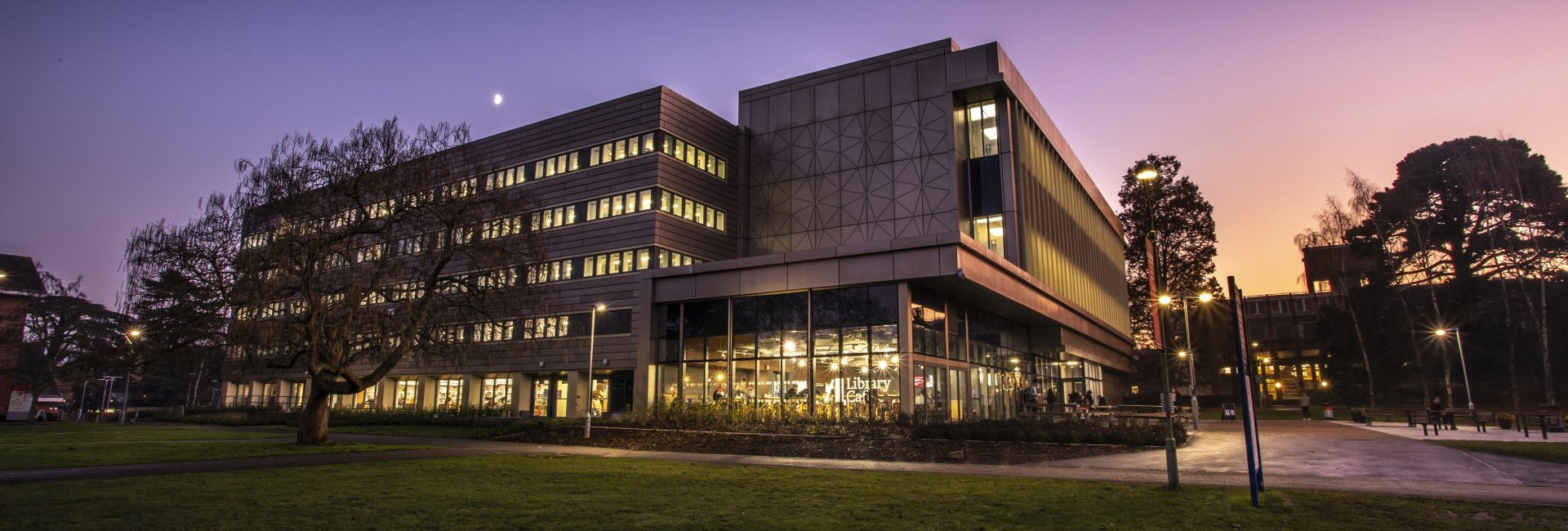
The University of Reading’s award-winning campus is home to over a thousand different animal species and is extremely useful for learning fieldwork skills. It offers multiple habitats for study, including lakes, hay meadows and woodlands, and allows you to step straight from the laboratory to the field. Additionally, the University owns a number of large farms, which can be used as sites for final-year projects.
You will also be able to practise species identification and ecology skills through a choice of field trips in the UK and beyond. Our Ecology and Conservation Field Course takes place in South Africa, exposing you to diverse conservation and development issues, while our Marine Biology Field Course explores South Africa's incredible marine biodiversity. Closer to home, our UK Biodiversity Field Course takes you to Devon to explore the UK's diverse habitats and the animals that call them home.
Overall, 90% of graduates from the School of Biological Sciences are in work or further study within 15 months of graduation (based on our analysis of HESA data (c) HESA 2024, Graduate Outcomes Survey 2022/23, includes all School of Biological Sciences responders).
Most of our staff are actively engaged in research, and our work on wildlife ecology and conservation feeds into undergraduate teaching. 92% of School of Biological Sciences students said teaching staff are good at explaining things (National Student Survey 2025, 92.3% of responders).
All graduates are eligible for membership of the Royal Society of Biology and can apply for Chartered Biologist status.
You have access to state-of-the-art facilities for your practical sessions and research projects.
The MSci follows the standard undergraduate curriculum, but with an additional year of study leading to a master's-level qualification.
Your first year focuses on understanding the basics of ecology. You will begin practical training and develop skills through field trips and biodiversity sampling techniques. Explore the significant changes happening to our planet due to human activities and gain practical knowledge of the interactions between organisms, their environment, and human influence.
In your second year, you will deepen your understanding of ecological system patterns and processes by investigating recent methodologies and insights. Topics include biogeochemical cycles, microbial roles in ecosystems, food webs, ecosystem services, and more. A focus on quantitative and professional skills will teach you how to manage, analyse, visualise, and interpret different types of data.
The third year of the programme will involve field research, placing strong emphasis on the application of knowledge and skills and preparing you for your final year. During your fourth year, you will undertake an Advanced Research Project, collaborating with experienced academics on cutting-edge ecological research.
Modules may include:
Our Changing Planet
History of Life on Earth
Conservation Science in Practice
Animal Behaviour
Forensics
*Please note that all modules are subject to change. Check our website for more details about course structure.
This is the equal consideration deadline. You can still apply after this date, but your application may not receive guaranteed consideration.

University of Reading has participated in the Teaching Excellence Framework. These ratings were awarded in 2023, for four years.
See why these ratings were awarded
What does this TEF outcome mean?
The following entry points are available for this course:
Contextual offers for this programme are typically two grades beneath our standard entry requirement, e.g. BBC including grade B in a science subject. Acceptable science subjects: Biology, Chemistry, Physics, Mathematics, Further Mathematics, Statistics, Psychology, Geography, Environmental Science, Applied Science, Geology, Computer Science.
We issue offers to best fit the different circumstances and experiences of our applicants. We take a tailored and holistic approach, considering extenuating circumstances on a case-by-case basis. We recognise that some students are more likely than others to face barriers to fulfilling their academic potential at school, through no fault of their own. More information on our supportive offer making approaches can be found at: https://www.reading.ac.uk/ready-to-study/study/what-offer-will-i-get
This section shows the range of grades that students who received offers were previously accepted on to this course with (learn more).
It is designed to support your research but does not guarantee whether you will or won't get a place.
Admissions teams consider various factors, including interviews, subject requirements, and entrance tests. Check all course entry requirements for eligibility.
We are unable to show previous accepted grades for this course. This could be because the course is new, it's a postgraduate course, there isn't enough historical data, or the provider has opted out of sharing their entry grades data for this course - learn more.
This report uses your grades to show how students with similar results have done when applying to this course in the past. Sometimes, there isn’t data for every possible set of grades. When that happens, universities and colleges occasionally fill in the gaps for sets of grades that are typically accepted.
| Location | Fee | Year |
|---|---|---|
| England, Scotland, Wales, Northern Ireland, Channel Islands & Republic of Ireland | £10050 | |
| EU & International | £31800 |
Tuition fee status depends on a number of criteria and varies according to where in the UK you will study. For further guidance on the criteria for home or overseas tuition fees, please refer to the UKCISA website.
For Home students: The University will charge undergraduate home tuition fees at the upper limit set by the UK Government for the relevant academic year. The University will increase tuition fees for Home Undergraduate Students at the start of each academic year, in line with this and the new fee will be communicated to you.
For EU and International students: The University will increase Tuition Fees for International Undergraduate and Integrated Foundation Year Programme Students at the start of each academic year (September). The new fee for each academic year of your Programme will be communicated to you.
Email:ugadmissions@reading.ac.uk
Whiteknights Campus
Reading
RG6 6UR
At University of Reading