Course contact details
Enquiries
Email:ns.admissions@imperial.ac.uk
Phone:020 7594 7260
Imperial College London
South Kensington Campus
Kensington and Chelsea
SW7 2AZ

Develop your appreciation of core chemistry through to Master's level on this professionally accredited four-year course.
You'll be taught by world leaders in the field as you explore fundamental chemistry topics during your first two years.
You'll examine key aspects of inorganic, organic, physical, analytical, synthetic and computational chemistry, before specialising across a series of advanced topics as your degree develops.
An extensive laboratory programme will help develop your practical skills and understanding of experimental measurements and computational models. Through this work, you'll build a broad range of research skills from finding reliable information, to designing an experimental investigation and analysing and communicating the results.
During the third year, you'll examine emergent ‘industry 4.0’ approaches and technologies such as rapid prototyping, biohacking and machine learning.
An extensive research project forms the major component of your final year. You'll join one of the department’s academic research groups to complete a six-month independent research project.
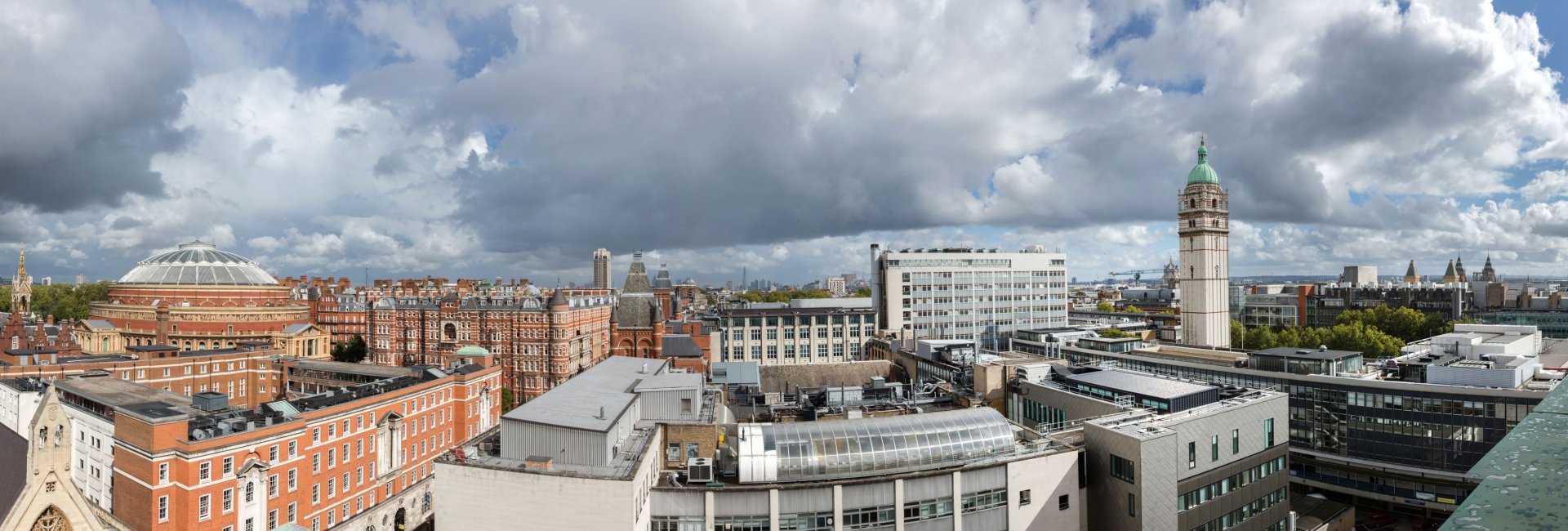
Teaching is primarily delivered at our South Kensington campus, with regular opportunities to advance your skills at our state-of-the-art Molecular Sciences Research Hub in White City.
Professional accreditation
This degree leads to a Master’s level qualification and is professionally accredited by the Royal Society of Chemistry (RSC).
This accreditation is internationally respected in an increasingly global industry and graduate market. It will allow you to demonstrate that you’ve completed a high-quality degree programme designed to meet the needs of both students and their future employers.
This MSci degree fully satisfies the academic requirements for professional registration as a Chartered Chemist (CChem). Becoming a Chartered Chemist earns you an internationally recognised qualification which can enhance your career prospects and earning potential.
We recommend reviewing our course page for the latest information regarding the curriculum (including core and optional modules) and course structure, as this information may be subject to periodic change.
Professionally accredited courses provide industry-wide recognition of the quality of your qualification.
This course is not accepting applications at this time. Please contact the provider to find out more.
This is the equal consideration deadline. You can still apply after this date, but your application may not receive guaranteed consideration.

Imperial College London has participated in the Teaching Excellence Framework. These ratings were awarded in 2023, for four years.
See why these ratings were awarded
What does this TEF outcome mean?
This course is not accepting applications at this time. Please contact the provider to find out more.
The following entry points are available for this course:
Find out more about qualification requirements for this course.
| Test | Grade | Additional details |
|---|---|---|
| Cambridge English Advanced | B | For pre-2015 test, the College requires grade B overall. If your test result is 2016 onwards, the College requires 185 overall with 176 in all elements/bands |
| IELTS (Academic) | 7 | Score above refers to overall score. Additionally, a score of 6.5 is required in all bands. Results must be within 2 years of course start date in order to be valid. |
| PTE Academic | 69 | Score above refers to overall score. Additionally, a score of 62 is required in all bands. Results must be within 2 years of course start date in order to be valid. |
| TOEFL (iBT) | 100 | Score above refers to overall score. Additionally, a score of 22 is required in all bands. Results must be within 2 years of course start date in order to be valid. |
College English Language Entry Requirementshttps://www.imperial.ac.uk/study/apply/english-language/
We adopt holistic approach to admissions at Imperial College London, with all applicants individually assessed, using their application, and the outcomes of interviews & test result where relevant. Our contextual admissions approach means that our selectors consider any additional barriers you are facing, which may affect your ability to show us your potential through your grades. When we make an offer for a place to study at Imperial, we set conditions that you have to meet.
This section shows the range of grades that students who received offers were previously accepted on to this course with (learn more).
It is designed to support your research but does not guarantee whether you will or won't get a place.
Admissions teams consider various factors, including interviews, subject requirements, and entrance tests. Check all course entry requirements for eligibility.
We are unable to show previous accepted grades for this course. This could be because the course is new, it's a postgraduate course, there isn't enough historical data, or the provider has opted out of sharing their entry grades data for this course - learn more.
This report uses your grades to show how students with similar results have done when applying to this course in the past. Sometimes, there isn’t data for every possible set of grades. When that happens, universities and colleges occasionally fill in the gaps for sets of grades that are typically accepted.
No fee information has been provided for this course
Tuition fee status depends on a number of criteria and varies according to where in the UK you will study. For further guidance on the criteria for home or overseas tuition fees, please refer to the UKCISA website.
Tuition fees at the home and overseas chargeable rate for 2026/27 entry are still to be confirmed.
Tuition fee rates at the home and overseas chargeable rate for 2025/26 entry are published at www.imperial.ac.uk on our course listings, which provide an indicative cost, noting that fees are likely to be subject to increases in line with inflation as per the Retail Price Index (RPIX) value.
This information will be updated in due course when the home and overseas tuition fee rates for 2026/27 are confirmed.
For further information on fees, funding, loans and grants, see: https://www.imperial.ac.uk/study/fees-and-funding/tuition-fees/fee-status/
For further information on fee status eligibility see: https://www.imperial.ac.uk/study/fees-and-funding/tuition-fees/fee-status/
We’re offering up to £5,000 each year through our Imperial Bursary scheme for eligible Home undergraduates.
If your household income remains under £70,000 a year, you’ll automatically qualify for every year of your course.
Find out more about the Imperial Bursary Scheme on our website.
Email:ns.admissions@imperial.ac.uk
Phone:020 7594 7260
South Kensington Campus
Kensington and Chelsea
SW7 2AZ
At Imperial College London