Course contact details
Swansea University Admissions Office
Ask us a question - undergraduate enquiries.
Email:study@swansea.ac.uk
Phone:01792 295111
Swansea University
Singleton Park
Swansea
SA2 8PP

Our BSc Software Engineering degree will teach you about computer graphics, computer systems modelling, software engineering, data visualisation, how to write mobile apps and some of the more advanced theoretical aspects of computer science. You will develop your programming skills in C and Java. Students on our software engineering degree will learn the fundamentals of computer science before specialising in software testing, design patterns and generic programming.
As part of this programme, you will spend a year abroad between your second and final year, broadening your skills and experience. Our partner institutions span the globe, with opportunities varying each year. If you wish to receive more information, please get in touch with us on study@swansea.ac.uk
Why Software Engineering at Swansea?
Top 201-250 in the world (QS World University Rankings 2025)
25th in the UK Computer Science (Daily Mail University Guide 2025)
Software Engineering at Swansea University has an excellent reputation and major appeal to students from different countries and disciplines.
Our diverse academic team will develop your knowledge of fundamental software engineering concepts and how they can be applied to solve real-world problems.
You will have access to dedicated computer laboratories and specialised equipment for projects, including Arduinos, smart home technologies and virtual reality headsets.
Showcase your work at the Computer Science colloquium and our annual Project Fair.
Your Software Engineering Experience
A flexibly structured degree path means you have the opportunity to study abroad for a year or work in industry for a year, either locally, nationally or overseas.
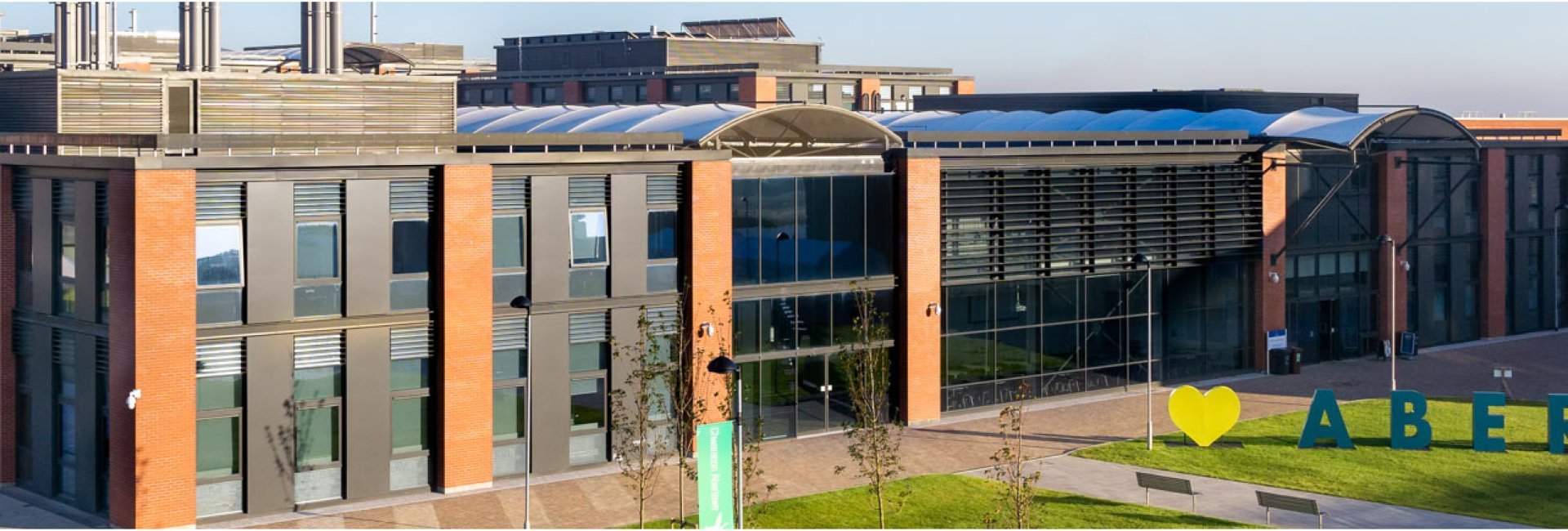
Our £32.5 million Computational Foundry is home to state-of-the-art teaching and research facilities which include a Vision and Biometric Lab, Maker Lab, Theory Lab, Cyber Security/Networking Lab, User Lab and Visualisation Suite.
Students will benefit from world-leading experimental set-ups, equipment, devices and prototypes to accelerate innovation. You will have the opportunity to learn about and work with these facilities.
In Year 1, you will typically study areas including: Programming 1; Professional Issues 1: Computers and Society; Concepts of Computer Science; Modelling Computing Systems 1; Programming 2; Professional Issues 2: Software Development; Introduction to Data Science; and Modelling Computing Systems 2.
In Year 2, you will typically study areas including: Declarative Programming; Software Engineering; Database Systems; Algorithms; Software Engineering 2; Professional Development and Career Planning; Introduction to Human-Computer Interaction; Concurrency; Software Security Engineering; Web Service Development; Visual Computing; Automata and Formal Language Theory; and Intelligent Robotics.
As part of this programme, you will spend a year abroad between your second and final year, broadening your skills and experience. Our partner institutions span the globe, with opportunities varying each year. If you wish to receive more information, please get in touch with us on study@swansea.ac.uk
In Year 4, you will typically study areas including: Project Planning and Management; Project Implementation and Dissertation; Project Specification and Development; Software Testing; Writing Mobile Apps; High Integrity Systems; Big Data and Machine Learning; Cryptography and IT-Security; Brain-Inspired Artificial Intelligence; Introduction to Video Games Programming...
We are proud to provide an outstanding educational experience, using the most effective learning and teaching approaches, carefully tailored to suit the specific needs of your course. Apart from a small number of online-only courses, most of our courses consist of in-person, on-campus teaching, enabling full engagement with your lecturers and fellow students. Practical skills sessions, lab work seminars, and workshops predominantly take place in person, allowing for group working and demonstrations. We also operate virtual labs and Simulated Learning Environments which will facilitate greater access to training opportunities in the future. However, our approach also includes the use of some online learning to support and enhance traditional face-to-face teaching. Online learning may take place ‘live’ using software such as Zoom, allowing you to interact with the lecturer and other students and to ask questions. Lecture recordings also allow for more flexibility to revisit material, to revise for assessments and to enhance learning outside of the classroom. Some modules have extra resources in Canvas, such as videos, slides and quizzes enabling further flexible study. This course may offer some modules taught through the medium of Welsh or bilingually for students who consider themselves to be fluent Welsh speakers. For more details on the provision available see the Welsh Provision expander below.
Professionally accredited courses provide industry-wide recognition of the quality of your qualification.
The following entry points are available for this course:
If you are an International Student, please visit our International pages for more information about entry requirements: http://www.swansea.ac.uk/international/students/requirements/
Discover what it's like to study Software Engineering with a Year Abroad at Swansea University: insights on the course, making friends, personal statement tips, uni prep, and recommended books, podcasts, and videos.

English Language Requirements at Swansea Universityhttps://www.swansea.ac.uk/admissions/english-language-requirements/
UK applicants who meet course requirements are guaranteed a conditional offer. We assess applications on individual merit. We consider making reduced offers, eg. to Care Leavers or students with extenuating circumstances. We encourage you to disclose any relevant circumstances.
The Advanced Skills Baccalaureate Wales is considered as equivalent to one full A-Level and students can take x2 A-levels alongside this. EPQ students predicted Grade B or above will receive a one-grade offer reduction.
This section shows the range of grades that students who received offers were previously accepted on to this course with (learn more).
It is designed to support your research but does not guarantee whether you will or won't get a place.
Admissions teams consider various factors, including interviews, subject requirements, and entrance tests. Check all course entry requirements for eligibility.
We are unable to show previous accepted grades for this course. This could be because the course is new, it's a postgraduate course, there isn't enough historical data, or the provider has opted out of sharing their entry grades data for this course - learn more.
This report uses your grades to show how students with similar results have done when applying to this course in the past. Sometimes, there isn’t data for every possible set of grades. When that happens, universities and colleges occasionally fill in the gaps for sets of grades that are typically accepted.
No fee information has been provided for this course
Tuition fee status depends on a number of criteria and varies according to where in the UK you will study. For further guidance on the criteria for home or overseas tuition fees, please refer to the UKCISA website.
For the latest fee information, please check the individual course page on our website. Our full range of programmes are listed here: https://www.swansea.ac.uk/undergraduate/courses/
Further information on tuition fees can be found here: https://www.swansea.ac.uk/undergraduate/fees-and-funding/tuition-fees/
Ask us a question - undergraduate enquiries.
Email:study@swansea.ac.uk
Phone:01792 295111
Singleton Park
Swansea
SA2 8PP
At Swansea University