Skip navigation

Mathematics for Finance with a Year in Industry

Course details
  • BSc (Hons)
  • 4 Years
  • Full-time
  • 21 September 2026
  • Undergraduate
Course location
Bay Campus

Course summary

Contemporary finance and business are underpinned by mathematics. Our BSc degree in Mathematics for Finance reflects the close connection between mathematics and industry.

Throughout your studies you will develop a solid grounding in the fundamental concepts of pure mathematics and applied mathematics, as well as stochastic processes and stochastic analysis, which are central for applications to finance.

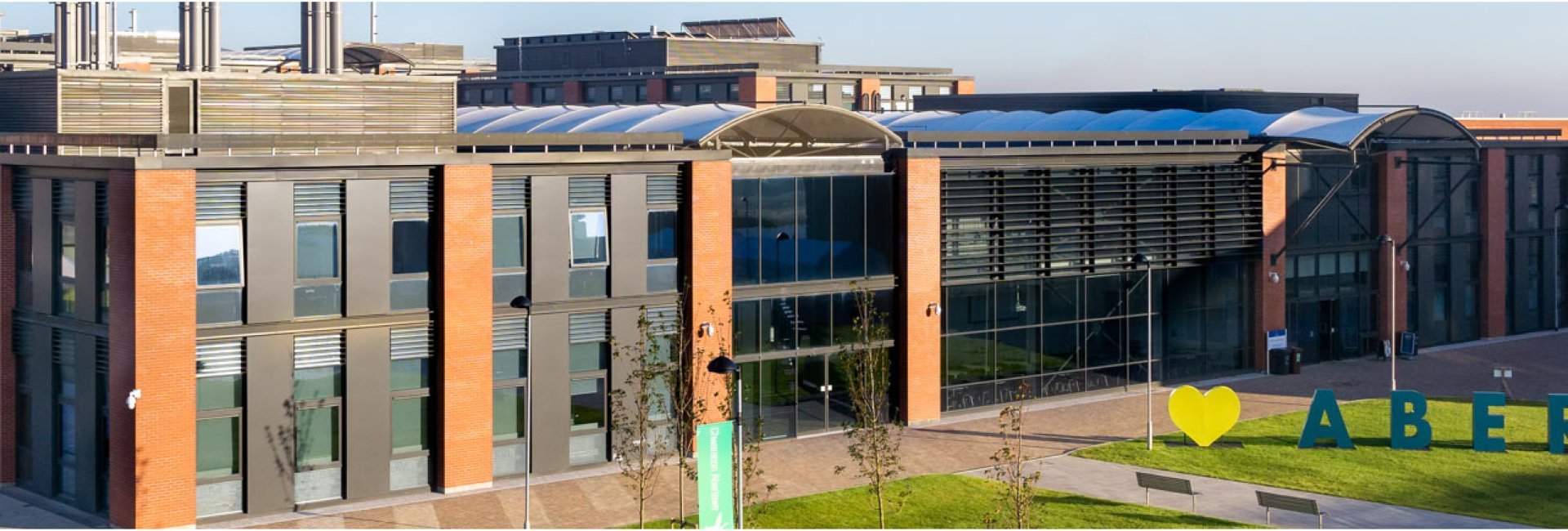
Your learning will be shaped by inspirational and internationally-renowned academics who have expertise in a range of topics, and you will study in bespoke teaching spaces, designed by, and for, mathematicians.

You will investigate the number theory studied by Pythagoras and the financial mathematics depended on every day in Wall Street, with strong analytical skills, logical reasoning and quantitative thinking, building a highly desirable set of graduate attributes that will set you apart in the employment marketplace.

This programme includes opportunities to undertake a Year in Industry, in the UK or overseas, enabling you to gain valuable workplace experience. The University advocates for paid-only placements, which on average have a salary of over £20,000. Unpaid placements are considered on a case-by-case basis.

Modules

In Year 1, you will typically study areas including: Mathematical and Computational Methods; Analytical Methods in Mathematics; Foundations of Algebra; Vector Spaces and Linear Algebra.

In Year 2, you will typically study areas including: Probability Theory; Multi-variable analysis; Metric spaces and measure theory; Vector Spaces; Differential Equations and Game Theory and Optimization.

In Year 3: Year spent in Industry.

In Year 4, you will typically study areas including: Dissertation in the Mathematics of Finance; Complex Analysis; Cashflows and Interest Rates; Financial Mathematics in Discrete Time; Markov Processes and Applications and Risk and Survival Models.

Assessment method

You will be taught through a combination of lectures, tutor-led tutorials and regular (non-assessed) coursework. The final year modules are more student-centred, to reflect a progression in teaching methods appropriate to the subjects taught. Throughout, the learner is encouraged to undertake independent reading both to supplement and consolidate what is being taught/learnt and to broaden knowledge and understanding of the subject. You will be assessed through a combination of unseen written examinations, set assignments, presentations and a dissertation.

How to apply

Apply by
14 January

This is the deadline for applications to be completed and sent for this course. If the university or college still has places available you can apply after this date, but your application is not guaranteed to be considered.

Application codes

Course code:
G956
Institution code:
S93
Campus name:
Bay Campus
Campus Code:
B

Points of entry

The following entry points are available for this course:

  • Year 1

International applicants

If you are an International Student, please visit our International pages for more information about entry requirements: http://www.swansea.ac.uk/international/students/requirements

Open days

Entry requirements

A level
ABB - BBC

To include a B in Mathematics

Pearson BTEC Level 3 National Extended Diploma (first teaching from September 2016)
DDD

Plus Grade B in A Level Mathematics

Access to HE Diploma

Access to HE (Science): Pass with Distinction overall (to include 24 Distinctions, 15 Merits and 6 Passes), including 18 in Maths

Scottish Higher
ABBBC

Plus Grade B in Mathematics

International Baccalaureate Diploma Programme
32 - 34 points

To include 6 HL Mathematics

WJEC Level 3 Advanced Skills Baccalaureate Wales

Swansea University accepts the Advanced Skills Baccalaureate Wales as fully equivalent to x1 A-Level.

Welsh Baccalaureate - Advanced Skills Challenge Certificate (last awarded Summer 2024)

Requirements are as for A levels where you can substitute the same non-subject specific grade for the Welsh Baccalaureate Adanced Level Core Grade

Extended Project

We recognise the EPQ as an excellent indicator of success.

If you are predicted a Grade B or above in the EPQ, you will receive an offer with a one
grade reduction, to include your EPQ with a grade B.

English language requirements

For applicants whose first language is not English we require a minimum overall IELTS score of 6.0 (or equivalent) and no less than 5.5 in each component.

English Language Requirements at Swansea Universityhttps://www.swansea.ac.uk/admissions/english-language-requirements/

Contextual admissions

Universities and colleges consider more than grades when assessing applications and may make offers based on a range of criteria. Learn more about contextual offers.

UK applicants who meet course requirements are guaranteed a conditional offer. We assess applications on individual merit. We consider making reduced offers, eg. to Care Leavers or students with extenuating circumstances. We encourage you to disclose any relevant circumstances.

The Advanced Skills Baccalaureate Wales is considered as equivalent to one full A-Level and students can take x2 A-levels alongside this. EPQ students predicted Grade B or above will receive a one-grade offer reduction.

Learn more on the Swansea University website

Historical entry grades data

This section shows the range of grades that students who received offers were previously accepted on to this course with (learn more).

It is designed to support your research but does not guarantee whether you will or won't get a place.

Admissions teams consider various factors, including interviews, subject requirements, and entrance tests. Check all course entry requirements for eligibility.

Not enough data available

We are unable to show previous accepted grades for this course. This could be because the course is new, it's a postgraduate course, there isn't enough historical data, or the provider has opted out of sharing their entry grades data for this course - learn more.

Fees and funding

Tuition fees

No fee information has been provided for this course

Tuition fee status depends on a number of criteria and varies according to where in the UK you will study. For further guidance on the criteria for home or overseas tuition fees, please refer to the UKCISA website.

Additional fee information

For the latest fee information, please check the individual course page on our website. Our full range of programmes are listed here: https://www.swansea.ac.uk/undergraduate/courses/

Further information on tuition fees can be found here: https://www.swansea.ac.uk/undergraduate/fees-and-funding/tuition-fees/

Sponsorship information

The Mathematics Department will offer prizes/scholarships worth up to a total of £3000 for students starting their university studies in September. The prizes will be awarded on the basis of a competitive two and a half hour examination which will be taken during the Spring. Usually, applicants take the exam in their school or college, but this year arrangements will be made to enable applicants to sit the exam remotely. If you would like to take the exam, you will need to make Mathematics at Swansea one of your UCAS selections.

These scholarships can be used in conjunction with our Excellence and Merit scholarships. If you are interested in taking the scholarship exam, then you should complete and return a Mathematics Scholarship Application to us via email. https://www.swansea.ac.uk/maths/scholarships/

Note: The University will also award Excellence Bursaries worth £3,000 to students who achieve AAA at A-level (or equivalent) and £2000 to students who achieve AAB at A level (or equivalent). For further details please see https://www.swansea.ac.uk/undergraduate/scholarships/excellence-bursaries/

Like this page