Skip navigation

Mathematics and Sport Science

Course details
  • Bachelor of Science (with Honours)
  • 3 Years
  • Full-Time
  • 21 September 2027
  • Undergraduate
Course location
Bay Campus
Awarded by:
Swansea University (Prifysgol Abertawe)

Course summary

Mathematics can be seen as the most international of subjects – a global ‘language’ with ancient origins, which is now vitally important in our data-driven world, and this exciting course combines mathematics with the study of exercise, physical activity and performance in sport.

Sport and Exercise Science is equally rooted in our distant human beginnings and anchored to our present state. It explores how the human body performs under different levels of pressure and covers broad issues from wider participation in sports, to ethics, sports psychology and nutrition.

Our three-year combined BSc degree covers a broad base of classical and contemporary theory across both disciplines and has been designed to be fresh and relevant to the wider industry.

Your learning will be shaped by inspirational and internationally-renowned staff including Dr Edwin Beggs, Reader in Mathematics and an expert in Algebra and Geometry, and Dr Nicholas Owen, expert in human biomechanics.

Why Mathematics and Sports Science at Swansea?
• 3rd in the UK for Student Satisfaction (Complete University Guide 2025)
• 7th in the UK (Guardian University 2025)
• 13th in the UK for Teaching Quality (Guardian University 2025)
• Top 201-250 in the world (QS World University Rankings 2025)

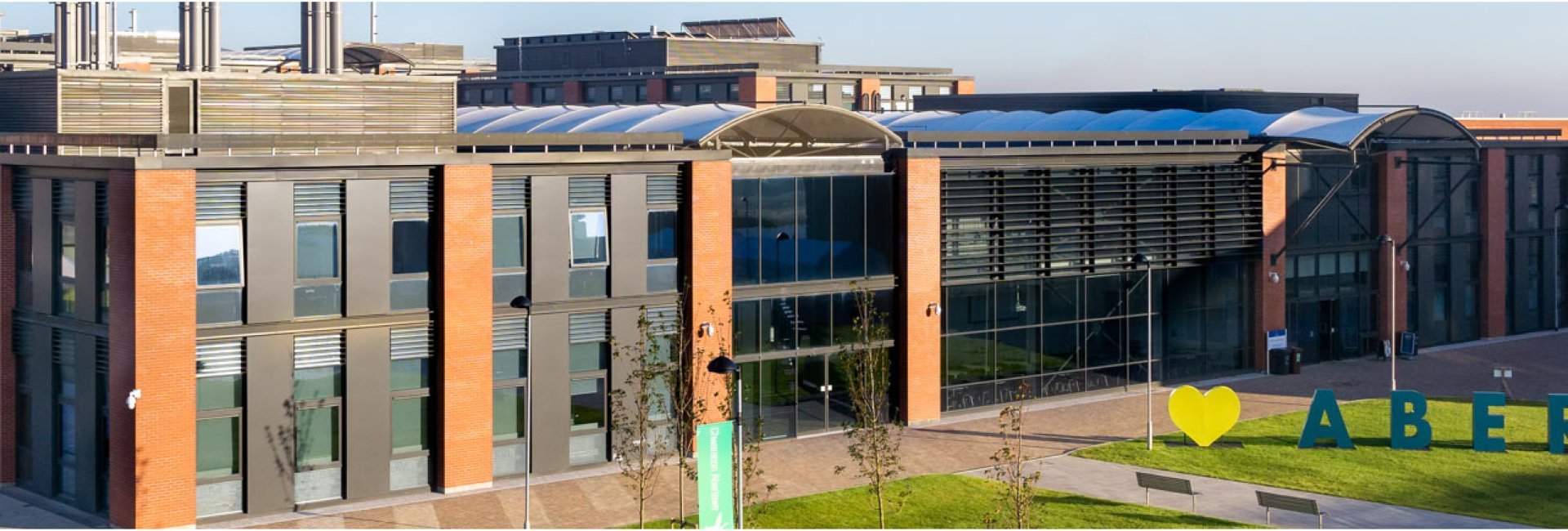
As a student on our three-year BSc Mathematics and Sports & Exercise Science, you will be taught in our new £32.5m Computational Foundry, a world class centre with state-of-the-art facilities for teaching and research, as well as networking and meeting spaces, to help prepare you for a successful and rewarding career. For the Sport & Exercise Science part of your degree, you will study in the high-quality facilities in the Engineering Quarter, also on our new Bay Campus.

Employers place great value on the ability to think rationally and to process data clearly and accurately, and Mathematics graduates earn on average 50% more than most other graduates. The most popular careers are the actuarial profession, the financial sector, IT, computer programming and systems administration, and opportunities within business and industry where employers need mathematicians for research and development, statistical analysis, marketing and sales.

The Sports & Exercise Science elements of the degree will also train you for a potential career as a sport and exercise scientist or roles such as performance scientist, strength and conditioning practitioner, cardiac physiologist, performance analyst, and in physical activity and health promotion.

Modules

Course Modules

In Year 1, you will typically study areas including:
Foundations of Algebra, Human Anatomy, Introduction to Sports Biomechanics, Introductory Linear Algebra, Probability and Statistics, Sports Performance Science

In Year 2, you will typically study areas including:
Multi-variable analysis, Exercise Physiology, Biomechanical Technology, Measurement & Analysis, Metric spaces and measure theory, Philosophy of Sports Ethics, Human Nutrition, Mathematical Modelling: Theory and Practice, Professional Development and Career Planning

In Year 3, you will typically study areas including:
Complex Analysis, Sport, Diet and Disease, Sports Biomechanics, Health Related Exercise, Markov Processes and Applications, Risk and Survival Models, Biomathematics

Assessment method

You will be taught through a combination of lectures, tutor-led tutorials and regular (non-assessed) coursework. The final year modules are more student-centred, to reflect a progression in teaching methods appropriate to the subjects taught. Throughout, the learner is encouraged to undertake independent reading both to supplement and consolidate what is being taught/learnt and to broaden knowledge and understanding of the subject. You will be assessed through a combination of unseen written examinations, set assignments, presentations and a dissertation.

How to apply

Apply by
13 January 2027

This is the deadline for applications to be completed and sent for this course. If the university or college still has places available you can apply after this date, but your application is not guaranteed to be considered.

Application codes

Course code:
GC16
Institution code:
S93
Campus name:
Bay Campus

Points of entry

The following entry points are available for this course:

  • Year 1

Entry requirements

Typical qualification requirements

A level
ABB-BBC

To include a grade B in Mathematics

Scottish Higher
ABBBC

Plus Grade B in Mathematics

Access to HE Diploma

Access to HE (Science): Pass with Distinction overall (to include 24 Distinctions, 15 Merits and 6 Passes), including 18 in Maths

Extended Project

We recognise the EPQ as an excellent indicator of success.

If you are predicted a Grade B or above in the EPQ, you will receive an offer with a one
grade reduction, to include your EPQ with a grade B.

International Baccalaureate Diploma Programme
32-34

To include 6 HL Mathematics

WJEC Level 3 Advanced Skills Baccalaureate Wales

Swansea University accepts the Advanced Skills Baccalaureate Wales as fully equivalent to x1 A-Level.

Pearson BTEC Level 3 National Extended Diploma (first teaching from September 2016)
DDD

Plus Grade B in A Level Mathematics

Welsh Baccalaureate - Advanced Skills Challenge Certificate (first teaching September 2015)

Requirements are as for A levels where you can substitute the same non-subject specific grade for the Welsh Baccalaureate Adanced Level Core Grade

English language requirements

For applicants whose first language is not English we require a minimum overall IELTS score of 6.0 (or equivalent) and no less than 5.5 in each component.https://www.swansea.ac.uk/admissions/english-language-requirements/

Contextual admissions

Universities and colleges consider more than grades when assessing applications and may make offers based on a range of criteria. Learn more about contextual offers.

UK applicants who meet course requirements are guaranteed a conditional offer. We assess applications on individual merit. We consider making reduced offers, eg. to Care Leavers or students with extenuating circumstances. We encourage you to disclose any relevant circumstances.

The Advanced Skills Baccalaureate Wales is considered as equivalent to one full A-Level and students can take x2 A-levels alongside this. EPQ students predicted Grade B or above will receive a one-grade offer reduction.

Learn more on the Swansea University website

Historical entry grades data

This section shows the range of grades that students who received offers were previously accepted on to this course with (learn more).

It is designed to support your research but does not guarantee whether you will or won't get a place.

Admissions teams consider various factors, including interviews, subject requirements, and entrance tests. Check all course entry requirements for eligibility.

Not enough data available

We are unable to show previous accepted grades for this course. This could be because the course is new, it's a postgraduate course, there isn't enough historical data, or the provider has opted out of sharing their entry grades data for this course - learn more.

Fees and funding

Tuition fees

No fee information has been provided for this course

Tuition fee status depends on a number of criteria and varies according to where in the UK you will study. For further guidance on the criteria for home or overseas tuition fees, please refer to the UKCISA website.

Additional fee information

Please refer to the Swansea course pages for tuition fee information.

Sponsorship information

Scholarships and bursaries 16

To find out about scholarships, bursaries and other funding opportunities that are available please visit the University's scholarships and bursaries page.

Like this page