Course contact details
Undergraduate Admissions Office
Email:admissions@lboro.ac.uk
Phone:01509 274 403
Loughborough University
Loughborough
LE11 3TU

Our Politics and International Relations degree offers a fantastic opportunity to study domestic, international and global challenges faced by states and citizens in the 21st century. It also offers the opportunity to contribute to debates about the theory and practice of politics in the contemporary era.
On our Politics and International Relations BA (Hons) course, you will study the ideas that have shaped the development of domestic and international politics, the creation of states and the systems by which we organise our political lives.
The Politics and International Relations degree will give you an opportunity to study the relationships between states on the world stage and to debate key issues and events as they unfold. You will learn about political theory, political institutions and political history. You will also be asked to question your own role in world politics and what it means to be a good citizen. You will critically examine the practical and theoretical difficulties faced by decision-makers across the world and how actually existing states have sought to resolve these difficulties.
Our Politics and International Relations degree therefore equips you with knowledge and understanding of political and international events, ideas and institutions. In learning about these, you will also learn the skills of argument and analysis that are essential to your own intellectual development but also for a wide range of careers.
If you join us to study Politics and International Relations at Loughborough, you will:
Study the subjects that interest you. Our teaching offers a wide range of topics, styles of delivery and forms of assessment, meaning you can tailor the course to best fit your personal and academic development.
Join a highly ranked university and department. We receive consistently high rankings in university guides.
Gain transferable skills valued by employers. All our students gain important transferable skills such as critical thinking, communication skills, analysis, research, independent and group work, which will help you secure employment after graduation.
Be taught by world-leading experts. Our lecturers are internationally recognised experts in their fields of research and teaching. You will often be learning at the cutting edge of ongoing research.
Be supported to fulfil your potential. We recognise that our students have different backgrounds and different learning styles and we support everyone to fulfil their potential. This includes through our Personal Academic Tutor system and extensive and tailored support provided by Loughborough University.
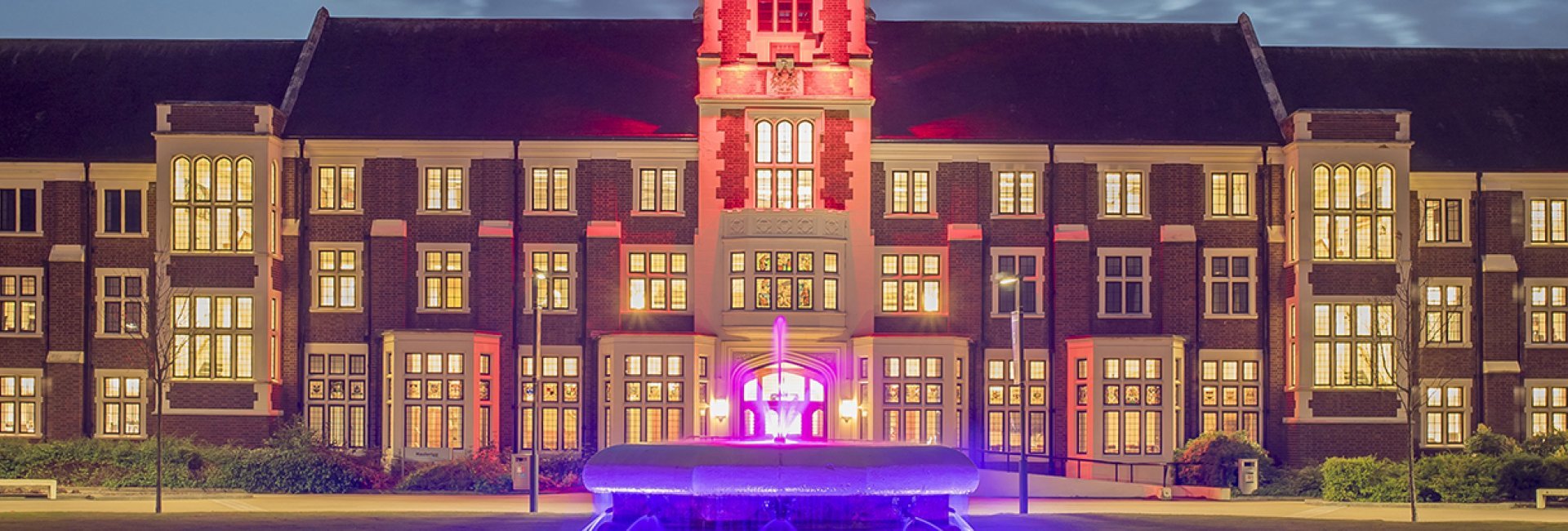
Become part of a supportive and inclusive community. Based in the newly refurbished Morag Bell building, our students have work and hang-out spaces down the corridor from our lecturers whose doors you can knock on for help and support.
Attend exciting events organised by our staff and students. These have included a Q&A with local MPs, roundtable discussions on US politics, lectures from visiting scholars, student quizzes in competition with other departments, and a School of Social Sciences and Humanities Ball.
Have the opportunity to undertake a placement, year abroad, year in enterprise or combination. All our students have this option, and you will then additionally be eligible for a Diploma in International Studies. You can decide to add this in your first or second year of study if you’re unsure when applying.
For a full list of areas studied, see the 'What You'll Study' section of the course page on our website.
A variety of innovative and diverse assessment methods are used on the Politics and International Relations degree course.
For the politics aspect of the degree, this could range from traditional essay questions, group presentations and case studies to political simulation, writing official reports and individual poster presentations.
For the international relations aspect of the degree, you can expect to undertake a range of assessment methods, from a journalistic piece or a book review, to an analysis of a film or a political simulation.
You will also complete a final year dissertation on a topic of your own choice. This could focus on politics or international relations or incorporate elements of both.
If you spend the third year of your degree working or studying abroad, you will complete the final year of your degree in the fourth year, and you will additionally be eligible for a Diploma in International Studies.
This is the equal consideration deadline. You can still apply after this date, but your application may not receive guaranteed consideration.

Loughborough University has participated in the Teaching Excellence Framework. These ratings were awarded in 2023, for four years.
See why these ratings were awarded
What does this TEF outcome mean?
The following entry points are available for this course:
Loughborough accepts a wide range of qualifications for entry as outlined on our website www.lboro.ac.uk/study/undergraduate/getting-started/applying/entrance-requirements/. This information details the general requirements and should be read in conjunction with the information given for each course.
Loughborough also accepts a wide range of international qualifications for entry as outlined on our website www.lboro.ac.uk/international/applicants/country/
Loughborough uses contextual data in the admissions process to provide insights into the context in which your academic qualifications have been achieved. This may influence the typical offers outlined in the information given for each course. www.lboro.ac.uk/study/undergraduate/getting-started/applying/contextual-data/ https://www.lboro.ac.uk/study/undergraduate/apply/entry-requirements/
We consider contextual information as part of the assessment of an application to provide us with further insight into your achievements. This may lead to reduced offers, up to two grades lower than the typical offer requirements, as well as additional consideration when your results are received. For further information about Contextual Admissions at Loughborough including our Access Loughborough Contextual Offer please visit our website.
This section shows the range of grades that students who received offers were previously accepted on to this course with (learn more).
It is designed to support your research but does not guarantee whether you will or won't get a place.
Admissions teams consider various factors, including interviews, subject requirements, and entrance tests. Check all course entry requirements for eligibility.
We are unable to show previous accepted grades for this course. This could be because the course is new, it's a postgraduate course, there isn't enough historical data, or the provider has opted out of sharing their entry grades data for this course - learn more.
This report uses your grades to show how students with similar results have done when applying to this course in the past. Sometimes, there isn’t data for every possible set of grades. When that happens, universities and colleges occasionally fill in the gaps for sets of grades that are typically accepted.
| Location | Fee | Year |
|---|---|---|
| EU & International | TBC | |
| England, Scotland, Wales & Northern Ireland | £10050 |
Tuition fee status depends on a number of criteria and varies according to where in the UK you will study. For further guidance on the criteria for home or overseas tuition fees, please refer to the UKCISA website.
The fees stated above are for the 2027/28 academic year; international fees are still to be approved. We will update this information as soon as it is available. Fees are reviewed annually and are likely to increase to take into account inflationary pressures.
While the cost of your tuition covers lots of things, it doesn’t cover everything. For instance this course doesn’t cover the cost of any stationery, printing, books or re-assessments which you might need.
UK tuition fees align with the applicable fee caps set by the UK government, and as such they are subject to changes made to the agreed cap in a specific year.
Email:admissions@lboro.ac.uk
Phone:01509 274 403
Loughborough
LE11 3TU
At Loughborough University