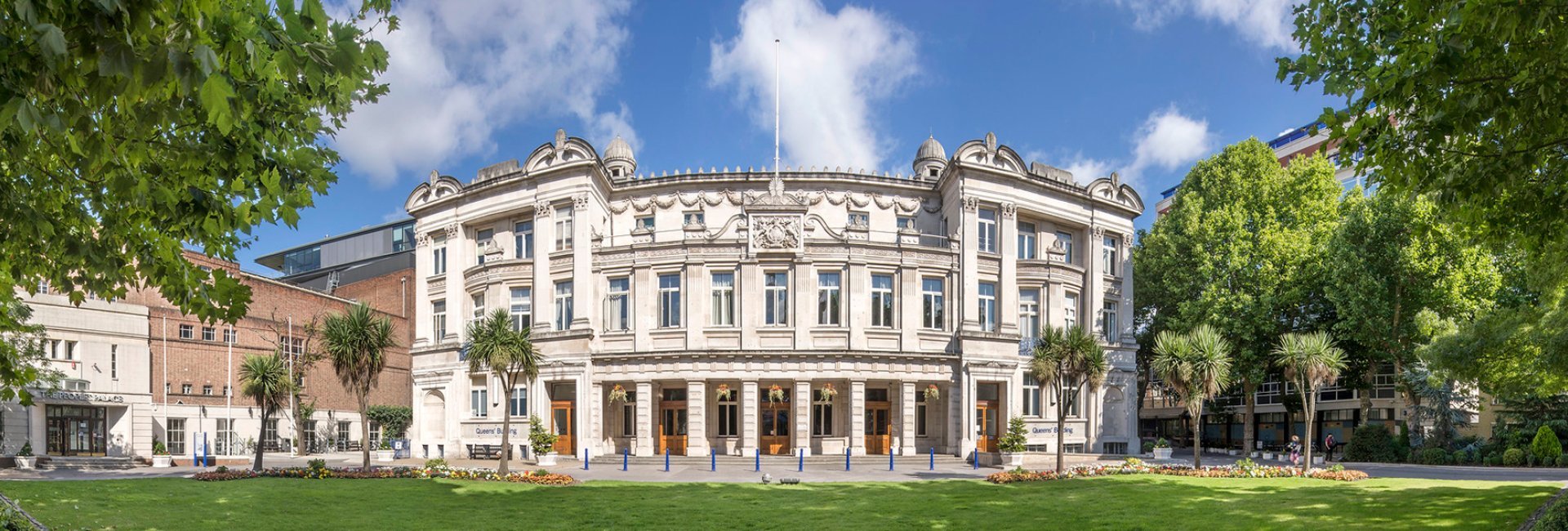
Queen Mary University of London | Open Day | 12 June 2026
12 Jun 2026, 09:00
London
Explore how digital technologies shape cultures, communities, and creativity around the world.
This truly global degree offers an exciting opportunity to explore and participate in the digital transformation of cultures. The production and consumption of culture in the twenty-first century is refracted through digital technologies, and you will gain the skills and knowledge needed to appreciate how this is changing our understanding of the past, present and future. You will not only analyse cultural and digital content but also create and publish it yourself, alongside developing a nuanced understanding of various cultural forms from around our increasingly globalised world, including Europe, the Middle East, Asia, Latin America and the Caribbean.
Taught through a mixture of lectures, seminars, workshops, coursework and independent study, this degree allows you to acquire knowledge and understanding of key issues in both digital media and global cultures. In addition, you will develop important academic skills (such as analysis, communication and media literacy) and personal attributes (teamworking and independent researching, for example), all of which are essential to your future career aspirations. By learning how to identify and apply creative approaches and ideas across cultural differences as well different media, you will be able to respond to employers' needs for skills in global awareness and intercultural competence. Thus, you will gain the interdisciplinary and communications expertise in digital and written forms needed to succeed in a range of career pathways, including in the fast-paced and growing fields of the creative and cultural industries.
Your progress is assessed in a variety of ways, including (but not limited to) presentations, essays, creative projects (including digital filmmaking), portfolios, reading diaries and a final year project, which can be either research or practice based – it’s your choice. You can also increasingly pursue your own interests and develop your individual talents through the modules that you select over the course of the degree, allowing you to focus more on practical skills, traditional academic learning, or a blend of the two.
Introduction to (Digital) Media (15 credits)
Digital Practice: An Introduction (15 credits)
Ghost in the Machine: Uncanny Media from the Typewriter to the Chatbot (15 credits)
Understanding Global Cultures (15 credits)
Knowledge and Power (30 credits)
30 credits of elective (optional) modules, for example:
Language and AI
Scriptwriting: Creativity and Technique
Myths and Debates about Human Language
Brief Encounters: Around the World in Short Stories
Year 2
Digital Culture and Society (15 credits)
Race and Digital Media (15 credits)
Adventures in World Literature (15 credits)
Digital Filmmaking/The Visual Essay (15 credits, alternating years)
60 credits of elective (optional) modules, for example:
Literatures of the Postcolonial World
History of the Internet
To be Continued: Adaptations of Global Literary Classics
Contemporary World Cinemas
Coding for linguists
Other Ways of Seeing Modern Art
Language modules: French, Spanish, Russian, German, Mandarin, Arabic, Japanese, Portuguese or Catalan
Year 3
Literary Culture in the Digital Age (15 credits)
Digital Media and Global Cultures Research Project OR Digital Media and Global Cultures Practice Project (30 credits)
+75 credits of elective (optional) modules, for example:
Videogames: History, Culture and Representation from Pacman to Pokemon
Creative Producing
Culture from Below: The Politics of the Popular
The Digital Critic: Reading with Computers
Poetry and Media
Multimodality, Media and Language
Look Who’s Computing Now
School of the Arts Review (STAR): Edit, Write, Publish
Language modules: French, Spanish, Russian, German, Mandarin, Arabic, Japanese, Portuguese or Catalan
Assessment typically includes a combination of exams and coursework, or coursework only. The final year may include completion of a research project.
To work as a teacher at a state school in England or Wales, you will need to achieve qualified teacher status (QTS). This is offered on this course for the following level:
The following entry points are available for this course:
Excludes General Studies.
Queen Mary University of London welcomes applications from students currently studying Level 3 BTEC qualifications and will consider you for entry to the majority of our undergraduate courses. The typical entry requirements will vary according to the course you are applying for.
Some of our courses require specific subject knowledge which you may not be able to cover as part of a Level 3 BTEC qualification and we may therefore require additional Level 3 qualifications to ensure that you are suitably prepared for relevant courses. A small number of our courses do not accept BTEC qualifications for entry, either as a standalone qualification, or in combination with other qualifications at Level 3.
Information on our typical entry requirements and guidance for applying can be found at http://www.qmul.ac.uk/undergraduate/entry/btec/
If you are at all unsure about the acceptability of your BTEC qualification for entry, please contact the Admissions team for individual advice (admissions@qmul.ac.uk).
We consider applications from students with the Access to Higher Education Diploma. The minimum academic requirement is to achieve 60 credits overall, with 45 credits at Level 3, of which 15 credits must be at Distinction and 15 credits at Merit or higher. Applications are considered on a case by case basis. Due to the high volume of applications, we do not make offers of study purely on the basis of meeting grade requirements.
5,5,5 in HL subjects, including an essay based humanities or social sciences subject
We consider applications from students offering an EPQ and may make an alternative offer to include three A levels, one grade lower than our usual requirement, along with a specific grade in the EPQ.
A minimum of five GCSE passes to include English at grade C or 4 or an acceptable equivalent will be required.
Queen Mary University of London: English Language Requirementshttps://www.qmul.ac.uk/international-students/englishlanguagerequirements/undergraduate-and-postgraduate-programmes/
Our standard contextual offer: Grades BCC at A-Level.
Our enhanced contextual offer: Grades CCC at A-Level.
Please note that General Studies and Critical Thinking are excluded from any A-Level offer and cannot be considered.
More information on our contextual offer criteria can be found on our contextualised admissions page below.
This section shows the range of grades that students who received offers were previously accepted on to this course with (learn more).
It is designed to support your research but does not guarantee whether you will or won't get a place.
Admissions teams consider various factors, including interviews, subject requirements, and entrance tests. Check all course entry requirements for eligibility.
We are unable to show previous accepted grades for this course. This could be because the course is new, it's a postgraduate course, there isn't enough historical data, or the provider has opted out of sharing their entry grades data for this course - learn more.
| Location | Fee | Year |
|---|
* This is a provisional fee and subject to change.
Tuition fee status depends on a number of criteria and varies according to where in the UK you will study. For further guidance on the criteria for home or overseas tuition fees, please refer to the UKCISA website.
Please visit and search for your chosen course on our A-Z course finder at http://search.qmul.ac.uk/s/search.html?collection=queenmary-coursefinder-undergraduate&query=&sort=title - here you will find further details on fees and funding.
Please also visit our A-Z course finder to view the amount of fee you would need to pay if you are an International fee paying student.
Email:admissions@qmul.ac.uk
Admissions and Recruitment Office
Mile End Road
Tower Hamlets
London
E1 4NS
At Queen Mary University of London