What is BA Modern Languages and Linguistics?
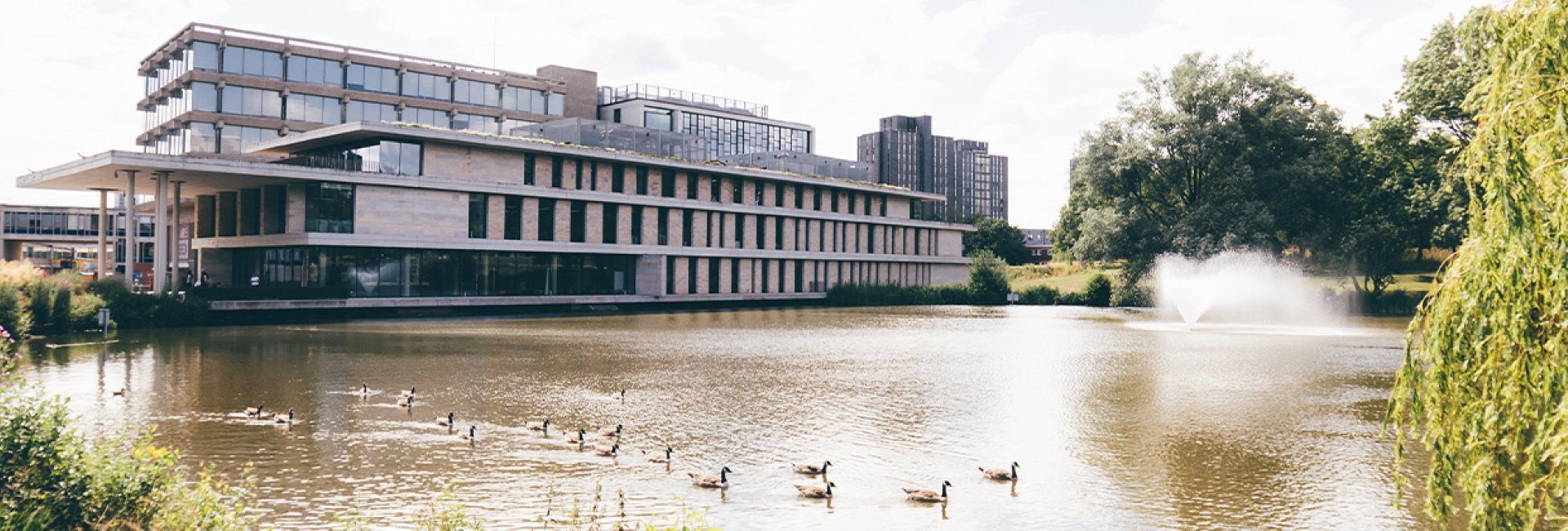
BA Modern Languages and Linguistics is a three-year degree, with opportunities to study abroad, taught at our Colchester campus.
This course combines the scientific study of language with the practical experience of learning and mastering another language. You'll explore how language works, how it shapes human communication and identity, and develop advanced proficiency in one or more modern languages.
Why this course
Understanding language helps us better understand ourselves and the ways we communicate with others. Linguistics examines the structures, meanings, and social dimensions of language, providing insight into one of the most fundamental aspects of human life.
Linguistics is an increasingly important discipline with links to psychology, philosophy, education, and artificial intelligence. It also has practical applications in areas such as human rights, language-learning technologies, and the analysis of communication in healthcare, legal, and professional environments.
This course combines a rigorous grounding in linguistic theory with the opportunity to achieve advanced proficiency in up to two modern languages. By developing expertise in both language analysis and language use, you'll gain a distinctive set of academic, professional, and intercultural skills.
Who should apply
-
Students fascinated by language, communication, and human behaviour
-
Those who want to combine linguistic theory with advanced language learning
-
Learners interested in multilingualism, intercultural communication, and global perspectives
-
Anyone seeking a degree with both academic depth and strong international career potential
What you’ll learn
-
Core linguistics: Study phonetics, phonology, morphology, syntax, semantics, and pragmatics
-
Language and society: Explore topics such as multilingualism, language impairment, and language, identity and gender
-
Language and cognition: Investigate language processing, acquisition, and the relationship between language and the mind
-
Meaning and communication: Analyse metaphor, irony, style, and other aspects of language use
-
Modern languages: Develop advanced proficiency in up to two languages from French, German, Italian, Spanish, and Portuguese
Your learning experience
-
Integrated study: Combine theoretical linguistics with practical language learning throughout your degree
-
Advanced language development: Complete at least one language to Mastery level and build near-fluency in your chosen language(s)
-
Specialist modules: Explore topics including American Languages, multilingualism, language and identity, and language and the mind
-
Summer language opportunities: Students starting a language from scratch via the intensive route can access a month-long summer course with fees paid by the University
-
Research-led teaching: Learn from academics in a department recognised for world-leading research impact
Careers and outcomes
A BA Modern Languages and Linguistics develops analytical, linguistic, and intercultural skills that are highly valued across a wide range of industries:
-
International business: Supporting organisations operating across global markets and multilingual environments
-
Translation and language services: Facilitating communication between languages and cultures
-
Education and language teaching: Helping others develop language and communication skills
-
Technology and language industries: Contributing to language technologies, AI, and digital communication projects
-
Research and public sector roles: Applying linguistic expertise to understand communication, behaviour, and society
-
You'll graduate with advanced language proficiency, a deep understanding of human communication, and the global outlook needed to pursue opportunities around the world.