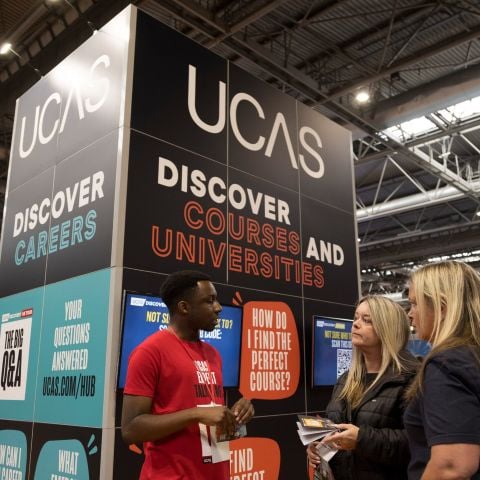
Careers fairs can be transformational experiences for students, but only when they come prepared. After a decade of hosting and attending careers fairs, one thing is clear: without the right preparation, students risk walking in 'cold' and leaving no clearer about their future.
Here are my top tips to help you prepare students for a truly impactful careers fair experience.
Before the event
- Get everyone on board – not just students, but colleagues and families too. Clearly communicate the benefits of attending and create a buzz of excitement.
- Maintain regular communications leading up to the event so everyone knows what to expect, who will be exhibiting, and why.
- Keep the event inclusive but realistic. A busy, high-impact event may not suit all students, so consider alternative options for those who need them.
- Inspire students to prepare questions in advance using the 5 Ws: Why? What? How? When? Where? UCAS mission cards can help get them started.
- Manage expectations by encouraging students to prioritise who they want to speak to, as time is often limited.
- If it’s an employer event, preparation is vital. Encourage students to have a polished CV, appropriate appearance, and a practised elevator pitch to make a strong impression.
Ideal outcome: A buzz around your school or college and confident students ready to seize the opportunity.
During the event
- Set clear expectations on the way to the event. Remind students that while freebies are fun, meaningful conversations are what count.
- Engage your staff – they can get up to speed on the options available and their enthusiasm will inspire students.
- Watch out for quieter students who may need a little help approaching exhibitors. Starting these conversations can lead to eye-opening results.
- Allow enough time for the event but not so much that students run out of energy. Leave them wanting more.
Ideal outcome: Students actively engaging with exhibitors until the very end, not waiting to leave.
After the event
- Keep the momentum going with a feedback loop to improve future events.
- Encourage students to review their notes and prospectuses promptly so the experience stays fresh.
- Support students in building their networks – help them create LinkedIn accounts and connect with exhibitors and speakers.
- Invite exhibitors to maintain contact with your school or college, whether in person or remotely, and encourage students to attend open days to continue their research.
Ideal outcome: Continued engagement and informed conversations among staff, students, and families, with ongoing improvements for future fairs.
Conclusion
Whether onsite or offsite, careers fairs can open doors and inspire students. But to maximise their impact, careful planning and communication are essential. Your goal is to spark curiosity, open new futures, and create meaningful conversations.
- Find your nearest UCAS Discovery event.
- Virtual tours are a great way for international students to explore a campus.