Undergraduate On-Campus Open Day at Swansea University - Singleton Park Campus and Bay Campus - 13 June 2026
13 Jun 2026, 07:30
Swansea
At Swansea, you’ll learn how to code and much more. We’ll empower you to create and innovate to solve real-world problems. From day one, you’ll be building software, exploring new technologies, and developing the skills that employers are looking for. You’ll dive into high-demand areas like artificial intelligence (AI), cybersecurity, data science, software engineering, and mobile app development. We don’t list specific tools and languages here, because we constantly update our curriculum to match what industry needs when you graduate, not what it needed when you started.
Our curriculum is shaped by industry input and delivered by experts who work at the cutting edge. From BAFTA-nominated game developers to world-leading cyber security experts and researchers collaborating with Airbus, Microsoft, HSBC, and Siemens – your lecturers excel in theory and make a difference in practice. You’ll learn in state-of-the-art labs, collaborate with your peers, and showcase your work to employers at our annual Project Fair. Whether you're interested in building cloud-based systems, designing accessible apps, exploring Internet of Things (IoT) technologies or developing technologies that haven’t even been invented yet, you’ll graduate with a portfolio that demonstrates your skills - and gives you the confidence to use them.
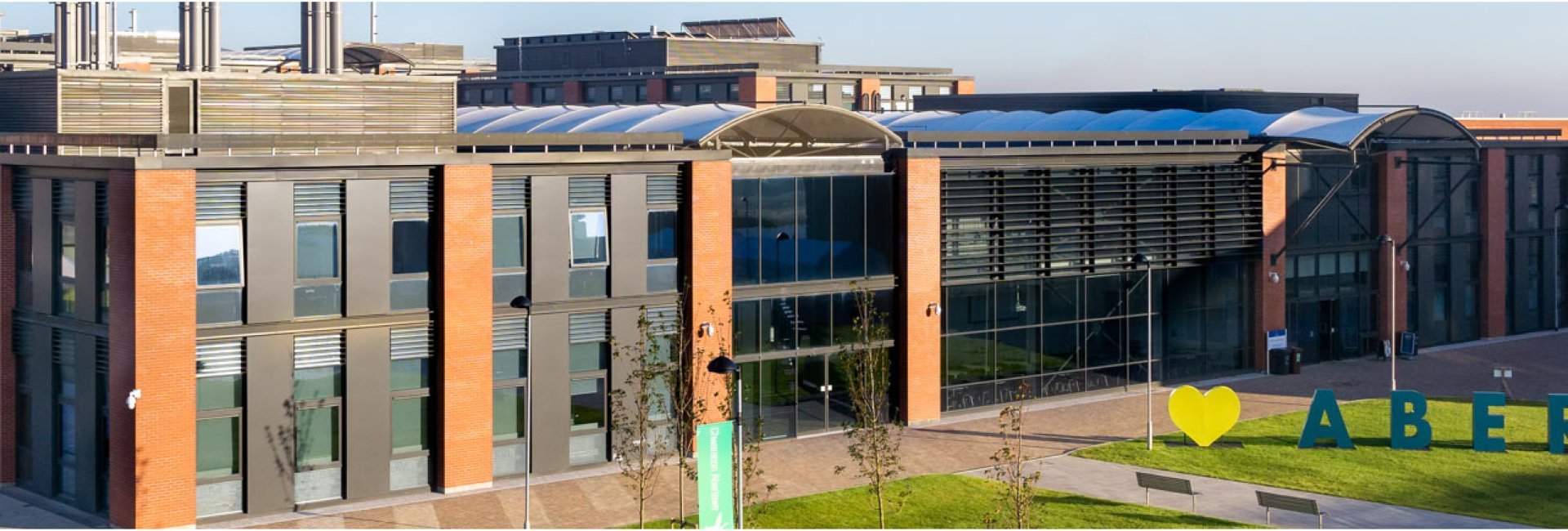
At Swansea University, our facilities set us apart. Our £32.5 million Computational Foundry is home to state-of-the-art teaching and research facilities which include a Vision and Biometric Lab, Maker Lab, Theory Lab, Cyber Security/Networking Lab, Robotics Lab, User Lab, and Visualisation Suite. Our students will benefit from world-leading experimental set-ups, equipment, devices and prototypes to accelerate innovation. You will have the opportunity to learn about and work with these facilities.
This course also offers you the opportunity to spend a Year in Industry, enabling you to gain valuable workplace experience and make industry connections.
This programme is also available as a 4-year MSci, which is an advanced undergraduate degree, adding a further research-focused year to your degree. Our MSci leads to a master’s level qualification, in addition to your undergraduate degree, giving you expert scientific training and a springboard towards a range of specialist careers.
In Year 1, you will typically study areas including: Data Representation & Computer Architecture; Programming & Software Engineering 1; Introduction to Data Science; Professional Issues, Security & Digital Technology; Programming & Software Engineering 2; Modelling Computing Systems
In Year 2, you will typically study areas including: Declarative Programming; Software Engineering; Database Systems; Algorithms; Automata and Formal Language Theory; Professional Development and Career Planning; Concurrency; Software Security Engineering; Web Service Development; Visual Computing; Artificial Intelligence; Intelligent Robotics.
In Year 3, you will typically study areas including: Computer Science Project Specification and Development; Computer Science Project Implementation and Dissertation; Critical Systems; Web Application Development; Embedded Systems Design; Cryptography and IT-Security; Software Testing; Brain-Inspired Artificial Intelligence.
In Year 4: Year spent in Industry.
In Year 5, you will typically study areas including: MSci Project; Operating Systems and Architectures; Logic, Modelling and Verification; Data Visualisation & Visual Analytics; Machine Learning
Professionally accredited courses provide industry-wide recognition of the quality of your qualification.
The following entry points are available for this course:
If you are an International Student, please visit our International pages for more information about entry requirements: http://www.swansea.ac.uk/international/students/requirements/
Discover what it's like to study Computer Science with a Year in Industry at Swansea University: insights on the course, making friends, personal statement tips, uni prep, and recommended books, podcasts, and videos.
If not studying A-Level Maths or Physics, GCSE Grade B (6) Maths is required.
From BTEC in Computing or Information Technology
To include 5 in HL or 6 in SL Mathematics and 4 in HL or 5 in SL English.
Swansea University accepts the Advanced Skills Baccalaureate Wales as fully equivalent to x1 A-Level.
Requirements are for A Levels where you can substitute the same non-subject specific grade for the Welsh Baccalaureate Advanced Level Core Grade.
We recognise the EPQ as an excellent indicator of success.
If you are predicted a Grade B or above in the EPQ, you will receive an offer with a one
grade reduction, to include your EPQ with a grade B.
Minimum of 390 points overall to include a minimum of 3 B1 passes in Higher/Honours paper (including Maths).
English Language Requirements at Swansea Universityhttps://www.swansea.ac.uk/admissions/english-language-requirements/
UK applicants who meet course requirements are guaranteed a conditional offer. We assess applications on individual merit. We consider making reduced offers, eg. to Care Leavers or students with extenuating circumstances. We encourage you to disclose any relevant circumstances.
The Advanced Skills Baccalaureate Wales is considered as equivalent to one full A-Level and students can take x2 A-levels alongside this. EPQ students predicted Grade B or above will receive a one-grade offer reduction.
This section shows the range of grades that students who received offers were previously accepted on to this course with (learn more).
It is designed to support your research but does not guarantee whether you will or won't get a place.
Admissions teams consider various factors, including interviews, subject requirements, and entrance tests. Check all course entry requirements for eligibility.
We are unable to show previous accepted grades for this course. This could be because the course is new, it's a postgraduate course, there isn't enough historical data, or the provider has opted out of sharing their entry grades data for this course - learn more.
No fee information has been provided for this course
Tuition fee status depends on a number of criteria and varies according to where in the UK you will study. For further guidance on the criteria for home or overseas tuition fees, please refer to the UKCISA website.
For the latest fee information, please check the individual course page on our website. Our full range of programmes are listed here: https://www.swansea.ac.uk/undergraduate/courses/
Further information on tuition fees can be found here: https://www.swansea.ac.uk/undergraduate/fees-and-funding/tuition-fees/
You may be eligible for funding to help support your study.
To find out about scholarships, bursaries and other funding opportunities that are available please visit the University's scholarships and bursaries page https://www.swansea.ac.uk/undergraduate/scholarships/
Academi Hywel Teifi at Swansea University and the Coleg Cymraeg Cenedlaethol offer a number of generous scholarships and bursaries for students who wish to study through the medium of Welsh or bilingually. For further information about the opportunities available to you, visit the Academi Hywel Teifi Scholarships and Bursaries page https://www.swansea.ac.uk/academi-hywel-teifi/learn/scholarships/
Email:study@swansea.ac.uk
Phone:01792 295111
Fax: 01792 295110
Singleton Park
Swansea
SA2 8PP
At Swansea University